
Bathroom Tiles Introduction
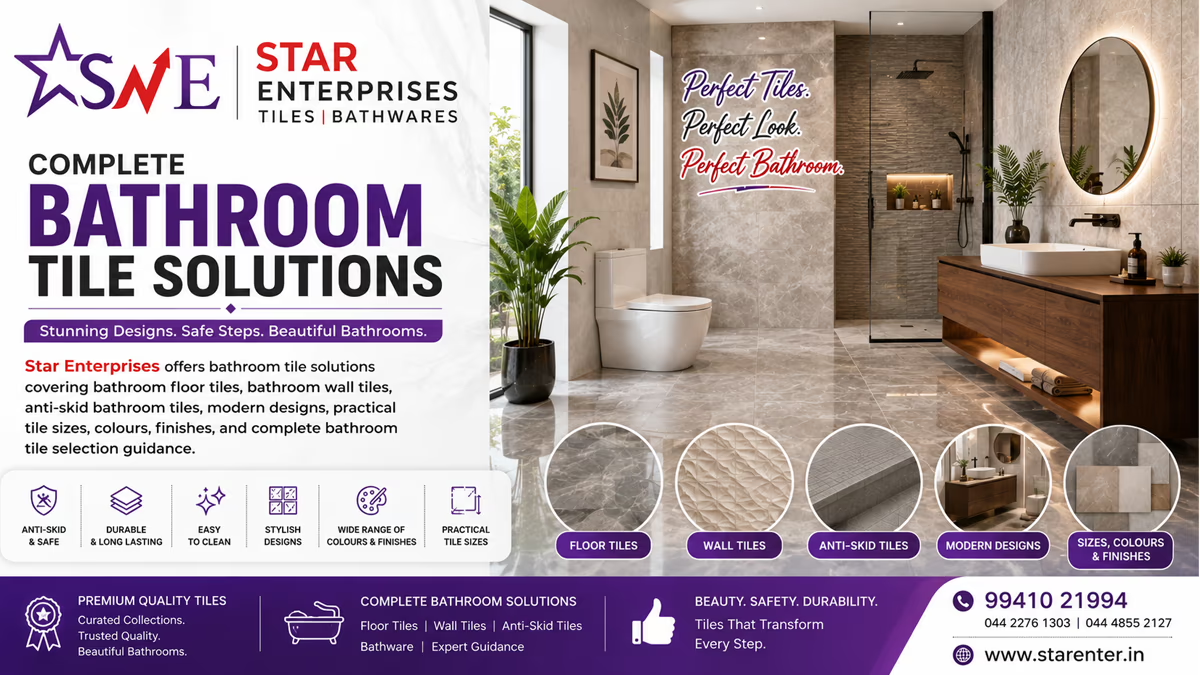
Choosing the right bathroom tiles shapes how your bathroom looks, how safe it feels underfoot, and how easy it is to keep clean for years to come. At Star Enterprises, our bathroom tiles collection covers everything a bathroom needs — from slip-conscious flooring to moisture-resistant wall finishes — so you can plan a space that is practical first and beautiful by design.
Unlike tiles used in living rooms or bedrooms, bathroom tiles have to perform in a wet, high-contact environment every single day. That changes what matters most: surface texture, water behaviour, cleaning effort, and how the tile holds its finish over time. This guide walks through bathroom floor tiles, bathroom wall tiles, anti-skid bathroom tiles, materials, finishes, sizes, colours, and the practical questions you should answer before you buy — so that when you visit our showroom, you already know what to look for.
If you are renovating an existing bathroom or planning tiles for a new one, you can explore our full range of bathroom solutions alongside this guide, or jump straight to a specific category using the sections below.
Why Choosing the Right Bathroom Tiles Matters
A bathroom is one of the few rooms in a home where tiles are in constant contact with water, soap, steam, and bare feet. That combination creates three practical priorities that don’t apply the same way elsewhere in the house:
- Moisture exposure — bathroom tiles need to resist water absorption on floors, walls, and especially shower zones, so the surface doesn’t degrade or trap dampness.
- Slip resistance — wet floors are a genuine safety concern, so floor tile texture and finish matter more here than in any other room.
- Cleaning demands — soap scum, hard-water marks, and grout staining build up faster in bathrooms, so finish and grout choice affect how much upkeep the room needs.
Getting these fundamentals right at the selection stage saves you from problems that are expensive to fix later — a glossy tile that turns slippery when wet, or a porous finish that stains within a year. The sections below walk through each decision so you can shortlist tiles that suit your bathroom’s actual conditions, not just its appearance in a showroom display.
Types of Bathroom Tiles
“Bathroom tiles” is a broad category that really breaks down into a few distinct product types, each solving a different problem. Understanding the difference helps you shop with intent instead of browsing everything at once.
Bathroom Floor Tiles
Floor tiles carry the most functional responsibility in a bathroom. They need to handle standing water, bare-foot traffic, and repeated wet-dry cycles without becoming a safety hazard. Matte and textured finishes are generally preferred for bathroom floors because they offer better grip than polished or high-gloss surfaces. Size also plays a role — smaller formats mean more grout lines, which can actually improve slip resistance in shower zones, while larger formats reduce grout maintenance in drier areas of the floor.
Explore our full bathroom floor tiles range to compare finishes and sizes suited to wet-area use.
Bathroom Wall Tiles
Wall tiles have different priorities. Since they aren’t walked on, slip resistance isn’t a concern — instead, the focus shifts to moisture resistance, ease of wiping down, and visual impact. Glossy and satin finishes are popular for bathroom walls because they reflect light and are simple to clean, while matte wall tiles offer a softer, more contemporary look. Wall tiles are also where most design personality shows up, through accent panels, feature walls behind the basin, or contrasting tones around the shower.
Browse bathroom wall tiles to see design-led options for shower walls, splashbacks, and accent panels.
Anti-Skid Bathroom Tiles
Anti-skid tiles are purpose-built for the wettest, highest-risk zones of a bathroom — the shower floor and areas immediately around it. These tiles use textured or micro-patterned surfaces to increase grip when wet, which is particularly important in homes with children, older family members, or anyone with mobility concerns. The trade-off is that heavily textured surfaces can require slightly more effort to clean than smooth tiles, since texture can hold onto soap residue.
See our dedicated anti-skid bathroom tiles collection for slip-resistant flooring built specifically for wet zones.
Ceramic Bathroom Tiles
Ceramic tiles are a widely used option for both bathroom floors and walls. They’re valued for their versatility in colour and pattern, relatively straightforward installation, and suitability for standard residential bathrooms. Our ceramic tiles range includes options appropriate for both wall and floor applications.
Porcelain Bathroom Tiles
Porcelain tiles are a denser, more compact tile type, often chosen where a harder-wearing surface is preferred — particularly for bathroom floors that see frequent use. They’re available in a wide range of finishes, including options that replicate the look of natural stone or marble. Explore porcelain tiles for floor and wall applications across our bathroom range.
Vitrified Bathroom Tiles
Vitrified tiles are manufactured through a process that reduces porosity, which is one reason they’re commonly considered for bathroom floors where water exposure is frequent. If low water absorption is a priority for your bathroom floor, our vitrified tiles range is worth comparing alongside ceramic and porcelain options.
| Material | Typical Use | Main Advantage | Selection Consideration |
|---|---|---|---|
| Ceramic | Floors and walls | Wide design and colour variety | Check finish suitability for wet-area use |
| Porcelain | Floors and walls, higher-traffic areas | Denser, harder-wearing surface | Compare finish options for slip resistance on floors |
| Vitrified | Floors, especially wet zones | Lower porosity, less water absorption | Confirm anti-skid finish for shower areas |
How to Choose Bathroom Floor Tiles
Bathroom floor tile selection comes down to matching the tile to how wet each zone of your floor actually gets. A shower floor, the area just outside the shower, and the section near the sink or door all experience different levels of moisture, and your tile choice can reflect that.
- Prioritise finish over pure looks. Matte and textured finishes generally offer better grip when wet than polished or high-gloss tiles. For the shower zone specifically, consider anti-skid bathroom tiles.
- Think about grout lines. Smaller tile formats create more grout lines, which can add texture and grip underfoot, but also mean more grout to clean and maintain over time.
- Match tile size to room size. Very large-format tiles can look striking in bigger bathrooms but may need careful planning around drainage slopes in smaller or irregularly shaped rooms.
- Consider drainage. Bathroom floors typically slope slightly toward a drain — smaller tiles with more grout lines are often easier to lay accurately across a sloped surface.
How to Choose Bathroom Wall Tiles
Wall tile decisions are more design-driven, but a few practical points still apply. First, decide whether wall tiles will run floor-to-ceiling, to a set height (common around showers and basins), or as an accent band. Second, consider how the wall tile finish interacts with lighting — glossy tiles reflect more light and can help a small bathroom feel brighter, while matte tiles absorb light for a calmer, more muted look. Third, think about where water will actually hit the wall; shower walls need more consistent moisture resistance than a wall behind a vanity.
Many homeowners coordinate bathroom wall tile choices with their floor tile, either matching tones for a seamless look or contrasting deliberately for definition between surfaces.
Bathroom Tile Finishes: Matte, Glossy & Textured
Finish is one of the most consequential — and most overlooked — decisions in bathroom tile selection. It affects grip, light reflection, cleaning effort, and overall mood of the room.
| Factor | Matte | Glossy |
|---|---|---|
| Slip resistance | Generally better grip, often preferred for floors | Can be slippery when wet; more common on walls |
| Light reflection | Absorbs light, softer look | Reflects light, can brighten a room |
| Cleaning | Shows fewer water spots, but texture can hold residue | Wipes clean easily, but shows water marks more visibly |
| Typical placement | Bathroom floors, contemporary walls | Bathroom walls, splashbacks |
Textured, satin, and polished finishes sit between these two extremes. Textured tiles add grip and are commonly used in shower zones. Satin finishes offer a soft sheen without the full reflectivity of a glossy surface, often chosen for wall applications where a subtle glow is wanted without high-gloss maintenance. Polished tiles have a smoother, reflective surface and are typically reserved for walls or very low-moisture floor zones, given their reduced slip resistance.
Stone-look and marble-look finishes have become popular for bathroom tile designs because they bring a natural material aesthetic without some of the porosity concerns of genuine stone. These are available across ceramic, porcelain, and vitrified bathroom tile ranges.
Best Bathroom Tile Sizes
There is no single tile size that suits every bathroom — the right choice depends on the room’s dimensions, the layout of fixtures, and the look you want. What matters is understanding how size affects both appearance and practicality.
- Small-format tiles (including mosaic-style pieces) create more grout lines, which can add texture and visual detail — often used in shower floors or as accent strips.
- Medium-format tiles are a common all-purpose choice for both bathroom floors and walls, balancing installation practicality with a clean look.
- Large-format tiles reduce the number of grout lines, giving a more seamless, spacious appearance — frequently used to make smaller bathrooms feel larger, though they require careful planning around drainage and wall irregularities.
| Bathroom Type | Possible Tile Approach | Visual Effect | Key Consideration |
|---|---|---|---|
| Small bathroom | Large-format floor tiles, light colours | Fewer grout lines, feels more open | Plan cuts around fixtures and drainage carefully |
| Standard family bathroom | Medium-format floor and wall tiles | Balanced, practical look | Easier installation and replacement of individual tiles |
| Shower zone | Small-format or mosaic anti-skid tiles | Added texture and grip | More grout lines mean more cleaning |
| Large or luxury bathroom | Large-format tiles, feature wall panels | Seamless, premium appearance | Confirm handling and installation requirements |
Bathroom Tile Colour Ideas
Colour has a direct effect on how spacious, bright, or cosy a bathroom feels — and on how much maintenance the space will visibly show.
- White — reflects the most light, makes bathrooms feel larger and brighter, but shows soap scum and hard-water marks more readily.
- Grey — a versatile neutral that hides everyday marks better than white while still feeling contemporary.
- Beige and cream — warm neutrals that soften a bathroom’s look and pair well with wood-tone fixtures.
- Black — used sparingly for accent walls or floor detailing; can add drama but shows dust and water spots on matte finishes.
- Brown and earthy tones — suit spa-inspired or natural-material-look bathrooms.
- Blue and green — popular for feature walls, evoking a calming, coastal, or nature-led mood.
Neutral colour combinations (light floor, slightly deeper-toned wall, or vice versa) tend to feel cohesive without demanding constant upkeep, while contrasting combinations — a dark floor with light walls, or a bold accent wall against neutral surroundings — create visual definition and are often used in modern bathroom tile designs.
Bathroom Tile Design Ideas
Once the practical decisions are set, tile design brings personality to the bathroom. A few approaches homeowners commonly explore:
- Modern minimalist — large-format tiles in a single neutral tone, minimal grout visibility, clean lines throughout.
- Luxury marble-look — marble-effect porcelain or vitrified tiles used on walls or floors for a high-end appearance without the maintenance concerns of natural marble.
- Natural stone-look — textured, earthy-toned tiles that echo the appearance of stone for a grounded, organic feel.
- Neutral contemporary — soft greys, beiges, and off-whites combined for a calm, versatile bathroom that suits most home styles.
- Monochrome — black-and-white combinations, often used with geometric patterns or classic checkerboard-style floor layouts.
- Warm earthy — terracotta, tan, and brown tones that bring warmth to the space.
- Hotel-inspired — large-format tiles, minimal colour variation, and a polished but understated finish.
- Spa-inspired — muted greens, natural textures, and matte finishes for a calming retreat feel.
- Feature wall or shower accent — one wall in a bolder tile design against otherwise neutral surroundings.
- Vertical wall patterns — tiles laid in a vertical or herringbone orientation to visually elevate ceiling height.
Bathroom Tiles for Small Bathrooms
Small bathrooms benefit from a few specific tile strategies aimed at making the space feel larger than it is:
- Light colours reflect more light and reduce visual weight in a compact room.
- Large-format floor tiles reduce grout-line clutter, which helps the floor read as one continuous surface.
- Coordinated floor and wall tones remove hard visual breaks between surfaces, making boundaries less noticeable.
- Consistent tile flow into the shower (same or closely matched tile inside and outside the shower) helps the whole room feel like a single space rather than a divided one.
- Avoiding busy patterns across large areas prevents visual clutter in a room where every surface is close to the eye.
For shower areas specifically in a small bathroom, a smaller-format anti-skid tile can add necessary grip without overwhelming the space, since it’s contained to one zone.
Bathroom Tiles for Modern Bathrooms
Modern bathroom tile design generally favours simplicity: fewer colours, larger formats, minimal ornamentation, and finishes that photograph and live cleanly. Large-format matte floor tiles paired with satin or matte wall tiles in a restrained neutral palette is a common modern approach. Where personality is added, it’s usually through one deliberate element — a textured accent wall, a contrasting floor border, or a stone-look feature panel — rather than pattern across every surface.
How to Match Bathroom Floor and Wall Tiles
Coordinating floor and wall tiles is less about matching exactly and more about creating a sense of intention. A few reliable approaches:
- Same tone family, different shade — for example, a mid-grey floor with a lighter grey wall — keeps cohesion without flatness.
- Neutral floor, feature wall — a plain floor tile lets a bolder or patterned wall tile stand out without competing for attention.
- Matching finish logic — even when colours differ, keeping both surfaces in the same finish family (both matte, or both satin) tends to look more considered than mixing high-gloss with heavily textured surfaces.
- Consistent grout colour — using the same or a closely related grout tone across floor and wall reduces visual fragmentation.
How Many Bathroom Tiles Do You Need?
Calculating tile quantity accurately avoids both project delays and shade-mismatch issues from ordering a top-up batch later. The general approach is straightforward, though your showroom team can help confirm exact figures for your bathroom’s layout:
- Measure floor and wall area separately in square metres or square feet, since they may use different tiles.
- Subtract fixture footprints where relevant (though many installers prefer to tile straight through and cut around fixtures).
- Add wastage allowance to account for cuts, breakage, and pattern-matching — this is a standard practice in tile planning and your installer or showroom can advise an appropriate percentage for your specific layout.
- Round up to full box quantities, since tiles are typically sold by the box rather than individually.
- Confirm batch consistency before finalising your order, since tile shade can vary slightly between production batches.
Our team at Star Enterprises can help you work through these calculations for your specific bathroom dimensions when you visit.
Bathroom Tile Maintenance & Cleaning
How a tile performs after installation matters as much as how it looks on day one. A few practical maintenance points to factor into your selection:
- Regular cleaning — routine wiping with a mild, tile-appropriate cleaner keeps most bathroom tiles looking their best; avoid harsh abrasive scrubbing on polished or glossy finishes.
- Grout cleaning — grout lines are typically more porous than the tile itself and need periodic attention to prevent discolouration, especially in wet zones.
- Hard-water deposits — areas with hard water can develop mineral deposits on tile and glass surfaces over time; wiping surfaces dry after use reduces buildup.
- Soap residue — textured and anti-skid finishes can hold onto soap film more than smooth tiles, so shower-zone tiles may need slightly more frequent attention.
- Ventilation — good bathroom ventilation reduces prolonged moisture exposure on tile and grout, helping maintain both surfaces over time.
- Cleaner selection — always check that a cleaning product is suitable for your specific tile and finish before use, since some finishes are more sensitive to certain chemicals than others.
Common Bathroom Tile Selection Mistakes
- Choosing floor tiles for looks alone, without checking finish suitability for wet, bare-foot use.
- Using the same glossy tile on both floor and wall, overlooking that a finish suited to a wall may be unsuitably slippery on a floor.
- Underestimating wastage when calculating quantity, leading to a shortfall mid-installation.
- Skipping in-person sample checks and relying only on photos, where colour and finish can appear different under real lighting.
- Ignoring grout colour until after installation, when it has already been decided by default.
- Overlooking shower-zone safety by using standard floor tiles instead of a dedicated anti-skid option in the highest-risk area.
Bathroom Tile Buying Checklist
- Floor or wall — confirm which application each tile is intended for.
- Wetness level — identify how much water exposure each zone will get.
- Slip resistance — prioritise finish for any floor area, especially the shower zone.
- Size — match tile format to room dimensions and layout.
- Colour — decide on tone and whether floor and wall will match or contrast.
- Finish — matte, glossy, satin, or textured, based on placement.
- Design — pattern, feature elements, and overall style direction.
- Maintenance — realistic expectations for cleaning effort based on finish and grout choice.
- Quantity — accurate measurement plus appropriate wastage allowance.
- Wastage — confirm allowance with your installer or showroom team.
- Grout — colour and type suited to the tile and application.
- Budget — align tile choice with your overall renovation budget.
- Installation — confirm installation requirements and any special handling needs.
- Showroom verification — see and compare actual samples before finalising your order.
Purchase Guidance: What to Check Before You Buy
A few practical steps make the difference between a smooth purchase and a mid-project surprise:
- Compare physical samples rather than relying solely on catalogue images, since colour and finish can look different in person.
- Inspect the actual finish under lighting similar to your bathroom, where possible.
- Check batch and shade consistency across all boxes intended for one area, since natural variation can occur between production runs.
- Calculate quantity carefully, including a reasonable wastage allowance for cuts and breakage.
- Confirm availability of your chosen tile in the quantity you need before finalising other renovation plans around it.
- Verify dimensions match your planned layout, especially for large-format tiles.
- Discuss installation requirements with your tiler or installer, particularly for larger formats or intricate patterns.
- Buy from a showroom you can visit, where you can see full-size samples and get guidance specific to your bathroom.
Bathroom Tiles in Tambaram & Chennai
Choosing bathroom tiles in person makes a genuine difference, particularly for a room where finish and colour accuracy matter as much as they do in a bathroom. Photographs and online listings can only tell you so much — seeing tiles under real light, feeling the texture of a matte or anti-skid finish, and holding wall and floor samples together are the details that help you choose with confidence.
If you’re planning a bathroom renovation in Tambaram, Chennai, or the surrounding areas, visiting in person lets you:
- Compare bathroom floor and wall tiles side by side under showroom lighting.
- Feel the texture difference between matte, glossy, and anti-skid finishes.
- Discuss your bathroom’s dimensions and get practical guidance on size and layout.
- Check shade consistency across the exact tiles you plan to order.
- Get help narrowing down colour and design combinations suited to your space.
Visit the Star Enterprises tiles showroom in Tambaram to explore our full bathroom tile range and get hands-on guidance from our team.
Why Choose Star Enterprises for Bathroom Tiles?
Star Enterprises brings together a wide bathroom tile selection under one roof — floor tiles, wall tiles, and dedicated anti-skid options — so you can plan an entire bathroom without piecing together choices from multiple sources. Our team helps with practical, showroom-based guidance: comparing finishes side by side, working through size and layout questions, and helping you coordinate floor and wall selections that suit your specific bathroom.
Explore our broader bathroom solutions range alongside our tile collection, or visit our showroom to see everything in person.
Frequently Asked Questions About Bathroom Tiles
What are the best tiles for a bathroom floor?
Bathroom floor tiles generally work best with a matte or textured finish, since these offer better grip when wet than polished or glossy surfaces. Beyond finish, consider size in relation to your bathroom’s layout and drainage slope — smaller formats can be easier to lay accurately on sloped floors, while larger formats reduce grout-line maintenance. For shower zones specifically, a dedicated anti-skid bathroom tile is worth prioritising, since this area sees the most consistent water exposure and bare-foot use.
Which tiles are safest for wet bathroom floors?
Anti-skid tiles, designed with textured or micro-patterned surfaces, offer the strongest grip in consistently wet areas like shower floors. Standard matte tiles can also provide reasonable slip resistance for less-wet zones of the bathroom floor, such as near the sink or door. Glossy and polished finishes are best avoided on any floor area that regularly gets wet, since they offer significantly less traction underfoot.
Are matte or glossy tiles better for bathrooms?
It depends on where they’re used. Matte finishes are generally better suited to bathroom floors because they offer more grip when wet. Glossy finishes are more commonly used on bathroom walls, where slip resistance isn’t a factor, and their reflective surface can help brighten the room and is simple to wipe clean. Many bathrooms use both — matte underfoot, glossy or satin on the walls.
What tile size is best for a bathroom?
There’s no universally “best” size — it depends on your bathroom’s dimensions and the look you want. Large-format tiles reduce grout lines and can make small bathrooms feel more spacious, but need careful planning around drainage and fixture cuts. Smaller-format tiles create more grout lines, which can add useful texture in shower zones, though they require more grout maintenance. Medium formats offer a practical middle ground for most standard bathrooms.
Which colour tiles make a small bathroom look bigger?
Light, neutral colours — such as white, light grey, or soft beige — reflect more light and tend to make a small bathroom feel more open. Pairing light colours with large-format tiles and minimal contrast between floor and wall tones reinforces this effect, since it removes visual breaks that can make a room feel busier or smaller than it is.
Are ceramic tiles good for bathrooms?
Yes, ceramic tiles are a widely used option for both bathroom floors and walls, valued for their range of colours, patterns, and finishes. When choosing ceramic tiles for a bathroom floor, prioritise a matte or textured finish for grip; for walls, glossy or satin ceramic finishes are common and easy to maintain. Explore our ceramic tiles range to compare options suited to bathroom use.
Are porcelain tiles suitable for bathroom floors and walls?
Porcelain tiles are commonly used for both bathroom floors and walls, and are often chosen for their denser, harder-wearing surface. As with any material, finish is what determines suitability for a specific application — a matte or textured porcelain tile suits a bathroom floor, while glossy or polished porcelain is typically better placed on walls. Our porcelain tiles range includes options for both.
How do I choose bathroom floor and wall tiles together?
Start by deciding whether you want a matching, coordinated, or contrasting look. A same-tone-family approach (similar colours, different shades) creates cohesion, while a neutral floor with a feature wall lets one surface stand out. Keeping the finish family consistent — both matte or both satin, for example — and matching grout tones across floor and wall also helps the two surfaces feel intentionally connected rather than mismatched.
Where can I buy bathroom tiles in Tambaram?
Star Enterprises operates a tiles showroom in Tambaram, offering a full range of bathroom floor tiles, wall tiles, and anti-skid options that you can view and compare in person. Visiting in person is particularly useful for bathroom tiles, since finish and colour are easier to judge under real lighting than in photographs. You can find details for the tiles showroom in Tambaram or get in touch via our contact page to plan your visit.
Final Guide: Choosing the Right Bathroom Tiles
Choosing bathroom tiles comes down to a short list of decisions repeated across every zone of the room: is this surface a floor or a wall, how wet does it get, what finish suits that condition, and how does the size and colour fit your bathroom’s dimensions and style. Get those fundamentals right, and the rest — pattern, accent walls, colour combinations — becomes a matter of preference rather than risk.
Ready to choose your bathroom tiles? Start by identifying your floor and wall requirements, shortlisting colours, and comparing finishes with safety in mind. From there:
- Explore Bathroom Floor Tiles
- Explore Bathroom Wall Tiles
- Explore Anti-Skid Bathroom Tiles
- Visit the Tambaram Showroom
- Contact Star Enterprises to enquire about bathroom tile options for your space