
Introduction
Digital Tiles: Discover digital tile designs for floors, walls, bathrooms, kitchens, living rooms and modern interiors, with practical guidance for choosing the right finish, size and style in Tambaram.
Digital Tiles for Stylish, Modern & Beautiful Spaces
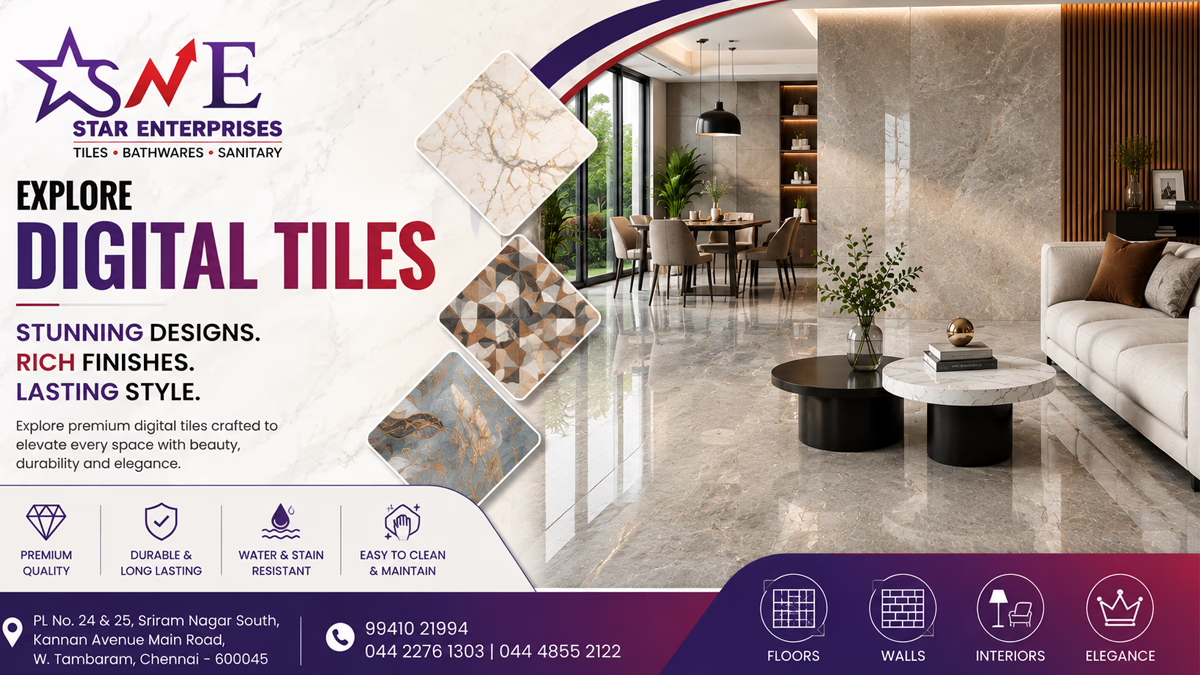
Digital tiles have changed the way homeowners, builders, contractors and interior designers approach tile design. Instead of being limited to simple repeating colours and basic patterns, digitally printed tile surfaces can reproduce the visual character of marble, stone, wood, concrete, decorative artwork, geometric patterns and many other design directions. This makes digital tiles a practical choice when the surface itself is an important part of the interior.
For a customer searching for digital tiles, the decision should not stop at finding an attractive picture online. The right tile depends on where it will be used, the required technical performance, surface finish, size, colour, lighting, maintenance expectations, installation conditions and the overall design of the room. A beautiful wall tile is not automatically suitable for a floor, and a dramatic feature design may not be the best choice for every surface.
This pillar guide is designed to take a customer from inspiration to a confident showroom decision. It explains what digital tiles are, how digital printing affects design, the most useful styles and finishes, room-by-room applications, tile sizes, colour coordination, price factors, quantity planning, installation and maintenance. It also explains how customers searching for digital tiles in Tambaram can use a local showroom visit to compare actual products.
At Star Enterprises in West Tambaram, customers can move from online research to physical product comparison. Seeing the actual tile helps reveal pattern scale, texture, gloss level, colour variation and the relationship between different tile designs. That final comparison is important because a tile that looks perfect on a phone screen can look very different when viewed across a full wall or floor.
What Are Digital Tiles?
Digital tiles are tile products that use digitally printed decorative imagery or patterns on their surfaces. Modern printing technology allows manufacturers to reproduce detailed designs with greater flexibility, including natural-stone effects, marble veining, wood grain, concrete textures, decorative motifs and contemporary graphics.
Digital is primarily a description of the printing and decorative process, not a guarantee of one particular technical specification. This distinction is important when buying. A digitally printed wall tile may be intended for a completely different application from a digitally printed floor tile. The tile body, water absorption, surface finish, strength, slip characteristics and manufacturer’s application guidance should therefore be considered separately from the printed design.
For buyers, the easiest way to think about digital tiles is to separate the decision into two layers. First decide what the room needs technically. Then decide what visual language you want. This prevents a common mistake in which a customer chooses a pattern first and only later discovers that the product is unsuitable for the intended surface.
Digital printing is particularly useful for design-led interiors because it allows many visual options to be created without relying on a single natural material. Marble, stone, wood and decorative effects can all be explored as part of one tile-selection process.
Why Choose Digital Tiles?
One of the strongest reasons to consider digital tiles is design freedom. Digital printing can create detailed visual effects that help a room achieve a particular mood without requiring every surface to use a natural material.
A living room can use a marble-look digital floor to create an elegant foundation. A kitchen can use a decorative digital backsplash as a focal point. A bathroom can use a stone or marble digital wall tile to create a calm, premium appearance. A bedroom can use wood-look designs to bring warmth into the space.
Digital tiles also make coordination easier. One visual idea can be repeated across related surfaces while different colours or patterns provide variation. For example, a stone-inspired floor can be combined with a subtle textured wall tile, or a marble-look wall can be supported by a plain neutral floor.
The best reason to choose a digital tile is not simply that it is fashionable. It should solve a design requirement while also being appropriate for the intended application. Product specifications and showroom guidance should always be considered alongside appearance.
Digital Tile Designs for Modern Interiors
Modern digital tile collections can reproduce many different visual styles. Marble-look tiles are useful for elegant and contemporary interiors. Stone-look surfaces can create a natural character. Wood-look tiles can make a room feel warmer. Concrete-inspired designs can support minimalist and industrial interiors. Decorative digital tiles can create a focal point.
Design scale matters. A pattern that looks attractive on a small sample may become dominant when repeated across an entire room. A very subtle pattern can have the opposite problem: it may look impressive in a close-up photograph but become almost invisible at installation scale.
This is why a showroom comparison is valuable. View the tile from several metres away and imagine it covering the complete surface. Compare multiple pieces together rather than judging a single tile.
A successful interior usually has a visual hierarchy. One material or surface acts as the main feature, other materials support it, and a small number of accents add character. Digital tiles can work particularly well when they are given a clear role within that hierarchy.
Marble-Look Digital Tiles
Marble-look digital tiles are among the most popular design directions because marble has a long association with elegance and premium interiors. Digital printing can reproduce veining, tonal movement and stone-inspired patterns across tile surfaces.
White marble-look tiles can create a bright and spacious appearance. Grey marble designs can support a contemporary interior. Beige and cream marble effects can provide a warmer character that works well with wood furniture and warm lighting.
The quality of the visual result depends on how the pattern behaves across several tiles. Look for natural variation and consider how the pieces will be arranged. A repetitive image can appear artificial, while thoughtfully distributed variation can create a more convincing stone effect.
Marble-look digital tiles can be considered for living rooms, bedrooms, bathrooms, feature walls and other suitable applications. Always confirm whether the selected product is intended for floor or wall use before ordering.
Wood-Look Digital Tiles
Wood-look digital tiles are useful when homeowners want the warmth and visual character of timber with the practical qualities of a tiled surface. The appearance depends on grain direction, colour, plank proportions and variation.
Warm brown and natural oak-inspired tones can make bedrooms and living spaces feel comfortable. Grey wood effects can support contemporary interiors. Lighter wood effects can help create a bright Scandinavian-inspired appearance.
Installation direction also influences the result. Long formats installed in a consistent direction can reinforce the appearance of timber. Layout should be discussed before fixing begins, particularly when the design has strong grain movement.
As with all digital tiles, confirm the intended application. A product designed for a wall should not be assumed to be suitable for flooring. The exact manufacturer’s technical information should guide the final decision.
Stone-Look Digital Tiles
Stone-look digital tiles can create a natural and grounded appearance while providing the design consistency of a manufactured tile. They can suit contemporary, rustic, minimalist and transitional interiors.
Stone effects can range from soft limestone-inspired patterns to stronger slate and natural-rock appearances. Neutral stone colours are versatile because they can coordinate with wood, metal, painted walls and many furniture styles.
Variation is important. Natural stone is rarely visually identical from one area to another, so digital tile collections that offer appropriate visual variation can produce a more convincing result.
Before choosing a stone-look design, compare it with the project’s existing materials. Grey, beige and taupe stone patterns can have different undertones, and the wrong undertone can clash with cabinets, furniture or paint.
Concrete-Look Digital Tiles
Concrete-look digital tiles are popular in contemporary and industrial interiors. Their restrained texture and neutral colour can create a strong architectural foundation without introducing a busy pattern.
Soft grey concrete designs can work with black metal, timber and minimalist furniture. Warmer concrete tones can create a softer modern appearance. The design can also be used selectively as a feature wall.
Concrete effects are especially useful when the interior needs a calm background for furniture, artwork or decorative lighting. However, the room should still have enough contrast so that the space does not feel flat.
As always, evaluate the product at realistic scale and under the actual lighting conditions of the room.
Digital Wall Tiles
Digital wall tiles are one of the most flexible applications of digital printing. Walls can carry decorative patterns, detailed imagery and strong colour without being exposed to the same type of foot traffic as floors.
A digital wall tile can be used behind a television, around a vanity, as a kitchen backsplash, behind a bed or on another carefully selected feature surface. The objective should be to create a clear focal point rather than decorate every wall equally.
Large-format marble or stone effects can create a premium appearance. Geometric patterns can create a modern accent. Decorative graphics can bring personality to smaller areas.
Before installation, plan around electrical sockets, windows, doors, niches, corners and furniture. The pattern should be positioned intentionally so that important visual elements are not lost through awkward cuts.
Digital Floor Tiles
Digital floor tiles combine decorative flexibility with the performance requirements of flooring. The exact product should be checked for intended floor use, expected traffic, slip characteristics, water exposure and maintenance.
Living rooms can use marble, stone, wood and concrete effects. Bedrooms can use calmer wood and neutral designs. Kitchens require attention to cleaning and everyday traffic. Bathroom floors require particular attention to moisture and slip performance.
Do not assume that a visually attractive digital tile is automatically suitable for every floor. Two products with similar printed surfaces can have different technical characteristics.
If you are comparing digital floor tiles with broader flooring categories, consider the complete specification rather than judging only the printed appearance. Star Enterprises can help customers compare suitable flooring options for their particular room.
Digital Tiles for Living Rooms
Living rooms offer a large canvas for digital tile design. The floor can either provide a quiet foundation or become the main visual feature.
Marble-look digital tiles can create an elegant appearance in contemporary and luxury-inspired interiors. Stone and concrete effects can support minimalist rooms. Wood-look designs can create warmth and work particularly well with natural furniture.
If the floor has strong movement, use simpler wall colours and furniture fabrics. If the floor is restrained, a digital feature wall can add personality.
Tile size is another important factor. Larger formats can create visual continuity, while smaller formats can make patterns more noticeable. The final choice should account for room dimensions, furniture placement and installation conditions.
Digital Tiles for Bedrooms
Bedrooms usually benefit from calm, comfortable visual design. Wood-look digital tiles can create warmth, while subtle stone and marble effects can support modern interiors.
A feature wall behind the bed can carry a stronger digital pattern while the floor remains neutral. This creates visual hierarchy without making the entire room busy.
Lighting should be considered before choosing colour. Warm lamps can make beige, cream and brown designs appear richer, while cooler lighting can make grey and white designs feel sharper.
A versatile floor can also be useful because bedroom furniture and bedding are often changed over time. A design that works with several colour palettes provides more long-term flexibility.
Digital Tiles for Kitchens
Kitchens can use digital tiles on both walls and suitable floors. A decorative digital backsplash can become a focal point, particularly when cabinets and countertops have relatively simple finishes.
Marble-look designs can coordinate with stone-inspired countertops. Geometric designs can create a contemporary accent. Neutral stone and concrete effects can provide a restrained background.
Kitchen floors should be selected with practical considerations in mind. Cleaning, traffic, water exposure and slip characteristics all matter. The product should be appropriate for the intended use.
When comparing kitchen tile options, place the samples beside cabinet, countertop and hardware colours. This makes undertones and pattern relationships easier to judge.
Digital Tiles for Bathrooms
Bathrooms are particularly suitable for digital wall tile designs because walls can carry detailed patterns without the same foot-traffic requirements as floors.
Marble-look digital tiles can create a spa-inspired appearance. Stone effects can create a natural feel. Geometric and decorative designs can add personality to a vanity or shower feature wall.
Bathroom floors should be treated separately. Choose a product intended for wet-area flooring and check the relevant slip characteristics and installation requirements.
Small bathrooms can benefit from controlled colour and pattern. One feature wall combined with quieter surrounding surfaces often creates a more balanced result than multiple competing patterns.
Digital Tiles for Feature Walls
A feature wall is one of the best ways to use a strong digital tile design without overwhelming the entire room. Common locations include behind television units, beds, vanities, kitchen counters and entry features.
A feature does not have to be highly decorative. Large marble imagery, subtle stone texture or concrete effects can provide a sophisticated focal point.
The best feature walls are planned around the architecture. Sockets, shelves, windows, doors, niches and furniture should be considered before selecting the final layout.
View the design at the same distance from which it will normally be seen. This helps determine whether the pattern is appropriately scaled for the room.
Digital Tile Colours
Colour should be selected in relation to the entire interior. White and cream can create brightness. Beige and taupe can create warmth. Grey can support contemporary interiors. Dark charcoal and black can add drama.
The undertone is often more important than the basic colour name. Two grey tiles may look completely different because one is warm and another is cool. The same applies to white, beige and stone-inspired designs.
Natural light, artificial light, wall paint, furniture, cabinets and countertops all influence how a tile appears.
The safest approach is to inspect physical samples in the actual room or under lighting that closely matches the finished environment.
Matte, Glossy and Textured Digital Tiles
Surface finish affects both appearance and everyday experience. Glossy tiles reflect more light and can make colours appear brighter. Matte tiles have a softer visual character and can work well in understated modern interiors. Textured tiles add tactile depth.
Finish should always be considered together with application. A decorative wall can support a glossy surface, while a floor may require a finish chosen for its particular slip and maintenance characteristics.
Do not rely on assumptions such as “matte always means anti-skid” or “glossy can never be used on floors.” The technical specification of the individual product is more important than a general label.
Maintenance is another consideration. Reflective surfaces may show water marks or fingerprints more clearly, while textured surfaces can require more careful cleaning.
Digital Tile Sizes and Formats
Digital tiles are available in different sizes depending on the collection. Common residential formats can include 300×600, 600×600 and 600×1200, although exact sizes and availability vary.
Large-format tiles can create a more continuous visual appearance by reducing grout lines. Smaller formats can create stronger pattern rhythm and can be useful for decorative areas.
Size should be selected according to room dimensions, layout, drainage, corners and installation capability. A large tile is not automatically better for every room.
For feature walls, consider the visual scale of the printed pattern as well as the physical size of the tile. Both need to work together.
Digital Tiles for Small Spaces
Small rooms require careful control of pattern, colour and visual interruption. Light colours and restrained designs can help create an airy appearance.
Large-format tiles can sometimes reduce grout lines, but practical installation conditions should be considered. Bathroom drainage and slope, for example, may influence the suitable floor format.
A single digital feature wall can add personality without making the room feel crowded. The remaining surfaces can use simpler complementary tiles.
The objective is not to avoid design in a small space but to use design deliberately.
Digital Tiles for Large Homes
Large homes and open-plan interiors need a different approach because a tile may remain visible across several connected zones.
A consistent stone, marble or concrete-inspired digital floor can create continuity between living and dining spaces. Furniture and rugs can then define different functional areas.
If different rooms use different digital designs, maintain a relationship through colour undertones or complementary materials.
Avoid selecting every room independently without considering the visual language of the whole house.
How to Choose the Right Digital Tile
Start by identifying the surface: floor, wall, backsplash, feature wall or another application. Confirm that the product is designed for that use.
Next decide the visual direction. Consider marble, stone, wood, concrete, decorative, geometric, textured or another design family.
Then narrow the colour palette and finish. Compare matte, glossy and textured surfaces according to the room and maintenance expectations.
Finally evaluate size, technical specification, quantity, availability and budget. This sequence helps prevent a design-first decision from becoming a technical problem later.
Whenever possible, compare physical samples before placing a large order.
Digital Tiles vs Ceramic Tiles
Digital and ceramic are not always competing categories. Ceramic describes a broad class of tile products, while digital commonly describes the decorative printing process. A digitally printed tile can therefore have a ceramic body.
The useful comparison is between the exact products. Check intended application, water absorption, finish, strength, slip characteristics, size and maintenance.
For customers researching both categories, the Star Enterprises ceramic tiles page provides broader guidance on ceramic products. Use the category page to understand the material, then compare the exact digital collection for the intended room.
Digital Tiles vs Vitrified Tiles
Vitrified tiles are widely used for flooring because of their dense bodies and low water absorption. Digital printing can also be used on certain vitrified products, so the two terms describe different characteristics.
When choosing flooring, compare the complete product specification. Consider traffic, moisture, surface finish, slip characteristics, size and maintenance alongside design.
If a project needs a digitally printed appearance with flooring performance, an appropriate digitally printed vitrified product may be relevant where available.
You can compare the wider category through the Star Enterprises vitrified tiles page.
Digital Tiles vs Porcelain Tiles
Porcelain tiles are a specific category of dense ceramic tile, commonly associated with very low water absorption. Digital printing can be used on some porcelain products to create decorative surfaces.
The correct decision depends on application rather than terminology alone. For demanding moisture environments or particular performance requirements, check the technical specification of the exact product.
For decorative wall applications, the visual design may be the primary consideration, while floors require additional attention to performance and slip characteristics.
See the Star Enterprises porcelain tiles page for broader category guidance.
Digital Tiles Price: What Determines Cost?
Digital tiles price varies according to product body, size, finish, design, brand, technical specification, collection and availability. Premium designs, large formats and specialised surfaces can have different pricing from standard products.
The total project cost also includes installation materials, grout, labour, cutting and wastage. Comparing only the price printed on a box can therefore be misleading.
Always compare equivalent coverage. Check how much area one box covers and whether the products being compared have the same size and intended application.
Tile collections and market prices can change, so current pricing should be confirmed with Star Enterprises for the exact product selected.
How Much Digital Tile Do You Need?
Measure the floor or wall area carefully, then account for openings, cuts, pattern matching and an appropriate allowance for breakage and wastage.
Patterned digital tiles may require additional planning because visual continuity can influence how pieces are cut and positioned. Large rooms with many corners can also create different wastage requirements.
Confirm box coverage before ordering. If several digital designs are being used, calculate each product separately.
Keeping some information about the product code, size and shade can also help if a repair or replacement is needed later.
Digital Tile Installation
Installation quality has a major effect on the final appearance of a digital tile surface. Surface preparation, level, alignment, joint width, cutting and grout all contribute to the finished result.
For marble, stone and wood effects, pattern direction and distribution should be considered before fixing. The installer should understand how the visual design is intended to flow.
Feature walls require planning around sockets, doors, windows and niches. A layout should be established before installation begins.
Large-format products may require particularly careful substrate preparation and handling. Follow the manufacturer’s installation instructions and use suitable installation materials.
Digital Tile Maintenance
Maintenance depends on the product’s finish and application. Many tile surfaces can be maintained through regular removal of loose dirt and cleaning with a suitable product.
Do not use aggressive chemicals unless they are confirmed as appropriate for the exact tile and grout.
Bathrooms need regular attention to moisture and residue. Kitchens need prompt cleaning of food and grease spills. Textured surfaces may need more careful cleaning than smooth surfaces.
Following manufacturer guidance is the safest way to protect the surface finish over the long term.
Digital Tiles for Renovation Projects
Renovation projects require additional planning because existing floors and walls can impose constraints. Check existing levels, door clearances, drainage, substrate condition and transitions before selecting the final tile.
Measure each room and consider cuts around existing architectural features. If the renovation combines old and new surfaces, compare colours and thicknesses carefully.
Keep the exact product name, size, shade and batch information where available. This can be valuable if replacement tiles are required in the future.
A showroom visit can help renovation customers compare the new digital tile with existing furniture, cabinets and sanitaryware.
Digital Tiles for Builders, Contractors and Interior Designers
Professional projects need design quality and predictable planning. Confirm the product code, size, finish, shade, box coverage and application before approving a collection.
For larger projects, check current availability and plan quantities room by room. Keep a project record of selected products.
Interior designers can use digital tiles to create a clear material hierarchy. Contractors should also understand the intended pattern direction and installation requirements before work starts.
The showroom discussion should cover technical suitability as well as appearance.
How to Compare Digital Tile Samples in a Showroom
Start with a small shortlist rather than comparing dozens of unrelated designs. Place the samples together and evaluate colour, pattern, texture and finish.
View the samples from close range and several steps away. Imagine the design repeated across the full wall or floor.
Compare the sample with existing furniture, cabinetry, countertop materials, paint and lighting. This reveals undertones that may not be obvious when the tile is viewed alone.
Finally, ask about application, technical specifications, size, box coverage, availability, installation and current pricing. A useful showroom visit should make the decision clearer, not more confusing.
Why Visit Star Enterprises for Digital Tiles in Tambaram?
Customers researching digital tiles online often reach a point where photographs are no longer enough. A physical showroom allows them to compare actual colours, surface texture, gloss, pattern scale and multiple products side by side.
Star Enterprises in West Tambaram provides a practical next step for customers looking for digital tiles in Tambaram and nearby areas. Bring room photographs, approximate measurements and examples of your preferred style.
The showroom discussion can also help customers compare digital tiles with ceramic, vitrified, porcelain, floor and wall tile options when the original design choice needs a technical review.
The objective is to find a tile that works for the room, not simply to select the most attractive image online.
Digital Tiles in Tambaram: Local Buying Guide
Searches such as digital tiles Tambaram, digital tile shop Tambaram, digital tile showroom Tambaram and digital tiles near me indicate strong local purchase intent. A useful local page should answer that intent with genuine business information and useful product guidance.
Customers want to know what types of tiles are available, where they can see them, how to compare them and how to contact the business. A real showroom makes those questions easier to answer.
Local SEO should not depend on creating dozens of nearly identical pages for neighbouring areas. One strong business location supported by accurate business information, real photographs, useful product pages, directions and customer experience is a stronger foundation.
For customers in and around West Tambaram, the natural journey is to research online and then visit the showroom to compare the actual products.
Digital Tiles by Room: Quick Selection Guide
For living rooms, consider marble, stone, concrete and wood-look digital floor designs according to the overall interior.
For bedrooms, prioritise calm colours, warm wood effects and restrained patterns.
For kitchens, use decorative digital wall tiles or backsplashes where they create a useful focal point, and select floor products for the required practical conditions.
For bathrooms, use digital wall designs for feature surfaces and choose bathroom floor products according to wet-area and slip requirements.
For feature walls, choose the design according to viewing distance and surrounding furniture.
For outdoor applications, never assume an indoor digital tile is suitable. Confirm exterior suitability and relevant technical requirements for the exact product.
Digital Tile Buying Checklist
Before visiting the showroom, note the room, approximate dimensions, preferred colour family, preferred design style and broad budget.
At the showroom, compare physical samples and ask about application, technical specifications, size, finish, box coverage, current availability and installation.
Before ordering, confirm the exact product code, shade, size and quantity. Make sure the selected product is suitable for the intended surface.
Keep the product information after purchase. It can make future replacement or repair easier.
Most importantly, do not choose a digital tile solely because it is trending. Choose a design that fits the room and a product that fits the application.
Frequently Asked Questions About Digital Tiles
The following questions address common customer searches and practical buying decisions around digital tiles, digital wall tiles, digital floor tiles, designs, finishes, sizes, pricing and local showroom selection.
What are digital tiles?
Digital tiles are tile products with digitally printed decorative surfaces. Digital printing allows detailed visual effects such as marble, stone, wood, concrete, geometric and decorative patterns. The exact technical properties depend on the individual product.
Are digital tiles good for flooring?
Some digital tiles are designed for floors and others for walls. Always check the exact product’s intended application, traffic suitability, finish and slip characteristics before using it as flooring.
Are digital tiles suitable for bathrooms?
Suitable digital wall tiles can be used in bathrooms, while suitable digital floor products may also be available. Bathroom floors require particular attention to water exposure, drainage and slip characteristics.
Are digital tiles good for kitchen walls?
Yes, suitable digital wall tiles can be used for kitchen backsplashes and other wall applications. Consider cleaning, grout, design coordination and the exact product’s application guidance.
Which digital tiles are best for living rooms?
Marble-look, stone-look, wood-look and concrete-look designs can all work. The best choice depends on room size, lighting, furniture, maintenance and the overall design direction.
Which digital tiles are best for bedrooms?
Wood-look, subtle stone and restrained marble designs are popular choices because they can create a calm and comfortable visual environment. The final choice should coordinate with furniture and lighting.
How do I choose digital tile designs?
Start with the room’s overall style, then choose a dominant design direction such as marble, stone, wood, concrete or decorative. Compare physical samples with the room’s lighting and existing materials before ordering.
What size digital tiles should I choose?
There is no single best size. Consider room dimensions, design scale, grout lines, drainage, corners, cutting and installation conditions. Large formats can create visual continuity, while smaller formats can emphasise patterns.
Are matte digital tiles better than glossy digital tiles?
They serve different purposes. Matte surfaces have a softer appearance, while glossy surfaces reflect more light. The correct finish depends on the application, maintenance expectations and the technical characteristics of the individual product.
How much do digital tiles cost?
Price varies by size, tile body, finish, design, brand, technical specification, collection and availability. Installation materials, labour and wastage also affect the total project cost. Current pricing should be confirmed for the exact product.
Where can I buy digital tiles in Tambaram?
Customers searching for digital tiles in Tambaram can visit Star Enterprises in West Tambaram to compare suitable digital tile collections and discuss their project requirements.
Where can I find digital tiles near me?
Use the genuine Star Enterprises showroom location, directions and business information to visit the store. A real local showroom provides a better buying experience than relying only on online images.
Can digital tiles be used on feature walls?
Yes, suitable digital wall tiles can be used on feature walls behind television units, beds, vanities, kitchen counters and other focal areas. Layout planning is important before installation.
Can digital tiles be used outdoors?
Do not assume that an indoor digital tile is suitable outdoors. Exterior exposure, weather, moisture and slip requirements can be different. Confirm the exact product’s exterior suitability before installation.
Final Step: Visit Star Enterprises for Digital Tiles
Digital tiles give modern interiors an enormous range of visual possibilities. The strongest choice, however, is not necessarily the most dramatic pattern. It is the product that combines the right design with the right application, size, finish, maintenance expectations and project budget.
If you are searching for digital tiles in Tambaram, build a shortlist online and then visit Star Enterprises in West Tambaram to compare the actual products. Bring room photographs and approximate measurements. Compare the designs in person and ask about application, technical suitability, current availability, box coverage, installation and price.
You can continue exploring related Star Enterprises categories through tiles, ceramic tiles, ceramic floor tiles, wall tiles, floor tiles, vitrified tiles, porcelain tiles, bathroom tiles, kitchen tiles, living room tiles and the showroom.
The goal is simple: choose a digital tile that looks right in the finished room and performs appropriately for its intended use. Once online research has created your shortlist, the showroom visit is the natural next step.
Explore Digital Tiles at Star Enterprises, West Tambaram
Compare digital tile designs, finishes, sizes and suitable applications in person before making your project decision.
Visit the showroom · Contact Star Enterprises · Tiles showroom in Tambaram