
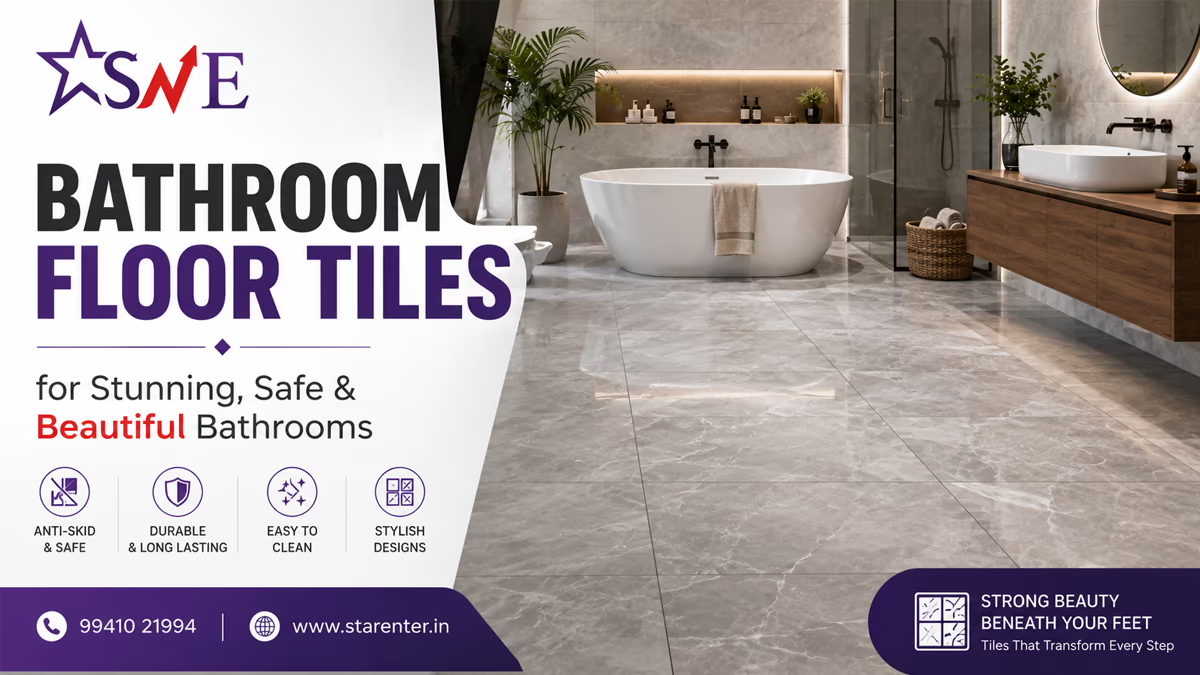
Introduction
A bathroom floor does a job no other floor in your home has to do: it stays wet, gets stepped on with bare, sometimes soapy feet, and has to look good doing it, every single day, for years. Choosing bathroom floor tiles isn’t the same decision as picking a tile for a living room or bedroom — safety, water resistance, and slip performance sit alongside colour and design as genuinely non-negotiable factors, not afterthoughts. This guide walks through everything worth knowing before you buy: tile types, safety and anti-skid considerations, finishes, sizes, colours, designs, shower-area specifics, maintenance, and a practical step-by-step way to plan the whole floor. And because floor tiles are one of those products where texture and true colour are genuinely hard to judge from a photo, we’ll also talk about why the final decision is best made in person — something you can do at Star Enterprises’ tiles showroom in West Tambaram, Chennai.
What Are Bathroom Floor Tiles?
Bathroom floor tiles are tiles specifically manufactured and rated for use underfoot in wet, high-moisture environments — a meaningfully different product category from bathroom wall tiles, even when the two look similar on a shelf. Floor tiles are tested for slip resistance under wet conditions, generally have a lower water-absorption rate, and are built to handle continuous foot traffic without cracking, chipping, or wearing down the way a decorative wall tile might over the same years of use.
The distinction matters more than most people realise during a renovation. A wall tile and a floor tile can come from the same design collection, share the same colour and pattern, and still have completely different safety ratings — one built to look good vertically where feet will never touch it, the other engineered to perform under exactly the wet, textured, weight-bearing conditions a bathroom floor experiences daily. If you’re coordinating a full bathroom, it’s worth exploring floor and wall options together — our bathroom wall tiles range pairs naturally with everything covered in this guide, but the two should never be treated as interchangeable products.
Why Choosing the Right Bathroom Floor Tiles Matters
It’s tempting to treat floor tile selection as a colour-matching exercise once the walls are decided — but the floor is arguably the highest-stakes surface in the entire bathroom, for reasons that go well beyond appearance.
Safety is the most obvious one. A bathroom floor is wet more often than any other floor in the house, and the wrong surface underfoot turns an ordinary morning routine into a genuine fall risk, particularly for older family members, young children, or anyone in the household with mobility concerns. This isn’t a minor design preference — it’s the single factor most likely to actually affect someone’s wellbeing, which is why we’ve dedicated an entire section further down this guide to it.
Water exposure is constant and unavoidable. Unlike a kitchen floor, which sees occasional spills, a bathroom floor is directly wet multiple times a day from showering, bathing, and general use — which means water absorption rate, not just surface appearance, has to factor into your decision.
Cleaning and long-term maintenance are shaped heavily by tile choice. Some finishes hide soap scum and water spots better than others; some grout lines trap grime more easily than others; some surfaces stay looking new for a decade, while others show wear within a couple of years of daily use.
Durability matters because a bathroom floor, unlike a decorative wall, takes real physical load — bare feet, dropped bottles, the occasional stool or bath caddy dragged across it. A tile that isn’t rated for floor use can crack or chip under this kind of everyday wear far sooner than a tile properly engineered for it.
Comfort is a quieter consideration but a real one — some floor tiles feel noticeably colder or harder underfoot than others, which matters if the bathroom is used first thing in the morning, barefoot, before the rest of the house has warmed up.
And finally, appearance still matters enormously — a bathroom floor sets the tone for the whole room from the ground up, and it’s entirely possible to get safety and durability right without sacrificing a genuinely beautiful finished look. The rest of this guide is built around helping you get all of these factors right together, not trading one off against another.
What Makes a Good Bathroom Floor Tile?
With safety, water exposure, cleaning, durability, comfort, and appearance all in play, it helps to have a simple practical checklist to evaluate any tile you’re considering:
- Confirmed floor/wet-area rating. Always check that a tile is explicitly rated for floor use in wet areas — don’t assume based on appearance alone.
- An appropriate slip-resistance rating for the specific zone. A general bathroom floor and a shower floor can reasonably use different products, with the shower area typically needing a higher slip-resistance specification.
- Low water absorption. Denser tile bodies (porcelain, vitrified) absorb less water over time, which helps prevent long-term surface and grout issues in a consistently damp room.
- A finish that balances grip and cleanability. Very heavily textured surfaces can improve slip resistance but may be marginally harder to clean in the texture’s grooves — this trade-off is worth discussing directly rather than assuming more texture is always better.
- A size and layout that suits your actual bathroom. Tile size affects grout-line frequency, visual scale, and how much cutting is needed around drains, fixtures, and corners.
- A colour and design that works with your walls, fittings, and available light. Practical performance and appearance are not competing goals — the right tile achieves both.
This checklist is exactly the kind of thing worth working through with someone who can show you actual product specifications rather than general marketing claims — a conversation that’s far easier to have in person, holding the tile, than trying to compare specification sheets from memory across multiple websites.
Best Types of Tiles for Bathroom Floors
Bathroom floor tiles are generally made from one of a few base materials, each with different strengths worth understanding before you shortlist a specific design.
Ceramic Floor Tiles
Ceramic remains a widely used, budget-friendly choice for bathroom floors, offering a broad range of colours, patterns, and textured finishes suited to wet-area use. It performs well for general bathroom floors when a floor-rated, appropriately textured product is chosen, and remains one of the more accessible entry points for homeowners balancing design ambitions against a defined renovation budget. Our full ceramic floor tiles range covers a variety of bathroom-suitable textures and finishes.
Porcelain Floor Tiles
Porcelain is denser and less porous than standard ceramic, giving it better long-term resistance to water absorption — a genuine practical advantage in a room that experiences near-constant moisture. It’s a step up in both durability and typical cost, and is frequently chosen for bathroom floors specifically because that lower porosity translates into better performance over years of daily wet use. Explore the range in our porcelain floor tiles collection.
Vitrified Floor Tiles
Vitrified tiles go through a high-temperature manufacturing process that fuses the material into an extremely low-porosity, highly durable surface — a strong choice for bathroom floors where long-term performance under constant moisture is the priority. Vitrified tiles are also available in a wide range of large-format and stone-look designs, letting you combine genuine durability with a premium finished appearance. Browse the full vitrified floor tiles range for bathroom-suitable options.
Full Body Vitrified Tiles
Full body vitrified tiles carry colour and pattern consistently through the entire thickness of the tile, not just as a surface layer — meaning that minor chips or heavy wear over time don’t reveal a different-coloured base material underneath, an advantage in a high-traffic wet area over many years of use. This makes them a particularly durable option for bathroom floors that need to look consistent for the long haul. See the complete full body vitrified tiles range for bathroom-appropriate designs.
Comparing Your Options
| Tile Type | Key Characteristics | Suitable Considerations |
|---|---|---|
| Ceramic | Wide design range, budget-friendly, good general performance when floor-rated | Strong choice for general bathroom floors on a defined budget |
| Porcelain | Denser, lower water absorption than ceramic, higher durability | Well suited to consistently wet bathroom floors and busy households |
| Vitrified | Very low porosity, highly durable, wide large-format and stone-look designs | Good fit where long-term durability and a premium look both matter |
| Full Body Vitrified | Colour consistent through full tile thickness | Particularly durable appearance under heavy long-term wear |
No single material is universally “best” — the right choice depends on your household’s usage, your budget, and how much of a priority long-term low-maintenance durability is versus upfront cost. This is genuinely one of the most useful conversations to have in person, where you can compare the actual weight, surface texture, and finish of each option side by side.
Anti-Skid & Safety: Choosing Floor Tiles You Can Trust Underfoot
Of everything covered in this guide, safety deserves the most direct attention, because a bathroom floor’s slip performance genuinely affects how safe the room is to use every single day.
Why bathroom floors become slippery. Water alone is part of the story, but soap residue, shampoo runoff, and humidity buildup all reduce a tile surface’s grip further than plain water would on its own. A glossy, highly polished tile — beautiful as it can look in photographs — is generally a poor choice for a bathroom floor specifically because that same reflective smoothness that catches the light also reduces the surface texture your feet rely on for grip.
Why surface finish matters more on floors than walls. On a wall, finish is a purely visual decision. On a floor, finish is a safety decision first and a visual one second — textured, matte, or specifically anti-skid-rated finishes give your feet meaningfully more grip than a smooth glossy surface, particularly once water is on the surface.
Wet-area and general bathroom floor considerations. Even outside the direct shower or bath zone, a bathroom floor stays damp for extended periods after use — condensation, splashback, and residual humidity all keep the floor wetter for longer than a quick glance around a “dry” bathroom area might suggest. Choosing an appropriately textured tile for the entire bathroom floor, not just the immediate wet zone, is a sensible default rather than an over-cautious one.
Shower-area considerations specifically. The area directly inside a shower enclosure experiences the highest and most sustained water exposure in the whole bathroom, and reasonably deserves the highest slip-resistance specification on the floor. Many homeowners choose a more heavily textured or specifically anti-skid-rated tile for this zone even when using a smoother option elsewhere in the bathroom.
Cleaning considerations. More heavily textured anti-skid surfaces can require slightly more attention to keep grime from settling into the texture over time, which is a reasonable trade-off worth planning for rather than a reason to avoid textured tiles altogether — a few extra minutes of regular cleaning is a small price for meaningfully better grip.
Why you should always check actual product specifications. Slip resistance is measured and rated by real testing standards, and it’s worth asking directly for a tile’s specific rating rather than relying on visual impressions of “textured-looking” tiles. Not every tile marketed as suitable for bathrooms carries the same tested slip-resistance performance, and not every anti-skid tile is equally slip-proof under every condition — asking to see the actual specification, and discussing your specific bathroom’s needs, is the only reliable way to choose correctly. Our dedicated anti-skid bathroom tiles range is built specifically around this need, with options suited to both general bathroom floors and higher-exposure shower zones, and it’s worth exploring alongside your general bathroom floor tile shortlist rather than as a separate, later decision.
Bathroom Floor Tile Finishes
Finish is where safety and appearance meet most directly on a bathroom floor, and it’s worth understanding the trade-offs of each before deciding.
Matte Finishes
Matte surfaces generally offer better grip than glossy alternatives and are a common default recommendation for bathroom floors specifically because that lack of reflective smoothness translates into meaningfully better underfoot traction, especially once wet.
Textured Finishes
Deliberately textured surfaces — sometimes with a visible grain, ridged pattern, or subtly raised surface — offer the strongest slip resistance of the common finish categories, making them a frequent choice for shower-zone flooring or households prioritising safety above all else.
Glossy Finishes — Where They Do and Don’t Belong
Glossy tiles are a poor fit for bathroom floors generally, precisely because the same shine that looks appealing reduces surface grip. Where a glossy look is genuinely desired, it’s far better reserved for bathroom walls — see our bathroom wall tiles guide — while the floor uses a matte or textured product instead. This distinction between wall-tile appearance preference and floor-safety requirement is one of the most important things to get right in a bathroom renovation, and it’s a mistake worth actively avoiding rather than discovering after installation.
| Finish | Appearance | Bathroom Considerations |
|---|---|---|
| Matte | Understated, contemporary, non-reflective | Good general-purpose choice for bathroom floors; solid everyday grip |
| Textured | Visible grain or surface pattern | Strongest grip; well suited to shower zones and safety-first households |
| Glossy | Reflective, bright, polished look | Best reserved for walls; generally unsuitable for bathroom floors |
Bathroom Floor Tile Sizes
Floor tile size shapes a bathroom’s appearance and practicality in several interconnected ways. Larger-format tiles reduce the number of grout lines across the floor, generally reading as a cleaner, more spacious, more contemporary look — a trend that’s held strong across bathroom sizes in recent years, including smaller bathrooms where instinct once pushed toward smaller tiles.
Smaller tiles and mosaics still play a genuinely useful role, particularly in shower floors, where a smaller tile format allows for the slight slope needed for water drainage — something a single large-format tile can’t easily accommodate in a shower base. It’s common, and often the most practical solution, to use a larger-format tile across the main bathroom floor and a smaller mosaic specifically within the shower drainage area.
Grout-line frequency also affects cleaning: more grout lines mean more seams where grime and moisture can collect over time, which is one more reason larger-format tiles have become the more common recommendation for general bathroom floor areas outside the shower zone itself. That said, installation planning matters too — larger tiles require a more level subfloor to sit correctly, and this is worth discussing with your tiler before finalising a size purely based on visual preference.
In smaller bathrooms specifically, a well-chosen larger tile can genuinely make the room read as more open, while an overly busy small-tile layout can make the same space feel more cramped — the same underlying principle covered in more depth in our small bathroom tiles guide, which applies equally to floor and wall choices in a compact room.
Bathroom Floor Tile Colours
Floor colour interacts closely with wall colour, lighting, and fixtures to set the overall mood of a bathroom, and it’s worth thinking about deliberately rather than as a final afterthought once everything else is chosen.
Light colours — pale grey, soft beige, off-white — tend to make a bathroom floor feel less visually heavy and help a room feel larger and brighter, particularly useful where natural light is limited. They also tend to show dust and hair more visibly on a day-to-day basis, which is worth factoring into your realistic cleaning routine.
Dark colours — charcoal, deep grey, near-black — create a strong grounding effect and can look genuinely striking, especially paired with lighter walls, but tend to show water spots, soap residue, and mineral deposits more visibly than mid-tone colours, particularly in a glossy or semi-glossy finish.
Neutral tones — mid-grey, warm taupe, soft stone shades — are consistently the most forgiving choice for a bathroom floor specifically because they hide both dust and water marks reasonably well while still looking deliberately styled rather than purely practical.
Earthy tones — warm terracotta, sandy beige, muted clay shades — bring warmth and a more organic, natural character to a bathroom, and pair particularly well with stone-look or textured tile finishes.
Patterned floor options — geometric or Moroccan-inspired patterned floor tiles — can act as a genuine design statement on their own, often used deliberately with plain, unpatterned walls so the floor becomes the room’s clear focal point rather than competing with a patterned wall for attention.
Floor colour should always be considered alongside your wall tile plan, available lighting, and chosen fixtures rather than in isolation — our dedicated bathroom tile colours guide goes deeper into how specific colour combinations perform under different lighting conditions, and is worth reading alongside this section before finalising a floor colour.
| Colour Direction | Visual Effect | Maintenance Consideration |
|---|---|---|
| Light (white, pale grey, beige) | Brighter, more spacious feel | Shows dust/hair more visibly; needs more frequent sweeping |
| Dark (charcoal, near-black) | Bold, grounding, dramatic | Shows water spots and residue more visibly, especially if glossy |
| Neutral/mid-tone (grey, taupe) | Balanced, versatile, understated | Generally the most forgiving day-to-day maintenance |
| Earthy (terracotta, sand) | Warm, natural, organic | Pairs well with textured finishes; moderate maintenance |
Bathroom Floor Tile Designs
Beyond colour and finish, the overall design direction of your floor tiles shapes the bathroom’s entire character. A few directions worth considering:
Minimalist floor designs use a single plain tile, laid simply, letting the material’s natural texture and colour speak for itself without pattern — a dependable, timeless approach that pairs well with almost any wall tile decision.
Modern and contemporary directions typically favour large-format tiles, neutral or monochrome palettes, and minimal grout lines, often paired with a bold single wall feature to provide visual contrast against an otherwise understated floor.
Natural stone-inspired designs — marble-look, travertine-look, or slate-look porcelain and vitrified tiles — bring a premium, organic aesthetic to the floor without the sealing and staining concerns real stone can bring to a genuinely wet room.
Geometric and patterned floor designs bring genuine personality and are particularly effective in guest bathrooms or powder rooms where daily practical wear matters slightly less than the first impression the space makes.
Neutral and understated directions favour tone-on-tone colour schemes and subtle texture over strong pattern — a popular choice for master bathrooms intended to feel calm and spa-like rather than visually busy.
Luxury-inspired designs often combine large-format stone-look tiles with minimal grout lines, coordinated wall tiling, and a deliberately restrained colour palette — the overall effect relying more on material quality and finish consistency than on pattern or colour boldness. For a much deeper dive into design direction and inspiration across bathroom styles, our bathroom tile design guide covers this in far more visual detail than this floor-focused section can.
Coordinating Floor Tiles with Wall Tiles
A bathroom’s floor and walls are viewed together, not separately, and the strongest results come from planning both at the same time rather than choosing one and then trying to match the other to it afterward. Floor and wall tiles don’t need to be identical — in fact, an exact match across every surface can flatten a bathroom’s sense of depth and make it harder to tell where one surface ends and the other begins.
What matters more is coordination: similar undertones between floor and wall, complementary rather than competing finishes, and a shared design language even where the specific tiles differ. A dependable, widely used approach is a lighter, glossier wall tile paired with a slightly darker, textured floor tile — the wall keeps the room feeling open and bright, while the floor grounds the space visually and provides the grip a wall tile isn’t required to.
Grout colour should be planned across both surfaces together too — a seamless, low-contrast grout on both floor and wall creates a calmer, more unified look, while a deliberately contrasting grout on one surface (commonly the floor, to define a pattern like herringbone or brick bond) can add visual interest without disrupting the walls. If you’re planning both together, our bathroom wall tiles range is worth browsing alongside this floor guide, ideally in the same shopping session rather than as two separate decisions made weeks apart.
Small Bathroom Floor Tile Guidance
Compact bathrooms benefit from a few specific floor strategies. A single, light-coloured, large-format tile laid with minimal cutting tends to make a small bathroom floor feel larger and less visually broken up than a smaller tile grid would in the same space. Keeping grout colour close to the tile colour, rather than in high contrast, reduces the number of visible lines the eye picks up, reinforcing that same sense of openness.
Pattern, where used at all in a small bathroom floor, is generally best kept subtle — a soft geometric texture rather than a bold, high-contrast design that can visually shrink a compact room rather than enhance it. Lighting also plays a bigger role in small bathrooms than larger ones, since there’s less natural light to begin with — a lighter floor colour helps reflect what light is available rather than absorbing it. Our dedicated small bathroom tiles guide covers these layout tricks in considerably more depth, including specific advice for both floor and wall choices in compact spaces.
Large Bathroom Floor Tile Guidance
Larger bathrooms open up design options that simply aren’t practical in a compact space. Larger-format tiles — including oversized formats well beyond what’s sensible in a small bathroom — read as genuinely luxurious when there’s enough floor area for the scale to register properly. Zoning becomes a realistic option too: a change in tile pattern, colour, or orientation can be used to visually separate a wet shower zone from a drier vanity area without a physical wall dividing the space.
Feature areas — a change of tile within a freestanding bath surround, or a distinct pattern beneath a double vanity — work particularly well in larger bathrooms where there’s enough surrounding plain floor to let the feature genuinely stand out rather than compete for attention. Floor-to-wall visual continuity also becomes a more powerful design tool at scale — carrying a similar tone from floor onto a lower wall section, for instance, can make an already spacious bathroom feel even more cohesive and deliberately designed rather than assembled piece by piece.
Shower Area Floor Considerations
The shower floor deserves separate attention from the rest of the bathroom floor, since it experiences meaningfully different conditions. Water exposure here is constant and direct rather than occasional splashback, which pushes both slip-resistance and water-absorption requirements higher than the general bathroom floor needs.
Drainage is a genuine design constraint, not just a plumbing detail — shower floors need a slight slope toward the drain, which is much easier to achieve with smaller tiles or mosaic sheets than with a single large-format tile, since more grout lines allow the floor to be laid at a gradual gradient without visibly awkward tile cuts. Texture matters more here than almost anywhere else in the bathroom, given the combination of constant water, soap, and bare feet — a more heavily textured or specifically anti-skid-rated tile is a sensible default for this zone specifically.
Cleaning a shower floor also deserves realistic planning — the combination of soap residue, water, and (in hard water areas) mineral deposits means shower floors typically need more frequent attention than the rest of the bathroom floor, regardless of which tile is chosen. Installation quality matters enormously here too — a shower floor that isn’t sloped and sealed correctly can develop pooling or leakage issues regardless of how good the tile itself is, which is worth confirming directly with your installer rather than assuming it will be handled correctly by default.
Bathroom Floor Tile Maintenance & Cleaning
Long-term maintenance is shaped as much by daily habits as by the tile itself. Regular sweeping or dry-mopping before wet-cleaning prevents grit from scratching the tile surface over time, particularly relevant for matte and honed finishes, which can show fine scratches more visibly than a glossy surface would.
A mild, non-abrasive cleaner is generally the safest everyday choice — harsh acidic or abrasive cleaners can gradually dull certain finishes and, over time, wear down grout lines faster than necessary. Grout itself benefits from periodic resealing in a bathroom floor specifically, since it’s exposed to near-constant moisture and is more prone to staining or minor deterioration than grout in drier parts of the home.
For textured or anti-skid floor tiles, an occasional deeper clean with a soft brush helps clear any grime that’s settled into the texture, keeping both the appearance and the slip-resistance performance consistent over years of use rather than gradually degrading as residue builds up unnoticed. None of this is complicated, but knowing it upfront helps you choose a tile and finish that realistically matches the maintenance routine your household will actually keep up with.
A Step-by-Step Bathroom Floor Renovation Guide
- Measure the space. Get an accurate total floor area, noting any irregular corners, fixture footprints, and the shower zone separately.
- Identify wet zones. Mark out the shower area and any other consistently wet zones distinctly from the general bathroom floor — they may warrant a different tile or finish.
- Decide the design direction. Choose a broad style — minimalist, contemporary, natural stone-inspired, patterned — before narrowing down to specific tiles.
- Choose appropriate floor-tile characteristics. Prioritise a confirmed floor rating and appropriate slip-resistance for each zone before finalising colour or pattern preferences.
- Coordinate wall tiles. Plan floor and wall together rather than sequentially, checking undertones and finishes work as a pair.
- Compare colours. Shortlist 2–3 floor colour directions and view them against your planned wall tile and fixtures.
- Compare sizes. Decide on a general floor format and a separate, smaller format for the shower drainage zone if needed.
- Check actual product specifications. Confirm floor rating, water absorption, and slip-resistance rating directly rather than relying on visual impressions alone.
- Estimate quantity with professional guidance. Measure carefully and add a reasonable buffer — commonly around 10% — for cutting wastage, breakage, and future repairs.
- Review the complete tile combination before purchase. Look at floor, wall, and grout choices together, ideally under lighting similar to your actual bathroom, before finalising the full order.
Explore Bathroom Floor Tiles at Star Enterprises — Tambaram, Chennai
Photographs and product listings only tell part of the story with floor tiles — texture, true colour, and how a finish actually feels underfoot are things you genuinely need to experience in person rather than judge from a screen. This is especially true for bathroom floors, where the practical difference between a matte and a lightly glossy finish, or between two slip-resistance ratings, can be hard to appreciate without holding the actual tile.
At Star Enterprises’ tiles showroom in West Tambaram, Chennai, homeowners researching bathroom floor tiles can explore a range of materials, finishes, sizes, and designs in person, compare floor options against coordinating wall tiles in the same visit, and ask direct questions about slip-resistance ratings and suitability for their specific bathroom layout — whether that’s a compact attached bathroom, a larger master bathroom, or a full renovation involving several bathrooms at once.
There’s no pressure to decide on the spot. Many customers visit to shortlist a few options, take samples home to check colour and texture under their own bathroom lighting, and return once they’re confident in the decision — an approach that consistently produces better long-term satisfaction than choosing quickly under time pressure at the tail end of a renovation timeline.
[VERIFY BEFORE PUBLISHING: exact showroom address, phone number, and opening hours to be inserted here, matched exactly to the Google Business Profile listing.]
Frequently Asked Questions
What is the best type of tile for a bathroom floor?
Porcelain and vitrified tiles are generally the strongest all-round choices for bathroom floors, thanks to their low water absorption and durability, though a well-chosen, floor-rated ceramic tile also performs well for many households on a more moderate budget. The right choice depends on your specific bathroom’s usage and budget more than any single “best” answer.
Are anti-skid tiles necessary for every bathroom floor?
An appropriately textured, floor-rated tile with reasonable slip resistance is recommended for the general bathroom floor, with a higher slip-resistance rating specifically worth prioritising for the shower zone, where water exposure is greatest. Explore our anti-skid bathroom tiles range for options suited to both zones.
Should bathroom floor tiles be matte or glossy?
Matte or textured finishes are strongly preferred for bathroom floors because they offer meaningfully better grip than glossy surfaces, particularly once wet. A glossy finish is better reserved for bathroom walls rather than the floor.
What size floor tiles work best in a bathroom?
Larger-format tiles are generally recommended for the main bathroom floor, since fewer grout lines create a cleaner, more spacious look and are easier to keep clean. Smaller tiles or mosaics remain the practical choice specifically within the shower drainage zone, where a slight slope toward the drain is needed.
What colours are best for a bathroom floor?
Neutral, mid-tone colours tend to be the most forgiving choice day to day, hiding both dust and water marks reasonably well. Lighter colours brighten a room but show dust more visibly, while darker colours look dramatic but show water spots more readily, especially in a glossier finish.
How do I choose floor tiles for a small bathroom?
A single, light-coloured, large-format tile with minimal grout lines is usually the most effective way to make a small bathroom floor feel more open. Our small bathroom tiles guide covers additional layout strategies specific to compact spaces.
How should I clean and maintain bathroom floor tiles?
Regular sweeping before wet-cleaning, a mild non-abrasive cleaner for routine cleaning, and periodic grout resealing in a bathroom’s consistently damp environment will keep most bathroom floor tiles looking and performing well for years.
Should bathroom floor tiles match the wall tiles?
They don’t need to match exactly — coordinated undertones and a shared design language typically produce a more visually interesting result than an identical match across every surface. See our bathroom wall tiles guide for coordination ideas.
Where can I explore bathroom floor tiles in Tambaram?
At Star Enterprises’ tiles showroom in West Tambaram, Chennai, where a range of bathroom floor tile materials, finishes, sizes, and designs can be viewed and compared in person before you decide.
Ready to Choose Your Bathroom Floor Tiles?
A bathroom floor has to work harder than almost any other surface in the home — safe underfoot every single day, resistant to constant moisture, easy to maintain, and good-looking enough to set the tone for the whole room. Getting all of that right is genuinely easier with the tile in your hand than on a screen, which is exactly the experience Star Enterprises’ tiles showroom in West Tambaram, Chennai, is built around.
Whether you’re planning one bathroom or renovating several, our team can talk through slip-resistance ratings, coordinate floor and wall choices in the same visit, and help you leave with a decision you’re genuinely confident will hold up for years, not just look good in a photo. Browse examples of past work in our portfolio, or find full showroom details on our tiles showroom in Tambaram page, and visit whenever suits you.