
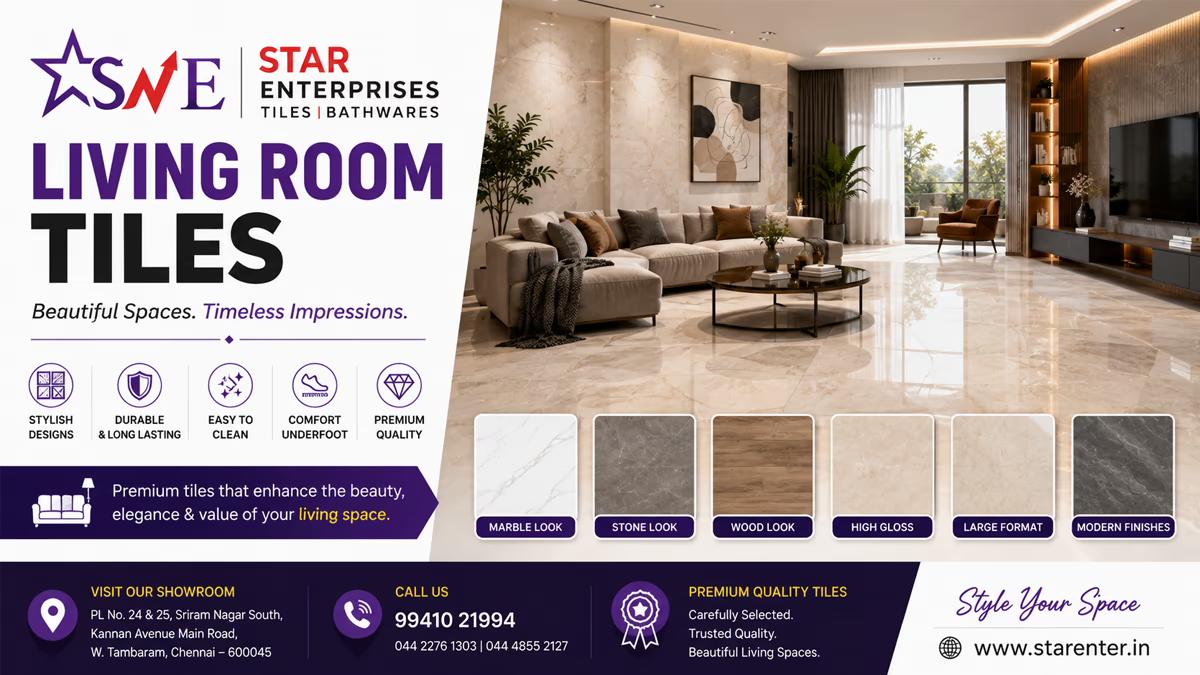
Introduction
Living room tiles do more work than almost any other surface choice in a home. They set the visual tone the moment someone walks in, they run under every piece of furniture in the room, and they need to hold up to daily foot traffic for years without needing attention. Getting the choice right means balancing four things at once: how the tile looks, how large or small it makes the room feel, how it coordinates with your furniture and walls, and how much upkeep it actually needs.
This guide covers living room tiles as a whole — material, design, colour, size, finish, furniture coordination and practical selection — so you can plan the room with a clear decision process rather than choosing on appearance alone. If you want a deeper, flooring-specific breakdown, our dedicated living room floor tiles guide goes further into that topic; this page is the starting point for the full living room tile picture.
What Are Living Room Tiles?
“Living room tiles” refers to the tiled flooring used across a living or family room, along with any tiled feature areas within it — an entryway strip, a media-wall accent, or a transition zone in an open-plan layout. Unlike a bathroom or kitchen, a living room’s tile choice is judged almost entirely on flooring performance and appearance, since walls in this room are rarely tiled.
- Flooring is the primary application — the single largest continuous surface in most living rooms.
- Interior appearance — because the floor is visible under every piece of furniture, its colour and finish influence the room’s overall mood more than almost any other single decision.
- Visual continuity — in open-plan homes, living room tiles often continue into a dining or kitchen area, so the choice affects more than just one room.
- Maintenance — living rooms see continuous daily use, so how the tile wears and cleans over time matters as much as how it looks on day one.
- Overall room design — tile tone and finish work alongside walls, furniture and lighting as one coordinated design decision, not an isolated purchase.
Why Living Room Tile Selection Matters
- Appearance — the floor is the largest visible surface in the room and directly shapes how the whole space reads.
- Durability — living rooms see constant footfall, furniture movement, and general daily use, so the tile needs to perform over the long term, not just look good at installation.
- Maintenance — dust, everyday spills, and general household traffic all affect how much upkeep a tile realistically needs.
- Furniture coordination — sofas, coffee tables, TV units and rugs all sit on or near the floor, so tile tone needs to work with what’s already in the room or planned for it.
- Lighting — natural and artificial light both change how a tile colour and finish actually read in the room.
- Room proportions — tile size and layout can visually expand or contract how spacious a living room feels.
- Long-term usability — living room floors are replaced far less often than furniture or paint, so the tile choice tends to outlast several rounds of other updates.
- Design consistency — especially in open-plan homes, the living room tile often sets the tone that adjoining spaces need to work with.
What Makes a Good Living Room Tile?
There’s no single “best” living room tile — the right choice depends on your room’s specific conditions. A few factors consistently matter, though how they combine is particular to each home:
- Material — ceramic, porcelain, vitrified and full-body options each offer a different balance of appearance and durability.
- Size — should suit the room’s actual dimensions, not just current trends.
- Colour — needs to work with existing or planned furniture, walls and lighting.
- Finish — matte, polished, glossy or textured, chosen for both look and practicality.
- Design — plain, patterned, marble-look, stone-look or wood-look, matched to your interior style.
- Room size — influences which tile formats and layouts will actually look proportionate.
- Traffic — a family living room with heavy daily use has different durability needs than a formal, rarely-used sitting room.
- Maintenance — realistic cleaning expectations based on household routine.
- Installation — larger formats and intricate patterns require more planning and skilled installation than simple layouts.
Best Types of Tiles for Living Rooms
Ceramic Tiles
Ceramic tiles offer a wide range of colours, patterns and finishes, making them a flexible option for living room floors and feature areas. Explore our full ceramic tiles range, or see ceramic floor tiles specifically for flooring applications.
Porcelain Floor Tiles
Porcelain is a denser tile option often chosen for living rooms where a harder-wearing floor is a priority, particularly in high-traffic households. Browse porcelain floor tiles for options suited to living room flooring.
Vitrified Floor Tiles
Vitrified tiles go through a manufacturing process that reduces porosity, which is one reason they’re frequently considered for living room floors that see regular use and cleaning. See vitrified floor tiles to compare living-room-suitable options.
Full Body Tiles
Full body tiles carry colour consistently through the entire thickness of the tile, which some households prefer for high-traffic floors since surface wear is less visible over time. Explore full body tiles where this characteristic is relevant to your living room plans.
Full Body Vitrified Tiles
Full body vitrified tiles combine the through-body colour consistency of full body tiles with the lower porosity of vitrified manufacturing. See full body vitrified tiles for living room flooring options in this category.
Double Charge Vitrified Tiles
Double charge vitrified tiles use a two-layer surface application to achieve pattern depth beyond a single printed layer. Browse double charge vitrified tiles if this level of surface detail suits your design direction.
| Material | Typical Living Room Use | Main Advantage | Selection Consideration |
|---|---|---|---|
| Ceramic | Floors, feature areas | Wide colour and pattern range | Compare finish options for daily-use durability |
| Porcelain | Floors, higher-traffic living rooms | Denser, harder-wearing surface | Confirm finish for the room’s light levels and traffic |
| Vitrified | Floors | Lower porosity, easier long-term cleaning | Compare finish and pattern depth against budget |
| Full Body / Full Body Vitrified | High-traffic floors | Colour consistent through tile thickness | Weigh against standard vitrified based on traffic levels |
| Double Charge Vitrified | Design-focused floors | Greater surface pattern depth | Compare cost against standard vitrified options |
Living Room Floor Tiles
As the single largest surface in the room, the floor deserves its own focused thinking within the broader tile decision:
- Foot traffic — living rooms are among the most-used spaces in a home, so floor durability is a genuine priority.
- Maintenance — dust and everyday marks show differently depending on tile tone and finish.
- Visual continuity — especially where the living room opens into a dining or hallway area, a continuous tile choice avoids visual breaks between spaces.
- Size — larger formats reduce grout-line visibility across a big open floor; smaller formats can suit more compact rooms or feature zones.
- Finish — matte and satin finishes are common for living room floors, balancing appearance with everyday practicality.
- Colour — needs to be planned alongside furniture and wall tones rather than chosen in isolation.
- Furniture — heavier furniture pieces are usually placed once and moved rarely, so floor tone should work with your actual furniture plan, not just an empty room.
- Installation — larger tiles and intricate layouts need more careful planning, particularly around room transitions and doorways.
For a deeper, flooring-specific walkthrough — including layout and installation guidance — see our full living room floor tiles page.
Modern Living Room Tile Designs
- Minimalist — large-format tiles in a single neutral tone with minimal visible grout, for an uninterrupted, calm floor.
- Contemporary — a considered mix of plain flooring with one deliberate design element, such as a patterned entry strip or feature rug zone.
- Marble-look — tiles that replicate marble’s veining and sheen, giving a premium appearance without the maintenance concerns of natural marble.
- Stone-look — textured, earthy-toned tiles suited to natural or grounded interior schemes.
- Concrete-look — muted grey tones with a flat, understated finish, often used in industrial or contemporary interiors.
- Wood-look — tiles that replicate timber grain and tone, offering a warm floor appearance with tile-level durability and cleaning.
- Geometric — angular or patterned layouts, typically reserved for a feature zone rather than the whole floor.
- Neutral — soft whites, greys and beiges that work as a long-lasting base for changing furniture and décor.
- Textured — tiles with a tactile surface that add depth to an otherwise plain colour scheme.
- Patterned — printed or geometric designs used for accent areas rather than across an entire large floor.
- Luxury-inspired — large-format, high-finish tiles with minimal grout, often extending seamlessly between rooms.
Living Room Tile Colours
- White — maximises brightness and reflects the most light, though it shows dust and marks more readily than darker tones.
- Cream and beige — warm neutrals that soften a room and pair well with wood furniture.
- Grey — a versatile, contemporary neutral that hides everyday marks better than white.
- Taupe — a warm grey-brown that bridges neutral and earthy palettes.
- Brown — grounds a room and suits traditional or earthy interior schemes.
- Black — used sparingly, often for a feature strip or contrast border rather than the full floor.
- Earthy tones — terracotta and warm browns suited to natural, grounded interiors.
- Neutral palettes — favoured where furniture or an accent wall already carries a strong colour, letting the floor recede.
- Contrasting combinations — a light floor against dark furniture, or vice versa, creates deliberate visual definition.
Colour interacts directly with several other factors in the room: natural light (rooms with less daylight benefit from lighter floors), artificial lighting (warm-toned lighting shifts how a tile colour reads compared to cool-toned lighting), furniture tone, wall colour, curtains, and any cabinetry or built-in units already in the space.
Living Room Tile Sizes
- Small formats add texture through more grout lines and can suit smaller rooms or accent zones.
- Medium formats remain a practical, widely used choice for standard living rooms, balancing installation ease with a clean look.
- Large formats reduce grout-line visibility and can make a room feel more open and continuous, though they require more careful planning around room shape, doorways and furniture placement.
Larger formats can visually reduce grout lines and often suit open, modern layouts — but this doesn’t make them universally “better” than smaller formats, which remain a practical, proven choice in many rooms, particularly where layout complexity or budget favours them.
Living Room Tile Finishes
| Finish | Effect | Consideration |
|---|---|---|
| Matte | Softer look, absorbs light | Shows fewer reflections; a practical everyday choice for busy living rooms |
| Glossy | Reflects light, can brighten a room | Shows dust and footprints more visibly than matte |
| Polished | High-shine, premium appearance | Requires more regular attention to maintain its shine |
| Textured | Adds tactile depth and visual interest | Can require more attention when cleaning than smooth finishes |
No single finish is universally best — the right one depends on how much light the room gets, how the space is used day to day, and how much time you want to spend on upkeep.
Large Tiles for Living Rooms
Large-format tiles have become a popular choice for living rooms because they reduce the number of visible grout lines, which can make a floor read as one continuous, spacious surface. This effect is genuine, but it comes with practical caveats: large tiles need a flat, well-prepared subfloor, more careful cutting around room edges and doorways, and generally more skilled installation than smaller formats. They can also be heavier and more prone to breakage if mishandled during transport or laying. None of this makes large tiles unsuitable — it simply means they need to be planned for, not assumed to be a drop-in upgrade over any other size.
Small Living Room Tile Ideas
- Light colours reflect more light and reduce the visual weight of the floor.
- Visual scale — a tile that’s too small can make a compact room feel busy, while an oversized tile can look disproportionate; a medium format is often the safer middle ground.
- Layout — a straight-lay pattern generally reads as calmer than a diagonal or heavily patterned layout in a small space.
- Lighting — a satin or light-reflective finish can help bounce available light around a compact room.
- Grout — a grout tone close to the tile colour avoids visually chopping up the floor.
- Furniture — lighter furniture legs and lower-profile pieces let more floor show through, reinforcing the open feel a lighter tile is meant to create.
- Continuity — carrying the same tile into an adjoining hallway or dining area removes a hard visual break that can make a small living room feel more enclosed.
Living Room Tiles for Large Spaces
- Zoning — a tile transition, border, or change in pattern can help define seating, media and dining zones within one large open room.
- Feature areas — larger floors give more room for a genuine feature-tile moment, such as a patterned rug-style inset.
- Large formats can be used more freely without the layout constraints a compact room imposes.
- Patterns and contrast read well at scale in a way they might not in a smaller room.
- Open-plan spaces — a consistent tile across living, dining and kitchen areas helps a large open-plan layout feel unified rather than fragmented.
- Visual continuity — with more floor visible at once, tone consistency across the space becomes more important than in a smaller, furniture-filled room.
How to Match Tiles with Furniture
- Sofa — a neutral floor gives more flexibility for a bold sofa colour later; a patterned or dark floor calls for a simpler sofa choice.
- Coffee table — glass and light wood tables tend to keep a floor visible and prominent, so floor tone matters more with these than with a solid, opaque table base.
- TV unit — dark TV units can visually anchor a light floor; light units on a light floor can feel visually flat without a rug or contrast element.
- Curtains — curtain tone should sit somewhere between the wall and floor colour for a cohesive look, rather than competing with either.
- Rugs — a rug is one of the easiest ways to introduce pattern or colour without committing to it at floor-tile level.
- Wall colour — a light floor with a mid-tone wall creates gentle contrast; a light floor with light walls creates a more expansive, airy feel.
- Lighting — warm-toned lighting fixtures can shift how a cool-grey floor reads, so it’s worth viewing samples under your room’s actual lighting.
- Flooring transitions — where the living room meets carpet, wood, or another room’s flooring, plan the transition point before finalising tile size and layout direction.
How to Match Tiles with Wall Colours
- Tonal matching — a floor and wall in the same colour family (e.g., warm beige floor, soft cream wall) creates a cohesive, calm room.
- Contrast — a distinctly different floor and wall tone creates definition and can help a room feel more intentional and designed.
- Neutral combinations — pairing a neutral floor with a neutral wall keeps the room flexible for furniture and décor changes over time.
- Warm vs. cool palettes — mixing warm-toned flooring with cool-toned walls (or vice versa) can create visual tension; keeping both in the same temperature family is generally safer for a cohesive look.
- Visual balance — a very bold floor generally calls for calmer walls, and a bold wall colour or accent generally calls for a simpler, more neutral floor.
Living Room Tiles for Different Interior Styles
Modern
Large-format neutral tiles, minimal grout visibility, and a restrained material palette with one deliberate design element rather than several competing ones.
Minimalist
A single tile tone carried across the whole floor, near-invisible grout lines, and no more than one textural variation in the entire room.
Contemporary
A mix of matte flooring with one accent — a patterned entry strip, a textured feature zone, or a deliberate colour contrast against furniture.
Classic
Warmer tones, symmetrical layouts, and finishes that read as timeless rather than trend-driven.
Traditional
Rich, warm colours, classic patterns used sparingly, and tile choices that coordinate with heavier, more ornate furniture styles.
Luxury-Inspired
Large-format marble-look tiles, minimal grout, and a floor that reads as continuous and premium, often paired with polished or high-satin finishes.
Natural / Earthy
Stone-look or wood-look tiles in warm, muted tones, often paired with textured finishes for a grounded, organic feel.
Industrial
Concrete-look tiles in muted greys, kept deliberately understated, paired with exposed or raw-material furniture and fixtures.
Marble-Look Living Room Tiles
Marble-look tiles have become popular for living rooms because they offer the veined, high-end appearance associated with natural marble, achieved through printed or digitally reproduced patterns on a standard tile base. This makes them a practical alternative for homeowners who want the visual effect without some of the maintenance considerations that come with genuine natural stone. When choosing a marble-look tile, pay attention to veining direction and colour consistency across boxes, and coordinate the tone with furniture and wall colours the same way you would any other tile. It’s worth being clear with yourself and any installer that a marble-look tile is a tile with a marble-inspired surface pattern — not natural marble with marble’s specific material properties.
Stone-Look Living Room Tiles
Stone-look tiles bring a natural, textured appearance into the living room without the sourcing and maintenance considerations of genuine stone. They suit earthy, contemporary, or natural-leaning interiors particularly well, and their texture can add visual depth to an otherwise plain colour scheme. As with any textured finish, factor in slightly more attention during cleaning compared to a smooth surface.
Wood-Look Living Room Tiles
Wood-look tiles replicate timber grain and tone while offering tile-level durability and straightforward cleaning — an appealing combination for households that like the warmth of a wood floor but want tile-level practicality. They coordinate naturally with wood furniture and warm-toned interiors, though it’s worth viewing a sample in person, since grain pattern and tone can vary meaningfully between products marketed under the same general description.
Patterned Living Room Tiles
Patterned tiles work well as a feature element — an entryway strip, a media-wall base, or a defined zone within an open-plan layout — rather than across an entire large floor. Used sparingly, pattern adds character and helps define zones without competing with furniture and décor. In a room that already has busy furnishings, patterned walls, or a bold rug, it’s generally worth keeping the tile itself simpler to avoid visual overload; save pattern for whichever single element you want to be the room’s focal point.
How to Choose Living Room Tiles Step by Step
- Measure the room — get accurate floor dimensions, including any adjoining open-plan areas.
- Understand room usage — a high-traffic family living room has different durability needs than a rarely used formal sitting room.
- Assess natural light — note how much daylight the room gets and at what time of day, since this affects colour and finish choices.
- Decide interior style — modern, traditional, minimalist or another direction that fits the rest of the home.
- Choose colour direction — with walls, furniture and lighting in mind, not the tile in isolation.
- Select tile type — ceramic, porcelain, vitrified, full body, or another material suited to your traffic and budget.
- Choose size — appropriate to the room’s proportions and your preferred visual scale.
- Choose finish — matched to lighting, cleaning realities, and visual preference.
- Coordinate with furniture — bring fabric swatches or photos of existing or planned furniture when comparing tiles.
- Coordinate with walls — check tile tone against your actual wall colour, not just a general shade description.
- Review sample tiles — see and compare actual samples in the room’s own lighting where possible.
- Plan quantity and installation — confirm area, wastage allowance and installation requirements with your supplier or installer.
- Confirm actual product specifications — verify size, finish and material details directly rather than assuming from a photo.
- Review the final combination — look at floor, wall and furniture samples together before finalising the order.
Living Room Tile Maintenance
- Routine cleaning — regular sweeping and mopping keeps most living room tiles looking their best.
- Dust — matte and textured finishes can show dust build-up differently than glossy or polished surfaces; factor this into your realistic cleaning routine.
- Spills — wiping up spills promptly helps prevent marks, particularly on more porous or textured finishes.
- Grout — grout lines are generally more porous than the tile itself and benefit from periodic attention to prevent discolouration over time.
- Suitable cleaning methods — match your cleaning approach to the specific tile and finish; a method suited to a matte tile may not suit a polished one.
- Manufacturer recommendations — check the specific care guidance for your chosen tile before settling on a routine cleaning product.
- Long-term care — periodic deeper cleaning of grout lines and high-traffic zones helps maintain the floor’s appearance well beyond installation.
Common Living Room Tile Mistakes
- Choosing tiles by appearance alone, without considering how the room’s lighting and traffic will affect the result.
- Ignoring room lighting — selecting a tile under showroom lighting without checking how it reads under your own room’s natural and artificial light.
- Wrong tile scale — a tile size that doesn’t suit the room’s actual proportions, either too small and busy or too large and impractical to install well.
- Excessive pattern use — applying a bold patterned tile across an entire large floor rather than reserving it for one feature zone.
- Poor furniture coordination — finalising a tile before considering how it will look against existing or planned furniture and rugs.
- Ignoring grout — treating grout colour as an afterthought when it visibly affects the finished look.
- Selecting without samples — relying on a catalogue photo instead of viewing an actual sample in person.
- Buying insufficient quantity — underestimating the area needed and having to order a top-up batch that may not perfectly match in shade.
- Failing to account for cuts — not allowing for wastage around room edges, doorways and any awkward angles.
- Choosing a finish without considering maintenance — picking a high-polish tile without weighing the extra care it needs to keep its shine.
How Much Tile Do You Need?
Living room tile quantity follows a simple underlying logic: measure the area, add an appropriate wastage allowance, then round up to full box quantities.
- Measure the room accurately, including any adjoining open-plan area using the same tile.
- Calculate base coverage from that measurement.
- Add a wastage allowance to account for cuts around doorways, corners and any awkward angles, plus breakage during handling and installation.
- Round up to full boxes, since tiles are typically sold by the box.
We won’t state a universal wastage percentage here, since the right allowance depends on your room’s layout, the number of cuts involved, and the tile format you choose. Confirm the appropriate quantity — including wastage — with your supplier or installer based on your actual room layout before placing an order.
Choosing Living Room Tiles at a Showroom
Living room tiles are difficult to judge accurately from photos alone — colour shifts under different lighting, texture can’t be felt on a screen, and scale is easy to misjudge without seeing a tile at full size in a real space. Visiting a showroom in person lets you:
- See colour and finish under lighting closer to real-world conditions.
- Feel the texture difference between matte, glossy, polished and textured options.
- Judge tile scale in person against a room-sized display, rather than guessing from a listing photo.
- Compare samples against fabric swatches or photos of your furniture and walls.
- Get practical guidance on layout, sizing and quantity suited to your specific room.
Living Room Tiles in Tambaram & Chennai
If you’re planning a living room renovation in Tambaram or elsewhere in Chennai, exploring tile options in person is particularly useful for this room, since floor tone needs to work with furniture, walls and lighting all at once — details that are genuinely hard to judge from a screen. Star Enterprises operates a tiles showroom where you can browse living room tile options across ceramic, porcelain, vitrified and full body categories, compare finishes side by side, and get hands-on guidance suited to your room’s layout and design direction.
This is also where our broader tile range becomes useful: alongside living room options, our showroom carries ceramic tiles, digital tiles, and a full floor tiles range — useful if your renovation extends into adjoining spaces, or if you’re comparing tile plans across multiple rooms such as the kitchen or bedroom.
Why Choose Star Enterprises for Living Room Tiles?
Star Enterprises brings together a wide living room tile selection — ceramic, porcelain, vitrified, full body and double charge vitrified options — in one showroom, so you can compare materials and finishes without sourcing from multiple suppliers. Our team helps with practical, in-person guidance: comparing samples side by side, working through size and layout questions for your specific room, and helping you coordinate tile choices with your furniture and wall plans.
[VERIFY BEFORE PUBLISHING: exact showroom address, contact details and opening hours should be confirmed and added here from Star Enterprises’ verified business information before this page goes live.]
Frequently Asked Questions About Living Room Tiles
What is the best type of tile for a living room?
There’s no single best tile type — it depends on your household’s traffic levels, budget and design direction. Ceramic tiles offer the widest range of colours and patterns, porcelain and vitrified tiles are often chosen for harder-wearing floors, and full body or double charge vitrified options suit households prioritising long-term surface consistency. Comparing samples against your room’s actual conditions is the most reliable way to decide.
What size tiles work best in a living room?
Large-format tiles reduce grout-line visibility and can make a room feel more open and continuous, which is why they’re popular in modern living rooms. Medium formats remain a practical, widely used choice for standard rooms, and smaller formats can suit compact spaces or accent zones. The right size depends on your room’s actual proportions, not a single universal recommendation.
Which colours make a living room look more spacious?
Light, neutral colours — white, light grey, or soft beige — reflect more light and tend to make a living room feel more open, particularly when paired with large-format tiles and minimal contrast against walls. Rooms with less natural light benefit most from lighter floor tones to help compensate.
What are popular modern living room tile designs?
Large-format neutral tiles with minimal visible grout, marble-look and stone-look designs for a premium appearance, and wood-look tiles for warmth with tile-level practicality are all consistently popular directions. Many homeowners pair a plain, large-format floor with one deliberate design element — a feature zone, an entry strip, or a rug — rather than introducing pattern across the entire floor.
Should I choose ceramic, porcelain or vitrified tiles for my living room?
Each has a different balance of characteristics worth weighing against your specific household. Ceramic tiles offer the broadest design and colour range. Porcelain is often chosen for a denser, harder-wearing floor. Vitrified tiles are frequently considered where lower porosity and easier long-term cleaning are priorities. Comparing actual samples and discussing your household’s traffic levels with a showroom team is the most reliable way to decide between them.
Which living room tiles are easiest to maintain?
Smooth, matte or satin-finish tiles in mid-toned colours generally show less dust and everyday marks than very light, very dark, or highly polished surfaces, making day-to-day cleaning less noticeable. Larger tile formats also reduce the amount of grout exposed, and grout lines are typically where cleaning effort concentrates over time.
What tiles work well for a small living room?
Light, neutral colours combined with a medium-to-large tile format tend to work best in small living rooms, since they reduce visual clutter and reflect more available light. Keeping the layout simple (a straight-lay pattern rather than a diagonal or heavily patterned one) and choosing a grout tone close to the tile colour both reinforce a more open feel in a compact space.
How do I match living room tiles with my furniture and walls?
Start with whichever element is hardest to change — usually the floor or a large existing furniture piece — and build the rest of the palette around it. A neutral floor gives the most flexibility for furniture and wall colour changes over time, while a bolder floor generally calls for calmer walls and furniture to avoid visual competition. Viewing tile samples alongside fabric swatches or photos of your furniture, ideally in the room’s own lighting, gives the most reliable result.
Where can I explore living room tiles in Tambaram?
Star Enterprises operates a tiles showroom where you can browse living room tile options across multiple materials and finishes in person, compare samples side by side, and get guidance suited to your specific room. Seeing tile colour and finish under real lighting, and holding samples against furniture or wall references, is particularly useful for living room decisions, since so much of the choice depends on how the tile works with everything else already in the room.
Final Guide: Choosing the Right Living Room Tiles
Living room tile selection comes down to a consistent set of decisions: what the room’s traffic and lighting actually demand, which material and finish suit that reality, what size and layout fit the room’s proportions, and how the final choice works with your furniture and walls as one coordinated plan. Get those fundamentals right, and the more personal decisions — pattern, feature zones, marble- or wood-look finishes — become a matter of preference rather than risk.
Ready to plan your living room tiles? Start by identifying your room’s size, traffic and lighting, then explore options in more depth:
- Explore Living Room Floor Tiles
- Browse Ceramic Tiles
- See Vitrified Floor Tiles for durable, low-porosity flooring options
- Compare our broader Floor Tiles range