
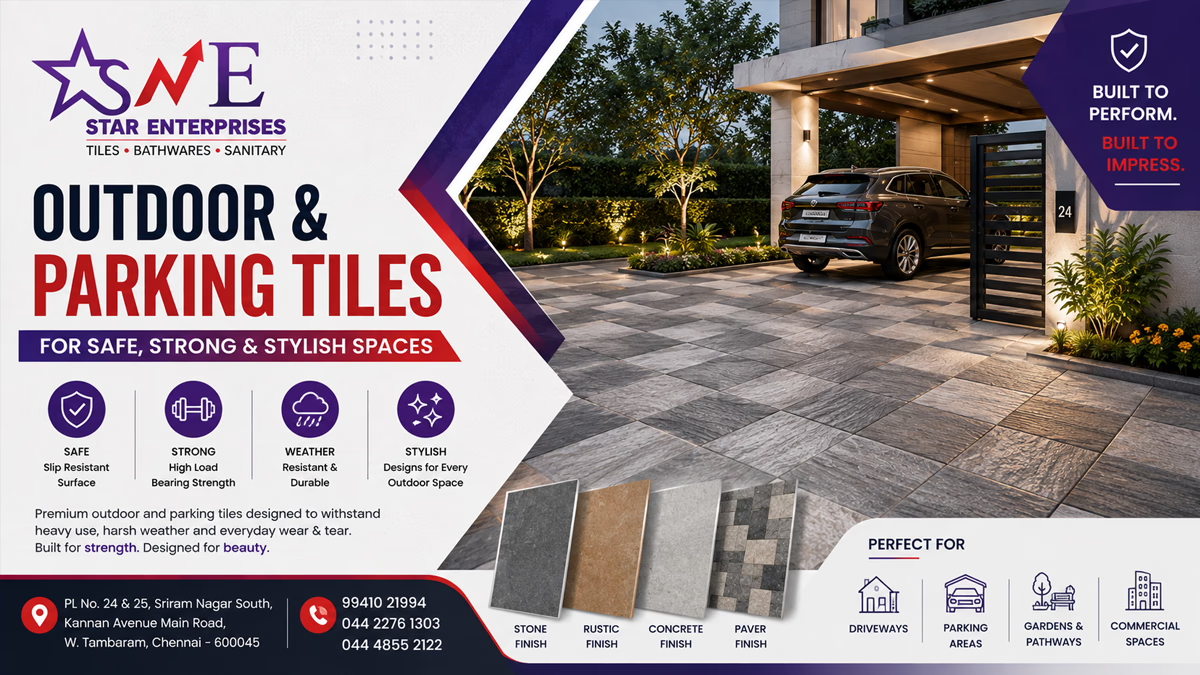
Introduction
Explore outdoor tiles, parking tiles, driveway flooring, anti-skid options and exterior flooring ideas for homes and commercial spaces, with practical buying guidance for Tambaram.
Outdoor & Parking Tiles for Safe, Strong & Stylish Spaces
Outdoor and parking tiles need to do more than look attractive. They are exposed to dust, rain, sunlight, vehicle movement, dirt, moisture and everyday wear, so the right product must be selected according to the exact area and the manufacturer’s application guidance.
A beautiful outdoor tile is not automatically a suitable parking tile. A product used for a pedestrian pathway may have different requirements from a surface that carries cars. Likewise, a terrace, balcony, porch and driveway can each have different exposure and drainage conditions.
This complete guide helps homeowners, builders, contractors, architects and commercial property owners understand outdoor and parking tiles before buying. It covers designs, anti-skid considerations, heavy-duty applications, car parking, driveways, terraces, pathways, porches, colours, sizes, drainage, installation, maintenance, price and quantity planning.
For customers searching for outdoor and parking tiles in Tambaram, the showroom stage is particularly valuable. Physical samples allow you to compare texture, surface finish, colour and size while discussing the intended application.
Star Enterprises in West Tambaram provides a practical destination for customers who want to move from online research to an informed tile selection. Bring photographs, measurements and details of the area so the product can be evaluated in its real context.
What Are Outdoor & Parking Tiles?
Outdoor tiles are tile products selected for exterior areas such as pathways, porches, terraces, balconies, gardens, entrances and other suitable outdoor surfaces. Parking tiles are products intended for areas where vehicles may be parked or moved, subject to the exact product’s technical suitability.
The terms describe application more than one universal material. Outdoor tiles can differ in body, thickness, texture, finish, water absorption, strength and installation requirements.
Parking surfaces can place additional demands on the product because vehicle loads, turning movements and repeated traffic create different stresses from normal pedestrian use.
For this reason, buyers should never choose a tile simply because it is marketed as outdoor or heavy duty. The exact technical information and manufacturer’s recommendations should be checked before installation.
The right product is the one that matches the actual environment.
Why Outdoor Flooring Needs Special Attention
Exterior surfaces face conditions that indoor floors may avoid. Rain can introduce water, dust can collect in textured surfaces, sunlight can change the appearance of colours, and temperature changes can affect building materials.
Drainage is especially important. Water should not remain against the tile or building for long periods. The substrate, slope, joints and surrounding construction must work together.
Slip considerations also matter wherever the surface can become wet. Buyers should check the exact product’s slip characteristics rather than relying on generic labels such as matte or anti-skid.
Outdoor flooring should therefore be selected as part of a complete installation system, not as an isolated decorative purchase.
Outdoor & Parking Tile Applications
Outdoor and parking tiles can be considered for many different spaces, including car parking, driveways, porches, entrances, walkways, garden paths, terraces, balconies, outdoor stairs, utility areas and selected commercial zones.
Each application should be treated separately. A car parking surface has different requirements from a garden pathway. A covered porch may have less rain exposure than an open driveway.
Start by identifying the actual use, then determine the technical requirements. After that, choose the design, colour and finish.
This sequence makes it easier to find a product that is both practical and visually appropriate.
Parking Tiles for Cars
Car parking tiles need to be selected for the expected vehicle load and movement. Parking areas can experience the weight of cars, turning forces, braking, dirt carried by tyres and repeated daily traffic.
The exact product should therefore be confirmed as suitable for parking rather than assuming that any exterior floor tile can carry vehicles.
Surface preparation is equally important. Uneven or weak substrates can create problems even when a technically suitable tile is selected.
Discuss vehicle type, expected traffic and installation conditions with the supplier and installer before ordering.
Parking Tiles for Driveways
Driveways experience repeated vehicle movement and may also be exposed directly to rain and sunlight. Turning areas can place additional stress on the surface.
Select a product specifically appropriate for the intended driveway application. Pay attention to drainage, slope, edge details and the condition of the base.
Driveway design can also influence the home’s entrance appearance. Stone-look, concrete-look and neutral textured surfaces can create a strong transition between the road and house.
Plan the driveway layout before ordering so cuts and edges are handled cleanly.
Heavy-Duty Outdoor Tiles
Heavy-duty outdoor tiles are generally selected for areas where higher loads or more demanding use are expected. However, the phrase heavy duty is not a substitute for checking technical specifications.
Commercial parking, service areas and busy entrances may require a different product from a private pedestrian path.
Ask about intended traffic, strength, surface characteristics and installation requirements. If the project involves unusual loads or commercial vehicles, professional technical advice is recommended.
The goal is to match the product to the real load rather than simply buying the thickest-looking tile.
Anti-Skid Outdoor Tiles
Anti-skid considerations are important for outdoor surfaces that can become wet. Rain, cleaning water and other contaminants can change how footwear interacts with the surface.
The exact slip performance should be checked for the individual product. A general assumption that every textured or matte tile is automatically anti-skid can be misleading.
For entrances, ramps, balconies, outdoor stairs and other potentially wet areas, discuss the intended conditions with the supplier and installer.
Good drainage remains essential. A slip-conscious surface and proper water management work together.
Outdoor Tiles for Porches
Porches are transition zones between exterior and interior spaces. They may receive rain, dust and frequent foot traffic while also forming part of the home’s visual entrance.
Stone-look and textured tiles can create a strong architectural appearance. Neutral colours are often easier to coordinate with exterior walls, doors and compound features.
If the porch is open, confirm that the product is suitable for the expected exposure. If it is covered, the requirements may differ.
Consider door thresholds, drainage and the transition to the indoor floor before installation.
Outdoor Tiles for Pathways
Garden and pedestrian pathways need a surface that supports regular walking and can cope with outdoor conditions. Stone-inspired textures, concrete effects and restrained natural colours can blend well with landscaping.
Pathway layout also affects the design. Long paths can benefit from consistent directional patterns, while curved or irregular paths may require smaller or more flexible formats.
Edges should be planned carefully to reduce exposed cuts. Drainage should be considered so water does not collect along the pathway.
Choose a product appropriate for pedestrian outdoor use rather than using a parking product simply because it appears stronger.
Outdoor Tiles for Garden Areas
Garden areas can use outdoor tiles around planting beds, seating areas and transitions between the house and landscape. Natural stone-inspired surfaces can help the hardscape blend with greenery.
Texture and colour should complement plants, walls and outdoor furniture. Extremely dark surfaces may create strong contrast, while warm earth tones can feel more natural.
Maintenance matters because leaves, soil and organic material can accumulate outdoors. Select a finish that can be cleaned appropriately for the location.
Outdoor Tiles for Terrace
Terraces are exposed to sunlight, rain and temperature changes, making correct product selection and installation important. Waterproofing and drainage should be resolved before decorative tile work begins.
The tile should be suitable for the intended exterior terrace application. Slip considerations are important where rain or cleaning water can make the surface wet.
Light neutral surfaces can create a bright terrace, while stone and concrete textures can create a contemporary outdoor living area.
Do not treat the tile as a waterproofing system. The underlying construction and drainage must be correct.
Outdoor Tiles for Balcony
Balconies can use suitable outdoor tiles to create a finished and practical surface. Because balconies may receive rain and have limited drainage, the exact product and installation system should be checked carefully.
Tile colour can influence the perceived size of a balcony. Light tones can keep a compact balcony visually open, while darker stone effects can create a stronger outdoor character.
Consider railing colours, outdoor furniture and plants when choosing the design.
Outdoor Tiles for Stairs
Outdoor stairs require careful attention to slip characteristics, edges and transitions. Not every outdoor floor tile is automatically suitable for steps.
The stair nosing and edge detail should be planned with the product and installation method. A clear visual contrast can sometimes help distinguish steps, depending on the project design.
Water drainage is also important because standing water on steps can create additional risk.
Outdoor Tiles for Commercial Areas
Commercial outdoor areas may include shop entrances, office approaches, hospitality patios, institutional walkways and parking zones. These spaces can receive higher traffic and more frequent cleaning than private homes.
The product should be selected according to expected use, traffic, moisture, maintenance and design requirements.
A neutral stone or concrete-look tile can provide a professional appearance. Strong decorative designs can be reserved for entrance or feature zones.
Commercial projects should confirm product availability and supply planning before installation begins.
Outdoor Tiles for Shops and Showrooms
Retail entrances and showroom approaches need to look inviting while handling regular customer movement. Outdoor tiles can create a clear transition from the street to the interior.
Use the facade, signage and brand palette as design references. The floor should support the business identity rather than compete with it.
For busy entrances, practical cleaning and slip considerations should be discussed before selecting the finish.
Outdoor Tiles for Homes
Homeowners can use outdoor tiles to connect the building with its surrounding landscape. Porches, pathways, parking, terraces and garden seating areas can be planned as a single exterior material scheme.
One way to create cohesion is to use related colours in different formats. A stone family can appear on the porch and pathway while a more suitable parking product handles the vehicle area.
This keeps the design connected without forcing one product into every application.
Outdoor Tile Designs
Outdoor tile designs include stone-look, concrete-look, slate-inspired, earthy textures, geometric surfaces and other contemporary patterns. The right style depends on the building and surrounding landscape.
Stone-look surfaces can create a natural appearance. Concrete effects suit modern architecture. Dark slate can add contrast. Warm earth tones can complement gardens and traditional homes.
Exterior patterns should be judged from the normal viewing distance. A small sample can look very different when repeated over a driveway or terrace.
Stone-Look Outdoor Tiles
Stone-look outdoor tiles are popular because they provide a natural visual language. Grey, beige, brown and mixed stone effects can work with many exterior palettes.
Variation is important. A surface with controlled visual variation can look more natural than a strongly repetitive image.
Compare the tile beside exterior paint, stone walls, landscaping and gate colours before choosing the final design.
Concrete-Look Outdoor Tiles
Concrete-look outdoor tiles can support minimalist and contemporary architecture. Soft grey surfaces can work with white walls and dark window frames, while warmer tones can soften the appearance.
Because concrete designs are relatively restrained, they can cover larger areas without becoming visually busy.
The surface should still be evaluated for the exact outdoor application, especially where rain and pedestrian movement are involved.
Slate-Look Outdoor Tiles
Slate-inspired tiles can create a strong textured exterior character. Dark and mid-tone slate effects can work particularly well around entrances, steps and garden features.
Texture can increase visual depth but may also require more cleaning because dust can settle into surface relief.
Confirm the product’s intended application and cleaning guidance before selecting a highly textured surface.
Outdoor Tile Colours
Outdoor colour should be chosen in relation to the complete property. Beige and warm earth tones can blend with landscaping. Grey can support contemporary architecture. Charcoal can create contrast, while lighter stone colours can keep the exterior bright.
Sunlight can significantly affect how a colour appears. A sample that looks neutral indoors may appear warmer or cooler outside.
Always compare physical samples under natural light before ordering a large quantity.
Outdoor Tile Sizes
Outdoor tile size should be selected according to the application, area dimensions, drainage, pattern and installation conditions.
Large formats can reduce grout lines and create a modern appearance, but they require a suitable substrate and careful handling. Smaller formats can provide more layout flexibility for pathways, curves and complex spaces.
Parking areas should be designed around vehicle movement and practical installation rather than choosing a size only for visual appeal.
Outdoor Tile Finishes
Surface finish influences both appearance and everyday use. Matte surfaces have a softer visual character, while textured finishes can add depth and may be useful in selected outdoor applications.
Do not assume a finish guarantees a particular slip performance. Always check the individual product’s technical information.
Maintenance should also influence the decision. Deep texture can collect dirt more easily than a smoother surface.
Outdoor Tile Drainage
Drainage is one of the most important considerations for outdoor flooring. Water should move away from the building and should not remain trapped against the tile surface.
Terraces, balconies, driveways and pathways may each require different drainage details. The base, slope, joints, edges and surrounding construction all contribute to performance.
Tile should not be used to conceal a drainage problem. Resolve the underlying water-management design before installation.
Outdoor Tile Waterproofing
Waterproofing and tiling are related but separate parts of an exterior construction system. A tile surface should not be expected to act as the building’s only waterproofing protection.
Terraces, balconies and other exposed areas should be assessed for the underlying waterproofing condition before tiling.
If an existing area has dampness, cracks or water leakage, address those problems first. A new tile layer may otherwise hide the symptom temporarily while the underlying issue continues.
Outdoor Tiles in Chennai Weather
Outdoor flooring in Chennai and surrounding areas can experience strong sunlight, seasonal rain, humidity, dust and changing moisture conditions. Product selection should therefore account for the actual exposure.
Open driveways and entrances can receive more rain than covered porches. West-facing walls and surfaces can experience intense afternoon sunlight.
Use physical samples outdoors when possible. Discuss exposure, drainage and maintenance with the installer and confirm the manufacturer’s exterior recommendations.
Outdoor & Parking Tiles Price
Outdoor and parking tile prices vary according to product body, size, thickness, finish, texture, design, brand, collection and technical specification. Installation and base preparation can significantly affect total cost.
A driveway or parking project may require additional preparation compared with a simple pedestrian area.
Compare total project value rather than only the box price. Check coverage, wastage, fixing materials, labour and maintenance requirements.
How to Calculate Outdoor Tile Quantity
Measure each area separately and calculate the surface coverage. Subtract major openings where relevant, then account for cuts, corners, edges, pattern matching and wastage.
Driveways and pathways may produce different wastage levels because of their shape. Complex curves and borders can require additional material.
Confirm the coverage per box and keep product details for future reference.
Parking Tile Base Preparation
For parking areas, the underlying base is as important as the tile. Vehicle movement can expose weaknesses in an uneven or poorly prepared substrate.
The installer should assess the existing base, levels, drainage and load conditions before fixing begins.
If the project is a new driveway, coordinate the base, drainage and tile specification as one design. If it is a renovation, identify existing cracks or settlement before installing a new surface.
Outdoor Tile Installation
Exterior installation should follow the manufacturer’s recommendations and use materials appropriate for the product and environment. Surface preparation, adhesive or fixing method, joint design, drainage and edge treatment all matter.
Large-format tiles require careful substrate preparation. Textured or directional patterns require layout planning.
Parking surfaces require particular attention to load and movement. Use an installation system appropriate for the exact product and application.
Outdoor Tile Maintenance
Outdoor tiles naturally collect more dust and debris than indoor surfaces. Regular sweeping or suitable washing can help preserve the appearance.
Cleaning frequency depends on exposure, traffic and nearby vegetation. Textured surfaces may need more attention because dirt can collect in surface relief.
Avoid aggressive chemicals unless confirmed safe for the exact tile and grout. Inspect joints periodically and address cracks or loose pieces promptly.
Outdoor Tiles for Renovation
Renovating an existing outdoor area requires an assessment of the current substrate and drainage. A new tile cannot reliably solve settlement, cracks or water-management problems underneath.
Measure existing levels and check transitions to doors, garages and paths. Tile thickness can affect finished levels, so the complete build-up should be considered.
A small feature improvement can sometimes deliver better value than covering every outdoor surface.
Outdoor Tiles for New Construction
New construction gives homeowners the opportunity to plan parking, porch, pathway, terrace and garden areas together. This can produce a coordinated exterior material palette.
Decide which areas require parking-grade or other application-specific products before selecting the decorative design.
Coordinate tile dimensions with drainage channels, steps, gates and thresholds. Early planning can reduce cutting and awkward transitions.
Outdoor Tiles vs Natural Stone
Natural stone and manufactured outdoor tiles can both provide attractive exterior surfaces. Natural stone has individual variation and may have specific sealing and maintenance requirements depending on the material.
Manufactured tiles can offer controlled sizes, repeatable patterns and a broad range of design effects.
The best choice depends on appearance, installation, maintenance, budget and technical suitability. Compare actual products rather than assuming one category is universally better.
Outdoor Tiles vs Concrete
Concrete is a common exterior surface, particularly for driveways and utility areas, while outdoor tiles can offer more controlled colour and decorative design.
The choice depends on the project’s requirements. Tile can provide a finished architectural appearance, while concrete may be selected for different structural or budget reasons.
Where vehicles are involved, the exact load requirements and base construction must be assessed regardless of the decorative surface.
Outdoor Tiles vs Interlocking Pavers
Interlocking pavers and outdoor tiles are different surface systems with different installation methods and design characteristics. Pavers may be suitable for certain driveways and landscape applications, while outdoor tiles may suit other architectural surfaces.
Compare drainage, base construction, vehicle loads, maintenance and appearance before deciding.
Do not select a surface system solely from a photograph. The installation method is part of the product decision.
Common Outdoor Tile Buying Mistakes
A common mistake is using an indoor tile outdoors because the appearance is attractive. Another is selecting a pedestrian tile for vehicle parking without checking load suitability.
Other mistakes include ignoring drainage, choosing a highly textured surface without considering cleaning, underestimating wastage and selecting colours without viewing them in sunlight.
Poor installation can also undermine a good product. Exterior tiling should be planned as a complete system.
How to Compare Outdoor Tile Samples
Start with a shortlist based on application. Separate parking products from pedestrian outdoor products and from terrace or balcony options.
Compare colour, texture, size, finish and pattern. View samples in natural light and imagine them across the full area.
Ask about exterior suitability, traffic, slip characteristics, drainage, installation, maintenance, box coverage, availability and current price.
This turns the showroom visit into a technical and design comparison rather than a simple browsing exercise.
Outdoor & Parking Tiles in Tambaram
Customers searching for outdoor and parking tiles in Tambaram often have immediate project intent. They may be building a house, renovating a driveway, finishing a porch or planning a commercial entrance.
A useful local buying journey should provide both product education and a genuine physical destination.
Star Enterprises in West Tambaram allows customers to compare suitable products in person and discuss the actual project. Bring photographs, approximate measurements and information about whether the area is for cars or pedestrians.
Local SEO should be based on the real showroom, accurate business information, genuine product relevance and customer experience rather than repetitive location pages.
Why Visit Star Enterprises for Outdoor & Parking Tiles?
Outdoor and parking tile decisions benefit from physical comparison because texture, colour and pattern scale can be difficult to judge online.
At Star Enterprises in West Tambaram, customers can compare exterior tile options and discuss whether the intended surface is a driveway, parking area, porch, pathway, terrace, balcony or another outdoor application.
Bring measurements and photographs. Ask about the exact product’s intended use, technical information, current availability, box coverage, installation requirements and price.
The objective is to find a product that works for the actual site, not simply the tile that looks best in an online photograph.
Outdoor & Parking Tile Buying Checklist
Before ordering, identify the exact application and expected traffic. Confirm the product code, size, finish, shade and technical suitability.
Ask about slip characteristics where the surface may become wet. Confirm drainage, substrate preparation, fixing method and maintenance requirements.
Calculate quantity from actual measurements and include an appropriate allowance for cutting and wastage. Confirm box coverage.
Before finalising, verify current availability and price. Keep product information and spare tiles where practical for future repair.
Outdoor Parking Layout Planning
Parking layout should be considered before tile selection because the way a vehicle enters, turns and exits can influence the surface requirements. Mark the gate, parking bay, turning area, pedestrian path and drainage points on a simple plan.
A straight parking bay is generally easier to tile than a narrow driveway with multiple changes of direction. Corners and curves can increase cutting and wastage, while drains and inspection covers create additional layout details.
For a residential project, consider whether the space will hold one car, several cars, a two-wheeler or occasional larger vehicles. For commercial property, estimate the likely traffic pattern rather than assuming that the area will receive only occasional use.
Once the movement pattern is understood, separate the vehicle surface from pedestrian areas where appropriate. This allows each zone to be matched with a product intended for its actual use.
Car Parking Tile Colour and Visibility
Colour can influence both appearance and practical maintenance. Very light surfaces can make a parking area look bright and spacious but may show tyre marks, dust and soil more quickly. Medium neutral colours can provide a balanced appearance for many residential driveways.
Darker surfaces can create a dramatic modern look, especially with light walls and landscaping. However, the amount of dust and sunlight at the property should be considered before choosing a very dark design.
Pattern can also help disguise small amounts of everyday dirt. Stone-inspired variation may look more forgiving than a completely uniform surface.
The best colour is therefore not simply the most fashionable one. It is the colour that coordinates with the property and remains practical under its real conditions.
Parking Tiles for Two-Wheeler Areas
Two-wheeler parking areas may experience different traffic patterns from car parking. Bikes are often moved by hand, parked closely and accessed frequently.
The surface should still be selected for the expected outdoor exposure and traffic. Wet conditions, cleaning water and drainage should be considered.
A consistent material between a two-wheeler zone and adjacent pedestrian areas can create a neat appearance, provided the product is appropriate for both applications.
Edges around stands, walls and drainage points should be planned so that the finished surface remains easy to clean.
Outdoor Tiles for Covered Parking
Covered parking receives less direct rain and sunlight than an open driveway, but it can still experience tyre dirt, oil or other vehicle-related contamination. The roof does not eliminate the need for suitable surface selection.
Consider how water enters the space through vehicles and the driveway opening. Drainage should still be planned so water can leave efficiently.
A covered parking area can use a more architectural design because the surface is part of the visible entrance to the home. Stone, concrete and restrained textured designs can coordinate well with a modern facade.
Cleaning access should also be considered, particularly in enclosed parking spaces.
Outdoor Tiles for Open Parking
Open parking is directly exposed to weather and therefore needs a product suitable for the actual outdoor conditions. Rain, sunlight, dust and temperature variation can all affect the environment.
The base and drainage design are particularly important. Water should move away from the building and should not remain in low areas.
Choose colour and texture after the technical requirements have been confirmed. A product that is suitable for the site can then be compared for appearance, size and price.
Outdoor Tiles for Walkways Around the House
Walkways around a house connect entrances, parking, gardens, utility areas and outdoor living spaces. A coordinated outdoor tile can make these routes feel like part of one design.
Think about pedestrian movement first. The surface should be appropriate for walking and for the expected wet conditions.
A pathway can use a different format or colour from the parking surface while remaining within the same visual family. This creates clear zoning without making the property look fragmented.
Lighting along the walkway can also emphasise the tile pattern after sunset.
Outdoor Tiles for Verandah Areas
A verandah is often used as an everyday sitting or transition area, so appearance and comfort matter alongside exterior suitability. Neutral stone and concrete-inspired textures can provide a calm background for furniture and plants.
If the verandah is open to rain, confirm exterior suitability and drainage. If it is enclosed or heavily sheltered, the exposure may be different.
Plan furniture positions, door openings and steps before finalising the layout. This can prevent awkward cuts beneath important architectural elements.
Outdoor Tiles for Courtyards
Courtyards can combine paving, plants, seating, water features and architectural walls. Outdoor tiles can provide a clean hardscape surface that visually connects these elements.
A natural stone effect can complement greenery, while a concrete-inspired tile can suit a modern courtyard. Smaller formats may work well where the layout contains curves or multiple design zones.
Drainage should be planned before the tile layout. Courtyards can contain several surfaces and water sources, so the tile should work with the complete landscape design.
Outdoor Tiles for Home Entrance Steps
Entrance steps require careful planning because people encounter them while carrying bags, entering from rain and moving between different levels. The selected product should be appropriate for exterior steps and its slip characteristics should be considered.
The edge of each step should be clearly defined through the design and installation. Water should not collect on the tread.
Use physical samples to check whether the pattern remains visually clear at the scale of the steps. Very busy textures can sometimes obscure the clean geometry of a staircase.
Outdoor Tiles for Service Entrances
Service entrances may receive more dirt and frequent movement than the main entrance. A durable, practical surface can be more important here than an elaborate decorative design.
Select a product suitable for the expected use and exposure. If carts, equipment or frequent cleaning are involved, mention those conditions before purchasing.
A neutral tile can keep the service area visually clean while requiring less attention to everyday dirt.
Outdoor Tile Texture and Dirt
Texture affects how dirt appears and how easily it can be removed. A lightly textured surface may provide visual depth without creating many deep recesses.
Very deep relief can collect dust, leaves and soil. This does not make such a product unsuitable, but it means cleaning access and maintenance expectations should be considered.
Compare samples by running your hand across the surface and looking at them under natural light. Ask the supplier for recommended cleaning practices for the exact product.
Outdoor Tile Surface Temperature
Exterior surfaces receive direct sunlight, and colour and finish can influence how the surface feels underfoot. Dark surfaces may visually absorb more heat, while lighter surfaces can create a brighter appearance.
The actual temperature also depends on sunlight, airflow, shading, local weather and the surrounding materials. Do not make a decision based on colour alone.
For outdoor sitting areas where people may walk barefoot, discuss the intended use and surface characteristics with the supplier and designer.
Outdoor Tiles and Garage Thresholds
The transition between a garage and an outdoor driveway needs careful level planning. The finished tile height should work with the garage door, threshold, drainage and surrounding pavement.
If the outdoor surface is raised incorrectly, water can be directed toward the building. If it is too low, an unnecessary step or uneven transition may be created.
Plan the complete section before installation rather than deciding the threshold after the tile has been purchased.
Outdoor Tiles and Gate Clearance
Driveway tile thickness and finished levels can affect gate clearance. Sliding gates, swing gates and pedestrian gates should all be checked before finalising the finished floor level.
Measure existing clearances and coordinate them with the planned tile build-up. Drain channels and edge details should also be included in the calculation.
This small planning step can prevent an expensive adjustment after installation.
Outdoor Tiles and Expansion of Large Areas
Large exterior tiled areas should be designed with appropriate joints and movement provisions according to the product and installation system. Temperature changes and building movement can affect large surfaces.
Do not treat a very large outdoor floor as one uninterrupted interior room. The installer should follow the manufacturer’s guidance and relevant professional practice.
The goal is to allow the surface system to accommodate expected movement while maintaining a clean visual layout.
Outdoor Tile Repair and Replacement
Even a well-maintained exterior can eventually require a replacement piece because of accidental damage or building work. Keeping spare tiles from the original batch can make repairs easier.
Record the product name, size, shade and supplier information after installation. Store spare material safely and label it.
A replacement from a later production batch may not look exactly the same, so retaining original material can be valuable for long-term maintenance.
Outdoor Tiles and Oil or Vehicle Marks
Parking surfaces can encounter oil, rubber marks and other vehicle-related dirt. The correct cleaning method depends on the tile, grout and contaminant.
Ask for cleaning guidance before choosing a surface. Avoid assuming that an aggressive chemical is safe simply because the tile is described as heavy duty.
Regular cleaning can make stains easier to manage. Persistent contamination should be treated according to the product manufacturer’s recommendations.
Outdoor Tiles for Builders and Contractors
Builders and contractors should confirm product specification, quantity, availability and installation requirements before beginning a project. The decorative sample should match the product delivered to site.
For larger projects, organise procurement so enough material is available for continuous installation. Maintain product identification and shade information.
Contractors should also coordinate tile work with waterproofing, drainage, electrical work, gates, doors and landscaping. This reduces the risk of finished surfaces being damaged by later construction.
Outdoor Tiles for Architects and Designers
Architects and designers can use outdoor tiles as one element within a broader facade and landscape palette. Tile selection can be coordinated with exterior paint, natural stone, metal, wood, glass and planting.
Samples should be evaluated at the intended scale. A pattern that appears subtle on a small board may become dominant when repeated across a driveway or courtyard.
Technical suitability should be considered alongside aesthetics. A design concept becomes stronger when the selected material can be installed and maintained successfully in the actual environment.
Outdoor Tiles for Homeowners: Questions to Ask
Homeowners should ask practical questions before ordering. Is the exact product suitable for this application? What traffic can it handle? How does it perform when wet? What installation system is recommended? What preparation is required?
Then ask design and purchasing questions: What is the box coverage? What wastage should be allowed? Is the selected shade currently available? Can the required quantity be supplied together? What is the current price?
These questions create a clearer buying decision and reduce the chance of choosing a product based only on appearance.
Outdoor Tile Showroom Visit Checklist
Take four things to the showroom: a photograph of the site, approximate measurements, the intended application and your preferred colour direction. If possible, also bring an exterior paint or material reference.
Ask to compare a small number of suitable products rather than viewing every available tile. Start with the application and then narrow by design.
View the sample close up and from a distance. Compare texture, pattern repetition, colour and size. Confirm technical suitability and current availability before placing an order.
Outdoor & Parking Tiles: Final Selection Matrix
A simple selection matrix can make the final decision easier. Rate each shortlisted product for application suitability, surface characteristics, design, colour coordination, size, maintenance, availability and total project cost.
Do not allow one category, such as appearance, to override an essential technical requirement. A visually perfect tile that is unsuitable for the application should be removed from the shortlist.
Once the technically suitable products are identified, the final choice can be based on design preference and budget.
Frequently Asked Questions About Outdoor & Parking Tiles
These FAQs answer common questions about outdoor tiles, parking tiles, car parking, anti-skid surfaces, driveways, terraces, prices and buying in Tambaram.
What are outdoor tiles?
Outdoor tiles are tile products selected for suitable exterior applications such as pathways, porches, terraces, balconies and other outdoor surfaces. Exact suitability depends on the product specification.
What are parking tiles?
Parking tiles are products intended for vehicle parking or movement when their technical specifications support that application. The exact product should be checked for expected loads and installation conditions.
Are outdoor tiles suitable for car parking?
Only products specifically suitable for vehicle use should be selected for car parking. Confirm the exact technical specifications, base construction and installation requirements.
Are outdoor tiles anti-skid?
Some outdoor products are designed with slip-conscious surfaces, but not every outdoor tile has the same performance. Check the exact product specification for the intended wet conditions.
Which tiles are best for driveways?
A product specifically suitable for vehicle movement should be selected for driveways. Consider load, turning movement, drainage, surface preparation and the manufacturer’s recommendations.
Which outdoor tiles are best for terraces?
Suitable exterior terrace tiles should be evaluated for moisture, slip considerations, weather exposure and compatibility with the waterproofing and drainage system.
Are outdoor tiles durable?
Durability depends on the exact product, application, substrate, installation and maintenance. Select according to the actual traffic and exposure rather than relying only on category labels.
How much do parking tiles cost?
Price varies by product, size, thickness, finish, design, brand and collection. Base preparation, installation and other materials also affect the total project cost.
What colour is best for outdoor tiles?
Neutral stone, beige, grey, brown and charcoal tones are versatile. The best colour depends on the building, landscape, sunlight and surrounding materials.
What size outdoor tiles should I choose?
Choose the size according to the application, area shape, drainage, pattern, installation conditions and desired visual effect.
Can outdoor tiles be used on balconies?
Suitable products can be used on balconies when the product and installation system are appropriate for exterior exposure and drainage conditions.
Can outdoor tiles be used on stairs?
Only products and installation systems appropriate for exterior stairs should be used. Slip characteristics, edges, drainage and transitions need careful planning.
Can parking tiles be used for a pedestrian pathway?
A technically suitable parking product may be usable in some pedestrian applications, but the decision should consider appearance, texture, comfort, drainage and the manufacturer’s application guidance.
Where can I buy outdoor tiles in Tambaram?
Customers searching for outdoor tiles in Tambaram can visit Star Enterprises in West Tambaram to compare suitable exterior tile options.
Where can I buy parking tiles in Tambaram?
Customers searching for parking tiles in Tambaram can visit Star Enterprises in West Tambaram and discuss the vehicle-use requirements of the project.
Where can I find outdoor tiles near me?
Use the genuine Star Enterprises showroom location and directions to visit the store and compare outdoor tile options in person.
Final Step: Visit Star Enterprises for Outdoor & Parking Tiles
Outdoor and parking tiles should be selected with the same care given to any important building material. Start with the application, confirm the technical requirements, then choose the design, colour, size and finish.
If you are searching for outdoor and parking tiles in Tambaram, visit Star Enterprises in West Tambaram with photographs and approximate measurements. Explain whether the area is a car park, driveway, porch, pathway, terrace, balcony, garden or commercial outdoor space.
Compare suitable products physically and ask about exterior application, traffic, slip characteristics, drainage, installation, maintenance, current availability and price.
You can continue exploring related Star Enterprises categories through outdoor parking tiles, outdoor parking floor tiles, floor tiles, full body tiles, vitrified tiles, elevation tiles, tiles, showroom and tiles showroom in Tambaram.
The final goal is a safe, durable and attractive exterior surface that suits the real conditions of the property. Good product selection, proper drainage and professional installation work together to create that result.
Outdoor Tile Planning for Vehicle Turning Areas
Vehicle turning areas deserve special attention because tyres do not simply move in a straight line. Steering creates lateral forces across the surface, particularly when a car turns in a narrow driveway or parking bay. The tile, base and installation system should therefore be selected for the actual vehicle movement.
Draw the driveway or parking layout before ordering. Mark the entry direction, turning zone, parking position and pedestrian route. This can reveal where the surface will experience the greatest movement.
A design that looks attractive in a straight rectangular layout may require additional cuts around columns, gates or drains. Plan those details before purchasing material.
If the property will regularly receive larger vehicles, discuss that requirement explicitly. A private car driveway and a commercial service entrance should not automatically use the same specification.
Outdoor Tile Planning for Drain Channels and Gullies
Drain channels, gullies and inspection points need to be integrated into the tile layout. They should remain accessible while the surrounding surface maintains a clean visual line.
Mark drainage locations before finalising tile orientation. This can help reduce narrow slivers and awkward cuts.
The finished surface should maintain the required fall toward drainage without creating standing-water pockets. Tile installation should follow the underlying drainage design rather than attempting to create drainage through random tile slopes.
Where waterproofing is involved, ensure the tile installation does not interfere with the waterproofing system or access points.
Outdoor Tiles Around Swimming Pools
Areas around swimming pools have particular wet-surface requirements and should be treated separately from ordinary outdoor floors. The selected product must be suitable for the environment and its slip characteristics should be evaluated carefully.
Pool surroundings also receive water, chemicals and frequent bare-foot traffic. Texture, comfort, cleaning and drainage should all be considered.
Do not assume that any outdoor tile is appropriate around a pool. Confirm the exact manufacturer’s recommendations and installation requirements before purchase.
Outdoor Tiles for Utility and Service Areas
Utility areas may not be the most visible part of a property, but they can experience water, dirt, cleaning chemicals and frequent movement. A practical outdoor tile can make these spaces easier to maintain while keeping the property visually consistent.
Choose the product according to the actual exposure and traffic. A simple neutral design may be more useful than a highly decorative surface.
Drainage should be planned carefully because utility areas often contain taps, washing equipment or other sources of water.
Outdoor Tiles for Pet-Friendly Spaces
Homes with pets can benefit from exterior surfaces that are easy to sweep and clean. Pathways, covered outdoor areas and pet-access zones may accumulate dirt and organic material more quickly.
A moderately textured surface can provide visual interest, but very deep texture may make cleaning more difficult. Consider both traction and maintenance rather than choosing solely by appearance.
Where animals frequently use a wet outdoor area, discuss the product’s surface characteristics with the supplier and installer.
Outdoor Tiles and Furniture Areas
Outdoor seating areas need a surface that works visually with furniture, planters and lighting. Stone and concrete effects are versatile because they can support wood, metal and fabric furniture.
Measure the furniture footprint before deciding the tile layout. Large furniture pieces can hide much of the floor, while open patios expose more of the tile pattern.
Consider how chairs will move across the surface and how often the area will be cleaned. A practical finish can make everyday outdoor living easier.
Outdoor Tiles and Landscaping
Landscaping can make an outdoor tile surface feel integrated with the property. Tile colour should relate to planting, boundary walls, exterior paint and natural materials.
Warm earth tones can complement greenery and timber. Grey stone can support contemporary landscaping. Dark accents can create contrast but should be used deliberately.
Leave appropriate space for soil, planting and drainage. Tile should define the hardscape without preventing the landscape from functioning properly.
Outdoor Tile Borders and Patterns
Borders can define parking bays, pathways and porch areas, but they should be used with restraint. A simple border can clarify a space, while multiple competing borders can make a small area feel busy.
If a patterned border is planned, calculate the additional cuts and material before ordering. The border should also work with the main tile’s dimensions.
For driveways, visual borders can help define vehicle routes, but the installation should still prioritise safe movement and drainage.
Outdoor Tile Installation Joints and Movement
Exterior surfaces can experience movement from temperature changes and building conditions. Joint planning is therefore an important part of installation.
The exact joint design and movement-joint requirements should follow the product manufacturer’s instructions and the professional installer’s assessment.
Do not eliminate necessary movement provisions simply to achieve a seamless visual appearance. Long-term performance should take priority over a small reduction in visible joints.
Outdoor Tile Edges and Transitions
Edges are especially visible in outdoor projects because tile often meets grass, soil, concrete, stone, drains or another flooring system. A planned edge can make the entire project look more professional.
At door thresholds, finished levels should be coordinated before installation. Avoid creating an unintended step where water could collect or where movement becomes inconvenient.
Parking edges should also be considered around gates and compound walls. The final transition should be strong enough for the expected use and visually clean.
Outdoor Tile Delivery and Storage
Outdoor tile projects can involve substantial quantities, so delivery and storage should be planned. Boxes should be stored in a suitable location and protected from unnecessary damage before installation.
Check the product information when material arrives. Confirm the product, size, shade and quantity before installation begins.
For large projects, organise boxes by the relevant area and avoid mixing unidentified material. Good material control can make installation and future replacement easier.
Outdoor Tile Quality Check Before Installation
Before fixing, inspect representative pieces for obvious damage and confirm that the product matches the selected collection, size and shade. If a project has multiple boxes, review the material as part of the planned installation rather than waiting until the entire surface is fixed.
Discuss any apparent issue with the supplier or installer before installation proceeds. Do not install material that has an unresolved identification or quality concern.
Once the installation is complete, retain the product details and, where practical, spare material.
Outdoor Tile Cleaning After Installation
After installation, follow the manufacturer’s guidance for initial cleaning and curing. Construction residue, grout residue and dust may require different cleaning methods from normal maintenance.
Do not use aggressive acids or chemicals without confirming compatibility. Some surfaces can be damaged by unsuitable cleaning products.
Once the surface is established, create a simple routine based on the area’s traffic. Regular cleaning is usually easier than allowing heavy dirt and organic residue to accumulate.
Outdoor Tile Design for Future Renovation
An exterior design should ideally remain compatible with future changes. Paint colours, gates, landscaping and outdoor furniture can all be replaced sooner than the tile.
Neutral stone, concrete and restrained textured surfaces can provide flexibility for future updates. Strong decorative designs can still work when they are intentionally integrated with the architecture.
Think beyond the current trend. A well-planned exterior should continue to look appropriate as the property evolves.
Outdoor & Parking Tiles: A Professional Decision Framework
A practical decision framework uses five questions. First, what is the exact application? Second, what environmental conditions will the surface face? Third, what traffic or load is expected? Fourth, what design should support the architecture? Fifth, what installation and maintenance system is required?
Once these questions are answered, the product shortlist becomes much smaller and more useful.
This approach prevents category confusion. A customer does not have to choose between dozens of random outdoor tiles; they need to identify the few products that satisfy the actual project.
The final showroom visit should confirm that shortlist through physical samples, technical information and current availability.
Visit Star Enterprises for Outdoor & Parking Tiles in Tambaram
Compare suitable exterior and parking tile options in person at the Star Enterprises showroom in West Tambaram.
Visit the showroom · Contact Star Enterprises · Tiles showroom in Tambaram