
Introduction
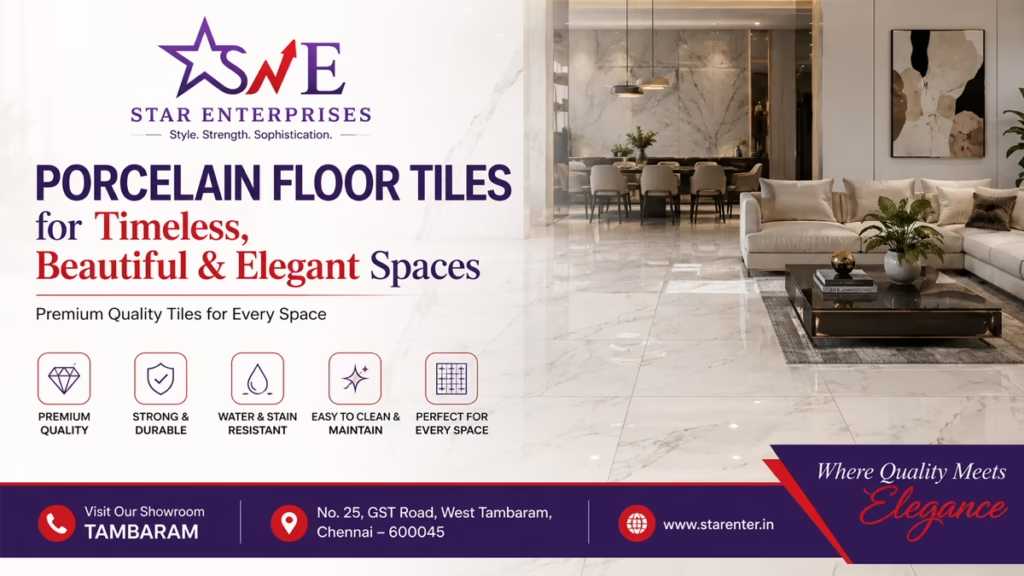
Choosing the right flooring is one of the most important decisions in any home or commercial project, and porcelain floor tiles have become one of the most popular choices for homeowners, builders and interior designers across Tambaram and Chennai. This guide walks you through what porcelain floor tiles are, where they work best, how they compare with other flooring options, and how to choose the right design, size and finish for your space.
Whether you are flooring a new home, renovating an existing one, or planning a commercial space, this guide is meant to help you make an informed decision before you visit a tiles showroom in Tambaram to compare actual samples.
What Are Porcelain Floor Tiles?
Porcelain floor tiles are a type of dense, fine-grained ceramic tile made primarily from refined clay fired at high temperatures. This manufacturing process gives porcelain tiles a tighter, less porous structure compared to many standard ceramic tiles, which is a major reason they are widely considered for flooring applications.
Because of their density, porcelain floor tiles generally have lower water absorption characteristics than standard ceramic tiles, which contributes to their reputation for durability. That said, no tile is indestructible or completely stain-proof, and actual performance depends on the specific product, its quality grade, the surface finish, and how it is installed and maintained. It’s always worth comparing actual samples and asking about the technical specifications of a particular collection before you decide.
Why Choose Porcelain Floor Tiles?
Porcelain floor tiles are popular across homes and commercial spaces in Tambaram and Chennai for several practical and aesthetic reasons:
- Durability characteristics — Their dense composition generally makes porcelain tiles well suited to withstand daily foot traffic in homes and moderate commercial use.
- Low water absorption — Porcelain’s manufacturing process typically results in a tighter body, which is one reason it is often chosen for flooring over more porous tile types.
- Design flexibility — Porcelain floor tiles are available in a wide range of looks, from marble and stone effects to wood-look and minimal designs.
- Manageable routine maintenance — With regular sweeping and mopping, porcelain floors are generally straightforward to keep clean.
- Modern, versatile appearance — Porcelain tiles suit a wide range of interior styles, from contemporary to traditional.
- Long-term aesthetic appeal — Well-chosen porcelain designs tend to remain visually relevant for years, reducing the need for frequent flooring changes.
As with any flooring material, actual performance depends on the specific product and installation. It is always a good idea to compare actual samples and confirm suitability for your intended use before purchasing.
Popular Porcelain Floor Tile Designs
One of the biggest advantages of porcelain tiles as a category is the sheer variety of surface designs available today. Here are some of the most popular styles used for flooring:
Marble-Look Porcelain Tiles
Marble-look porcelain floor tiles recreate the veining and luxurious appearance of natural marble at a fraction of the maintenance concerns. These are a strong choice for living rooms, halls, entrances and upscale interiors where a premium, elegant look is the priority.
Stone-Look Porcelain Tiles
Stone-look designs bring an earthy, natural visual character to a space. They work well in contemporary homes, larger open-plan areas, and interiors that lean toward a grounded, textured aesthetic.
Wood-Look Porcelain Tiles
Wood-look porcelain floor tiles offer the warmth of timber flooring with the practical characteristics associated with porcelain. These are popular for bedrooms, living rooms and feature areas where a cosy, inviting atmosphere is desired.
Concrete-Look Porcelain Tiles
For modern, minimal or industrial-style interiors, concrete-look porcelain tiles offer a clean, understated finish that pairs well with contemporary furniture and lighting.
Plain and Neutral Porcelain Tiles
Plain and neutral porcelain floor tiles remain a timeless option. They coordinate easily with a wide range of furniture styles and wall colours, making them a safe long-term choice for homeowners who prefer flexibility.
Porcelain Floor Tiles for Different Rooms
Choosing the right porcelain floor tile isn’t just about the design — it’s also about matching the tile to how each room is actually used.
Living Room
Living rooms generally benefit from larger tile formats, marble-look or neutral designs, and premium finishes that create a sense of visual continuity across the space. For more room-specific guidance, see our dedicated living room tiles page.
Bedroom
Bedrooms often work well with calmer colour tones, wood-look designs and matte surfaces that create a comfortable, relaxed visual atmosphere. Explore more ideas on our bedroom tiles page.
Kitchen
Kitchen flooring needs to handle daily foot traffic, occasional spills and frequent cleaning. Practical finishes that are easy to wipe down are generally preferred here. See our kitchen tiles page for more room-specific options.
Bathroom
Bathroom flooring requires careful attention to surface finish and slip considerations, since not every porcelain tile is designed or rated for wet-area use. It’s important to confirm the slip resistance and suitability of a specific product before selecting it for a bathroom floor. Visit our bathroom tiles page to explore suitable options.
Hallways and Entry Areas
Hallways and entrances typically see frequent foot traffic and exposure to dust or moisture from outside, so durability and easy maintenance are important considerations for these transition spaces.
Commercial Spaces
Porcelain floor tiles are also widely used in offices, retail outlets, showrooms and other commercial environments where a professional appearance needs to be paired with practical, low-maintenance flooring.
Porcelain Floor Tile Sizes
Porcelain floor tiles are commonly available in a range of formats, including standard sizes such as 600 x 600 mm and larger formats such as 600 x 1200 mm, among others. Availability of specific sizes varies by collection, so it’s best to confirm current stock with your showroom rather than assuming every size is on hand.
When choosing a tile size, consider:
- Room dimensions — Larger tiles can make smaller rooms feel more spacious, while smaller formats may suit compact or irregularly shaped areas.
- Grout line visibility — Larger tiles generally mean fewer grout lines, which some homeowners prefer for a cleaner look.
- Installation complexity — Larger-format tiles can require more careful handling and a level subfloor for proper installation.
- Wastage — Room shape and layout can affect how much material is needed and how much is cut away as waste.
- Handling — Larger tiles are heavier and need experienced installers for safe handling.
- Visual scale — The tile size should feel proportionate to the room and furniture.
Glossy vs Matte Porcelain Floor Tiles
One of the most common decisions buyers face is choosing between a glossy and a matte finish. Both have their place, and the right choice depends on the room and your priorities.
| Factor | Glossy Porcelain Tiles | Matte Porcelain Tiles |
|---|---|---|
| Appearance | Reflective, polished, bright look | Soft, understated, contemporary look |
| Light Reflection | Brightens rooms by reflecting light | Absorbs light for a muted, warm feel |
| Cleaning | Generally easy to wipe clean | Generally easy to clean, though texture can vary |
| Visibility of Marks | Footprints and dust may show more visibly | Tends to conceal minor marks and dust better |
| Visual Style | Formal, polished, premium look | Natural, modern, minimal look |
| Wet-Area Considerations | Should be checked for slip resistance before use in wet areas | Some matte and textured finishes offer better grip, but this varies by product |
Neither finish is universally “better” — the right option depends on the room, the amount of natural light, your maintenance preferences and the overall interior style you’re going for. Comparing actual samples in person at a showroom is the best way to decide.
Porcelain Floor Tiles vs Ceramic Floor Tiles
Porcelain and ceramic floor tiles are both popular flooring materials, and while they share similarities, there are some general differences worth understanding:
- Manufacturing: Porcelain tiles are typically made from more refined clay and fired at higher temperatures compared to standard ceramic tiles.
- Density and water absorption: Porcelain generally has a denser body and lower water absorption than many standard ceramic tiles, which is a common reason it is chosen for flooring.
- Durability considerations: Because of their density, porcelain tiles are often considered for higher-traffic flooring, though actual durability depends on the specific product and quality grade.
- Design: Both porcelain and ceramic tiles are available in a wide range of designs, including marble, stone and wood-look finishes.
- Applications: Ceramic tiles are commonly used for walls and some floor applications, while porcelain is frequently chosen specifically for flooring due to its density.
- Pricing factors: Pricing for both categories varies significantly by brand, collection, size and finish, so direct comparisons should be made product-to-product rather than category-to-category.
If you’re weighing the two options for your project, it helps to compare actual porcelain and ceramic flooring options side by side at a showroom.
Porcelain Floor Tiles vs Vitrified Floor Tiles
In everyday tile shopping, many customers use the terms “porcelain” and “vitrified” interchangeably, especially in the Indian tile market. Technically, vitrification refers to the process of firing tiles until they become glass-like and non-porous, and porcelain tiles are generally considered a type of vitrified tile with a particularly fine, dense body. However, market terminology can vary between manufacturers and product lines, so the exact classification of a specific tile is best confirmed with its technical specification sheet rather than assumed from the product name alone.
If your comparison shopping includes both categories, it’s worth exploring our dedicated vitrified floor tiles page and our broader vitrified tiles page alongside this one, so you can compare porcelain-specific and vitrified-specific options in more detail.
Porcelain Floor Tiles Price
We intentionally avoid publishing fixed prices for porcelain floor tiles on this page, because actual pricing depends on a number of variable factors, including:
- Tile type and collection
- Brand
- Size and format
- Surface finish
- Design complexity
- Quantity required
- Quality grade
- Transportation
- Installation
- Wastage allowance
Current prices can vary by collection, size, finish, brand, quantity and availability. Ask Star Enterprises for current porcelain floor tile pricing, designs and availability — this ensures you get accurate, up-to-date information for the specific tiles you’re considering, rather than a generic figure that may not reflect current market conditions.
How to Choose the Best Porcelain Floor Tiles
Use this step-by-step framework to guide your decision:
- Identify the room — Different rooms have different practical and aesthetic requirements.
- Understand the traffic level — High-traffic areas like hallways need different consideration than low-traffic bedrooms.
- Choose the correct surface finish — Weigh glossy versus matte based on the room’s use and light levels.
- Select the appropriate tile size — Match the format to your room dimensions and desired look.
- Match the tile with the interior — Consider your existing or planned furniture, wall colours and overall style.
- Consider maintenance — Think about how much time you’re willing to spend on routine cleaning.
- Set a realistic budget — Factor in tiles, wastage, transportation and installation, not just the tile price alone.
- Compare actual samples — Photos and screens rarely capture true colour and texture accurately.
- Confirm quantity and availability — Check that enough matching stock is available before finalising your order.
- Plan installation and wastage — Work with your installer to estimate an appropriate wastage allowance.
- Keep spare tiles where practical — Having a few extra tiles on hand can help with future repairs or replacements.
Common Buying Mistakes to Avoid
Even well-intentioned buyers can run into avoidable issues. Watch out for these common mistakes:
- Choosing a tile based only on its appearance in photos
- Ignoring the specific conditions of the room (moisture, traffic, light)
- Selecting a finish unsuitable for the intended space
- Buying tiles without accurately measuring the area
- Ignoring batch consistency between boxes
- Failing to compare physical samples in person
- Focusing only on tile price while ignoring installation costs
- Overlooking installation requirements specific to large-format tiles
- Purchasing too little material and running short mid-project
- Failing to confirm current availability before finalising a design choice
Why Visit Star Enterprises?
Star Enterprises serves customers looking for porcelain floor tiles and related home-surface solutions in and around the Tambaram area. Visiting the showroom in person allows you to compare actual porcelain floor tile designs, sizes and finishes side by side — something that’s difficult to do accurately through photos alone.
Star Enterprises is located at:
PL No. 24 & 25, Sriram Nagar South,
Kannan Avenue Main Road,
W. Tambaram, Chennai – 600045
For current designs, availability and pricing, you can reach out directly and ask the showroom team for the latest porcelain floor tile collections in stock. Availability may vary, so it’s always best to confirm your specific requirements before visiting or placing an order.
Explore our full tiles showroom in Tambaram page for more details on visiting Star Enterprises.
Explore More Tile Categories
If porcelain floor tiles aren’t the only surface you’re planning, Star Enterprises also offers a range of related categories worth exploring, including wall tiles, full body tiles, digital tiles, elevation tiles and outdoor parking tiles. You can also browse our complete tiles range or view our portfolio of completed projects for design inspiration.
Frequently Asked Questions
1. What are porcelain floor tiles?
Porcelain floor tiles are a dense, fine-grained type of ceramic tile made from refined clay fired at high temperatures, resulting in a tight, low-porosity structure that is commonly used for flooring in homes and commercial spaces.
2. Are porcelain floor tiles good for homes?
Porcelain floor tiles are a popular flooring choice for homes due to their durability characteristics, design variety and manageable routine maintenance. Actual suitability depends on the specific product, room and how it is installed and cared for.
3. Are porcelain tiles suitable for living room floors?
Yes, porcelain floor tiles are widely used in living rooms, particularly larger formats and marble-look or neutral designs that create a premium, cohesive look across the space.
4. Can porcelain floor tiles be used in kitchens?
Porcelain floor tiles are commonly used in kitchens because of their durability and manageable maintenance. It’s a good idea to choose a finish that handles daily traffic and occasional spills well, and to confirm the specific product’s suitability before purchasing.
5. Are porcelain floor tiles suitable for bathrooms?
Some porcelain floor tiles are suitable for bathrooms, but not all of them — surface finish and slip resistance vary by product. It’s important to confirm the slip rating and wet-area suitability of a specific tile before using it on a bathroom floor.
6. What is the difference between porcelain and ceramic floor tiles?
Porcelain tiles are generally denser and have lower water absorption than standard ceramic tiles, due to differences in the clay used and the firing temperature. Both are available in a wide range of designs, and actual performance depends on the specific product.
7. What is the difference between porcelain and vitrified floor tiles?
Porcelain tiles are generally considered a type of vitrified tile with a particularly fine, dense body, though the terms are often used interchangeably in everyday tile shopping. It’s best to check the technical specification of a specific product rather than assume based on the name alone.
8. How do I choose the right porcelain floor tile size and finish?
Consider your room’s dimensions, natural light, traffic level and desired look. Larger formats suit bigger, open spaces, while matte finishes often work well in bedrooms and glossy finishes can brighten smaller rooms. Comparing actual samples is the best way to decide.
9. Where can I buy porcelain floor tiles in Tambaram?
You can explore porcelain floor tile designs, sizes and finishes at Star Enterprises, located in W. Tambaram, Chennai. Visit the tiles showroom in Tambaram page for location details and to plan your visit.
Compare Porcelain Floor Tile Designs at Star Enterprises
Choosing the right porcelain floor tile is easier when you can see and feel the actual material in person. Visit the Star Enterprises showroom in W. Tambaram to compare porcelain floor tile designs, sizes and finishes side by side, and ask the team about current collections, availability and pricing for your project.