
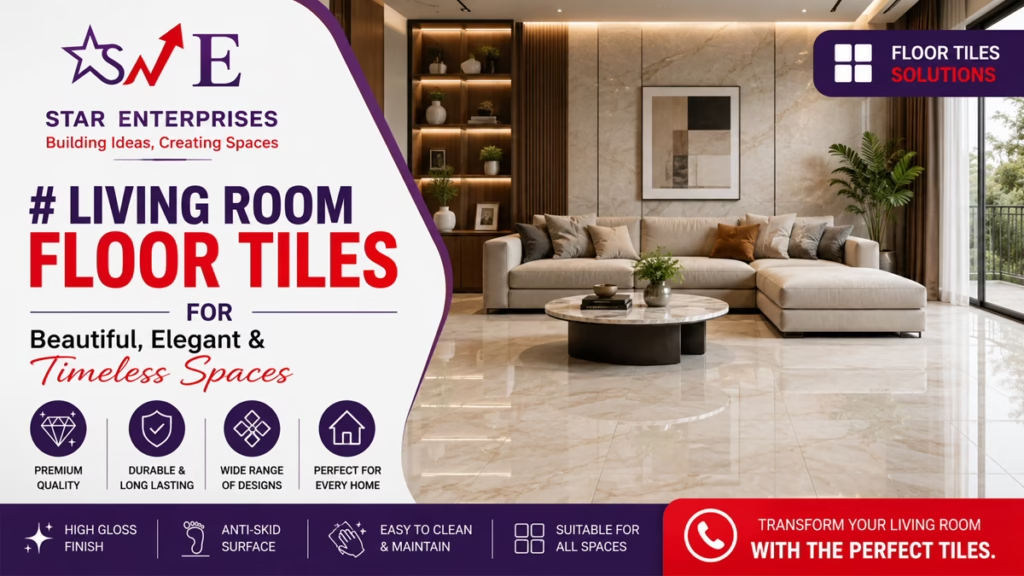
The living room floor gets more attention than almost any other surface in the house — it’s visible the moment someone walks in, it has to work with whatever furniture and colours you already own, and it has to hold up to daily use without looking tired within a year or two. Choosing living room floor tiles is rarely about picking the most expensive or most striking option in a catalogue; it’s about finding a tile that suits your room’s size, light, furniture and the way your family actually uses the space.
This guide walks through the practical side of that decision — which tile types are commonly used for living rooms, which designs, colours, finishes and sizes tend to work well, how to match a floor with your furniture and home style, what affects maintenance and cost, and which mistakes are easiest to avoid. By the end, you should be able to shortlist a direction with confidence before comparing physical samples.
How to Choose the Best Living Room Floor Tiles
There’s no single tile that’s universally “best” for every living room — the right choice depends on your room’s specific conditions. A structured approach makes the decision far more manageable:
- Measure the room. Know your exact floor area before looking at tile sizes or calculating quantity.
- Understand natural and artificial lighting. A room with strong natural light can carry darker or glossier tiles more easily than a dimly lit space.
- Consider furniture colours. Your existing or planned furniture palette should inform the floor tone, not fight against it.
- Decide the desired visual style. Marble-inspired elegance, minimalist neutrals, and warm wood-look floors all create very different moods.
- Assess foot traffic. A living room used constantly by a large family has different practical needs than an occasional-use formal sitting area.
- Choose tile type. Vitrified, porcelain, ceramic and glazed vitrified each bring different characteristics to a living room floor.
- Choose finish. Glossy, matte or textured — each affects appearance and everyday practicality differently.
- Select size. Larger formats suit larger rooms; smaller formats can suit tighter or more irregular spaces.
- Consider maintenance. Some finishes and colours show marks and dust more readily than others.
- Compare physical samples. Always view tiles in your room’s actual lighting before deciding.
- Calculate quantity and wastage. Factor in cutting, breakage and future repairs when ordering.
- Set a realistic budget. Account for the tile itself as well as adhesive, grout and installation.
- Confirm availability. Check current stock for your chosen design, size and quantity.
- Plan installation. Coordinate timing and installer experience, especially for larger formats.
What Type of Tiles Are Best for Living Room Floors?
Several tile categories are commonly used for living room floors, each with its own strengths. The right one depends on the design and practicality you’re after.
Vitrified Tiles
Vitrified tiles are a widely used choice for living room flooring, valued for their generally low water absorption and broad range of available designs. Exact characteristics vary by manufacturer and product line, so it’s worth reviewing the specification of the tile you’re considering. See our vitrified tiles range for a broader overview.
Porcelain Tiles
Porcelain tiles are known for their dense, low-porosity body, which makes them a popular option where durability is a priority. Design options range from plain and neutral to detailed marble and stone reproductions. Explore our porcelain tiles page for more detail.
Ceramic Floor Tiles
Ceramic floor tiles can also work in living rooms, particularly where budget is a key consideration, though their water absorption and durability characteristics differ from vitrified and porcelain options — so it’s worth confirming a specific product’s suitability for flooring rather than wall use. Learn more on our ceramic floor tiles page.
Glazed Vitrified Tiles
Glazed vitrified tiles (GVT) are often chosen for living rooms specifically for their design flexibility — marble-look, stone-look and wood-look patterns are all achievable through the printed, glazed surface. For a full breakdown of this category, see our glazed vitrified tiles guide.
Rather than assuming one category is automatically superior, it helps to compare specific products against your room’s traffic, lighting and design goals.
Popular Living Room Floor Tile Designs
Design is usually where the decision starts, since it sets the tone for the entire room.
Marble-Look Tiles
Marble-look tiles bring an elegant, premium appearance through printed veining, and their light-reflective quality can help a living room feel more open. They tend to work particularly well when paired with simple, modern furniture that lets the floor stand out.
Stone-Look Tiles
Stone-look tiles offer a more textured, earthy character than marble-look designs, suiting living rooms built around a natural or contemporary palette rather than a formal, polished look.
Wood-Look Tiles
Wood-look tiles bring warmth to a living room floor while avoiding the maintenance demands of solid timber. They’re a common choice for open-plan spaces that flow between living and dining areas, where a consistent warm tone helps tie the rooms together.
Concrete-Look Tiles
Concrete-look tiles suit minimalist and industrial-inspired interiors, offering a muted, understated backdrop for bolder furniture or artwork.
Plain and Neutral Tiles
Plain, neutral tiles remain a dependable option for buyers who expect to update furniture and décor over time, since a simple floor coordinates more easily with future changes than a strong pattern.
Patterned Tiles
Patterned tiles can create a genuine feature floor, but they work best when used deliberately — either across the whole room in a simply furnished space, or confined to a defined zone so the pattern doesn’t compete with furniture and rugs.
Best Tile Colours for Living Rooms
Colour has a bigger impact on how a living room feels than most buyers expect, well beyond the tile design itself.
White and Off-White
White and off-white tiles reflect light well and can make a room feel more spacious and airy, though they tend to show dust, footprints and stains more readily than darker tones, so more frequent cleaning may be needed.
Beige and Cream
Beige and cream tones bring warmth without the stark brightness of pure white, and they coordinate comfortably with both traditional and contemporary furniture styles.
Grey
Grey is a popular choice in modern interiors, ranging from light, airy shades to deeper charcoal tones, and it tends to pair easily with a wide range of furniture colours.
Brown and Wood Tones
Brown and wood-inspired tones bring a natural warmth that suits both traditional and contemporary living rooms, particularly where wood-look tiles are used.
Dark and Statement Colours
Darker floor colours can create a dramatic, grounded look, but they tend to show dust and light marks more visibly than lighter tones, and their effect depends heavily on how much natural light the room receives — a dark floor in a well-lit room reads very differently to the same floor in a dim one.
No colour makes a room physically larger, but lighter, more reflective tones can make a space feel more open, while darker tones tend to feel more enclosed and cosy.
Glossy vs Matte Living Room Floor Tiles
Finish is one of the most practical decisions in the whole process, since it affects both appearance and everyday upkeep.
| Feature | Glossy | Matte |
|---|---|---|
| Appearance | Reflective, polished, formal | Soft, understated, natural |
| Light reflection | Reflects light strongly, can brighten a room | Minimal reflection, more subdued look |
| Visible marks | Footprints and dust tend to show more | Marks are generally less obvious |
| Cleaning | May need more frequent light cleaning | Generally more forgiving between cleans |
| Interior style | Suits formal, premium or marble-look schemes | Suits relaxed, contemporary or natural schemes |
| Practical considerations | Check the specific product’s slip-resistance rating | Check the specific product’s slip-resistance rating |
Slip resistance depends on the individual product’s rating rather than the finish category alone, so it should never be assumed that glossy tiles are automatically slippery or that matte tiles are automatically slip-proof — always check the specification for the exact tile you’re considering.
Choosing the Right Tile Size for Your Living Room
Tile size shapes how the whole floor reads, not just how each individual tile looks. Common formats in the market include sizes such as 600 × 600 mm and 600 × 1200 mm, with larger formats available in some ranges — exact sizes and current availability should be confirmed for any specific product you’re considering.
- Visual scale — larger tiles tend to make a room feel more expansive, while smaller tiles can suit compact or more segmented spaces.
- Grout lines — bigger formats mean fewer grout lines, creating a more continuous, uninterrupted floor.
- Installation — larger tiles require more precise, experienced installation to lay flat and even.
- Wastage — irregularly shaped rooms may generate more cutting wastage with larger formats.
- Handling — larger, heavier tiles need careful handling during transport and laying.
- Room proportions — very large tiles in a small room can sometimes look disproportionate, so it’s worth visualising the layout before deciding.
Large-Format vs Standard Living Room Floor Tiles
Both large-format and standard-sized tiles remain common choices, and the right one depends on your room and priorities rather than one being universally superior.
Large-format tiles can offer fewer visible grout lines, a more contemporary appearance, and a stronger sense of visual continuity across an open living space. The trade-off is that they typically require more careful handling, precise cutting and a more experienced installation team, and rooms with unusual shapes may see more wastage.
Standard-format tiles are generally easier to handle and install, offer more flexibility for irregular room layouts, and tend to be more widely available across different designs and finishes.
Rather than assuming one is automatically the better option, weigh your room’s shape, your installer’s experience with large formats, and the look you’re going for.
Matching Floor Tiles With Furniture and Interiors
A tile rarely exists in isolation — it needs to work with the furniture, walls, curtains and lighting already in the room.
- Light floors with dark furniture create contrast and help furniture pieces stand out as focal points.
- Dark floors with light furniture give a grounded base while keeping the room from feeling too heavy overall.
- Neutral floors with colourful interiors let you introduce bold colour through cushions, art or accent walls without the floor competing for attention.
- Marble-look floors with modern furniture pair well when the furniture stays simple, letting the floor’s veining be the visual highlight.
- Wood-look floors with warm furniture reinforce a cohesive, cosy palette across the room.
- Grey floors with contemporary furniture are a dependable, flexible combination that adapts easily to changing décor.
Beyond furniture, consider how the floor reads against your wall colour, curtain fabric and lighting fixtures — a sample that looks right under showroom lighting can read quite differently under your room’s actual lighting conditions.
Living Room Floor Tiles for Different Home Styles
Modern Homes
Modern interiors typically favour clean lines, neutral palettes and large-format tiles that keep the floor feeling uncluttered and cohesive.
Minimalist Interiors
Minimalist spaces often lean on subtle textures and simple, restrained colour palettes, letting the tile’s material quality speak rather than a bold pattern.
Traditional Homes
Traditional interiors tend to suit warmer colours and more visually rich patterns, including stone-look and detailed marble-look designs.
Luxury Interiors
Luxury-styled living rooms often reach for marble-inspired designs and premium, glossy finishes to create a polished, formal impression.
Contemporary Apartments
Contemporary apartments, especially smaller or open-plan layouts, often benefit from practical, bright and versatile tile choices that work across multiple zones of the home.
Living Room Floor Tiles: Maintenance and Cleaning
No tile is entirely maintenance-free, but living room floors are generally manageable with a consistent routine:
- Regular sweeping or vacuuming removes dust and grit before it can scratch the surface underfoot.
- Suitable mopping with an appropriate cleaning solution keeps the surface looking fresh without damaging the finish.
- Prompt spill cleaning helps prevent marks from setting, particularly on lighter or more porous finishes.
- Appropriate cleaning products matter — always check the manufacturer’s recommendation rather than assuming any household cleaner is suitable.
- Avoid harsh chemicals unless they’re specifically confirmed as suitable for your tile’s finish.
- Grout maintenance is worth planning for separately, as grout lines can require their own periodic cleaning or resealing.
- Check manufacturer recommendations for your specific tile, since care requirements can vary between products and finishes.
Living Room Floor Tiles Price
It wouldn’t be accurate to quote a fixed price here, since cost depends on a range of factors specific to your project:
- Tile material — vitrified, porcelain, ceramic and glazed vitrified options are typically priced differently.
- Brand — pricing varies between manufacturers based on positioning and quality control.
- Design — detailed prints, such as realistic marble reproductions, can cost more than simpler designs.
- Size — larger formats often carry a higher per-unit or per-square-foot cost.
- Finish — glossy, matte and textured finishes can each carry different production costs.
- Quantity — your total floor area affects overall project cost.
- Wastage — cutting and installation wastage should be factored into the total quantity ordered.
- Installation — labour costs for laying the tiles are separate from the tile cost itself.
- Adhesive and grout — these materials add to the total project cost beyond the tiles alone.
- Transportation — delivery distance and logistics affect the final landed cost.
- Availability — current stock and demand can influence pricing at any given time.
It’s worth distinguishing between the tile cost itself and the total flooring project cost, which includes installation, adhesive, grout and wastage. For current living room floor tile prices, designs and availability, contact Star Enterprises.
Common Buying Mistakes to Avoid
- Choosing only by photograph. Screen colours rarely match how a tile looks in your room’s actual lighting.
- Ignoring room measurements. Inaccurate measurements lead to under-ordering or excessive wastage.
- Choosing colour without checking lighting. A tile that looks great in a bright showroom can read very differently in a dimmer living room.
- Ignoring furniture. A floor chosen in isolation can clash badly with existing furniture and décor.
- Selecting the wrong finish. A glossy finish chosen purely for looks may not suit a high-traffic family living room.
- Buying too little. Underestimating wastage or future repair needs often means a difficult search for matching tiles later.
- Buying from inconsistent batches. Shade variation between batches can be noticeable once tiles are laid.
- Focusing only on tile price. The cheapest tile isn’t always the most suitable once installation and long-term upkeep are factored in.
- Ignoring installation. Even a well-chosen tile can look poor with inexperienced installation, especially in larger formats.
- Ignoring maintenance. Choosing a finish or colour without considering your household’s cleaning habits often leads to disappointment.
- Failing to inspect samples. Always compare physical samples in your own space before finalising a decision.
Explore Living Room Floor Tiles at Star Enterprises in Tambaram
Photos and descriptions only go so far — the real test is seeing how a tile’s colour, texture and finish behave in your own living room’s lighting. Star Enterprises, based in West Tambaram, Chennai, gives you the opportunity to compare a range of living room floor tile designs in person, from marble-look and stone-look options to warmer wood-look and simple neutral choices.
Whether you’re flooring a compact apartment living room or a larger open-plan space, the team can help you compare tile types, sizes and finishes against your room’s dimensions and style, and answer questions about current pricing and availability. Visit our tiles showroom in Tambaram to start comparing designs for your project.
Explore More Tile Categories
If you’d like to compare the broader tile categories behind these living room options, see our vitrified tiles range, or look specifically at vitrified floor tiles. For decorative surface options, explore glazed vitrified tiles, and for an alternative material, see ceramic floor tiles.
If your project extends beyond the floor, our wall tiles range may also be useful. To compare everything in person, visit our tiles showroom in Tambaram.
Frequently Asked Questions
Which Tiles Are Best for a Living Room Floor?
Vitrified, porcelain, ceramic and glazed vitrified tiles are all commonly used for living room floors, each offering a different balance of design range, durability and cost. The right choice depends on your room’s traffic, lighting and the look you want, so it’s worth comparing specific products rather than assuming one category is best for every room.
What Colour Floor Tiles Make a Living Room Look Bigger?
Lighter, more reflective colours such as white, off-white and light grey tend to make a living room feel more open and spacious, particularly in rooms with good natural light. No colour physically changes the room’s size, but lighter tones generally create a more expansive visual effect than darker ones.
Are Vitrified Tiles Good for Living Room Floors?
Yes, vitrified tiles are a popular choice for living room floors due to their generally low water absorption and wide range of available designs. Exact performance varies by manufacturer and product, so it’s worth checking the specification of the specific tile you’re considering.
Are Large-Format Tiles Good for Living Rooms?
Large-format tiles can work very well in living rooms, particularly larger or open-plan spaces, since they reduce visible grout lines and create a more continuous appearance. They do require more careful handling and experienced installation, so factor this into your planning.
Should Living Room Floor Tiles Be Glossy or Matte?
Neither finish is universally better. Glossy tiles reflect more light and suit formal, premium-styled rooms, while matte tiles offer a softer look and tend to show marks less obviously. The right choice depends on your room’s lighting, traffic and the style you’re aiming for.
Are Marble-Look Tiles Suitable for Living Rooms?
Marble-look tiles are a popular and suitable choice for living rooms, offering an elegant appearance and good light reflection at a more accessible cost than natural marble. They tend to work particularly well with simple, modern furniture that lets the floor’s design stand out.
How Do I Choose the Right Living Room Floor Tile Size?
Match the tile size to your room’s dimensions and shape — larger formats generally suit larger, more open rooms, while standard sizes offer more flexibility for smaller or irregularly shaped spaces. Common formats include sizes such as 600 × 600 mm and 600 × 1200 mm, though availability should be confirmed for the specific product you choose.
How Much Do Living Room Floor Tiles Cost?
Cost depends on the tile material, brand, design, size, finish and quantity required, along with installation, adhesive and grout, so it varies considerably by project. For current living room floor tile prices, designs and availability, contact Star Enterprises.
Where Can I Buy Living Room Floor Tiles in Tambaram?
Star Enterprises in West Tambaram, Chennai offers a range of living room floor tile designs to compare in person. Visit our tiles showroom in Tambaram to explore current options and discuss your project.
Planning a New Living Room Floor in Tambaram? Visit Star Enterprises to compare suitable flooring designs in person, and discuss your room size, style and budget with our team before choosing at the tiles showroom in Tambaram.