
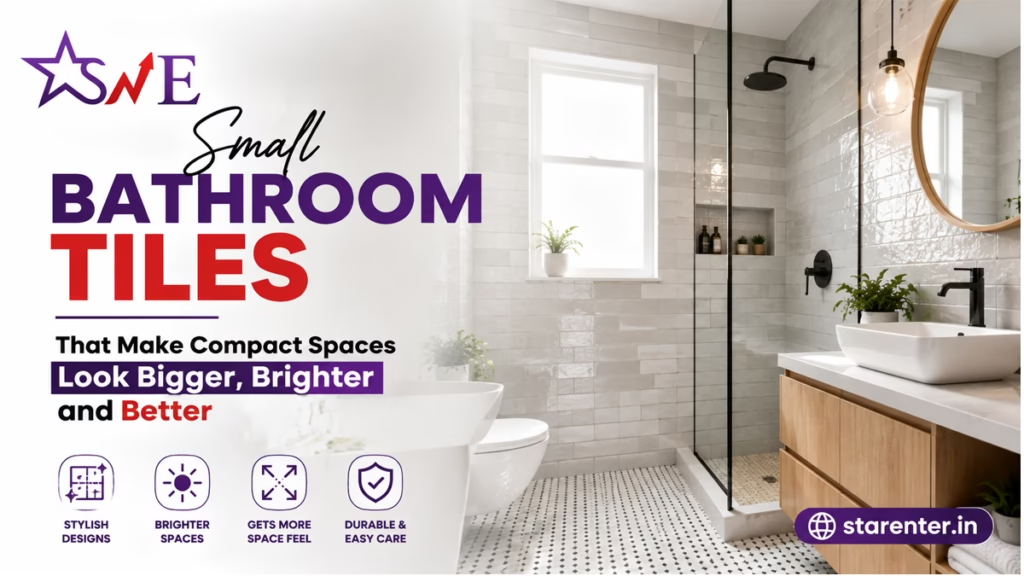
Introduction
A small bathroom has a simple problem: every visual decision shows up immediately. There’s no long wall to hide a busy pattern, no distance to soften a dark colour, no extra floor space to absorb a wrong-sized tile. The tiles you choose either work with the room’s limited size or work against it. Getting this right is less about following a trend and more about understanding how colour, size, finish and layout behave in a compact space.
Quick answer: For most small bathrooms, light-coloured tiles in a medium-to-large format, a matte or lightly textured finish on the floor, and colour continuity between walls and floor tend to make the room feel more open. But the “right” choice always depends on the room’s actual dimensions, natural light and layout — there’s no single tile that works for every bathroom.
Small Bathroom Tiles: Why the Right Choice Matters
Tiles cover more surface area in a small bathroom than almost anywhere else in a home. Because the walls and floor are close together and viewed from a short distance, the eye reads colour, grout lines and pattern far more intensely than it would in a larger room. A busy design that looks fine in a showroom can feel cramped once it’s surrounded by four close walls.
Colour and finish influence how light bounces around the space. Grout width and colour affect how broken up the surface looks. Tile size determines how many joints appear on a wall or floor, which in turn affects how continuous the surface feels. Beyond appearance, floor tiles in a bathroom also need to handle constant water exposure safely, and wall tiles need to be easy to clean around fittings, corners and the shower area. A good small bathroom tile decision balances all of these factors rather than optimising for looks alone.
15+ Small Bathroom Tile Design Ideas
1. Light-Coloured Large-Format Tiles
Larger tiles mean fewer grout lines, and fewer grout lines create a calmer, more continuous surface. In a small bathroom, this often reads as more open than the same wall broken into many small tiles. Light shades amplify the effect by reflecting available light rather than absorbing it. This works well on both floors and walls, though very large formats need a reasonably flat, well-prepared surface to install cleanly.
2. White and Grey Tile Combination
Pairing white with light or mid-grey is a dependable combination for compact bathrooms. White keeps the base tone bright, while grey adds definition without introducing a strong colour that can visually shrink the room. This pairing suits a grey floor with white walls, or a grey feature strip within an otherwise white scheme.
3. Warm Beige Bathroom Tiles
Beige and other warm neutrals soften a bathroom that might otherwise feel clinical in all-white. They still reflect light reasonably well and pair naturally with wood-look accessories or wooden vanity units. Beige tends to suit bathrooms with warmer artificial lighting, since it can look slightly dull under very cool, blue-toned lights.
4. Marble-Look Tiles
Marble-look porcelain or ceramic tiles bring a premium appearance without the maintenance demands of natural stone. The subtle veining adds visual interest without a strong colour block, which helps avoid the “busy” feeling that can shrink a small room. These tiles work particularly well as a feature wall behind the vanity or in the shower recess.
5. Glossy Wall Tiles
Glossy finishes reflect light more directly than matte finishes, which can make a wall feel brighter and, by extension, the room feel airier. This makes gloss a reasonable choice for walls in bathrooms with limited natural light. Gloss does show water spots and fingerprints more readily, so it needs regular wiping to stay looking its best.
6. Matte Anti-Skid Floor Tiles
On the floor, safety should come before shine. A matte or lightly textured surface designed for wet areas offers better underfoot grip than a high-gloss finish. Matte tiles also tend to hide water spots and minor scuffs better than glossy ones, which matters in a space that’s wet for large parts of the day.
7. Vertical Wall Tile Layout
Laying rectangular tiles vertically rather than horizontally can draw the eye upward, giving the impression of higher ceilings. This is a simple layout change rather than a different tile, so it’s a low-cost way to adjust how a room feels without changing the material itself.
8. Floor-to-Wall Colour Continuity
Using the same or a very similar tone on the floor and lower walls removes the visual “line” where one surface stops and another begins. Without that break, the eye tends to read the space as more continuous and open, even though the actual square footage hasn’t changed.
9. Textured Feature Wall
A single textured wall — behind the vanity or in the shower — adds depth and interest without covering the whole room in pattern. Keeping the texture confined to one wall, and the rest of the room simple, prevents the space from feeling overloaded.
10. Terrazzo-Inspired Tiles
Terrazzo-look tiles bring flecks of colour against a lighter base, giving personality without dominating the room the way a solid bold colour would. Because the base tone is usually light, these tiles can still contribute to a brighter overall impression while adding character underfoot or on a feature wall.
11. Neutral Stone-Look Tiles
Stone-look tiles in soft greys and taupes offer a natural, calming palette that works in both traditional and contemporary bathrooms. Their muted tone avoids the visual weight of darker stone-look options, making them a safer choice where floor space is limited.
12. Two-Tone Bathroom Design
Splitting the room into two complementary tones — for example, a lighter upper wall and a slightly deeper lower wall or floor — can add structure without making the room feel closed in. The key is keeping both tones within a similar light-to-mid range rather than pairing a very light tone with a very dark one.
13. Minimalist White Bathroom
An all-white or near-white scheme, with variation coming from texture rather than colour, is one of the more reliable ways to maximise brightness in a small bathroom. It also gives the most flexibility for accessories, fittings and future updates, since white pairs with almost anything.
14. Dark Accent Wall With Light Tiles
A single darker wall — often behind the vanity mirror — can work even in a small bathroom, provided the surrounding walls and floor stay light. Used sparingly, a dark accent adds contrast and a sense of intentional design rather than shrinking the room, because it’s balanced by light surfaces on all other sides.
15. Wood-Look Accent Tiles
Wood-look tiles bring warmth to a bathroom while remaining fully water-resistant, unlike real timber. Used on one wall or as a floor accent strip, they add a natural texture that pairs well with white, beige or grey schemes without introducing a strong colour.
What Colour Tiles Make a Small Bathroom Look Bigger?
Light, reflective colours — white, cream, beige and soft grey — tend to make a small bathroom feel more open because they reflect available light rather than absorbing it. Keeping a similar tone across walls, floor and even grout reduces visual breaks in the room, which can make the space read as more continuous.
That said, colour is only one factor. A bathroom with strong natural light or good artificial lighting can often accommodate a slightly deeper tone without feeling cramped, especially if it’s used on a single wall rather than the whole room. Darker colours aren’t automatically off-limits in a small bathroom — they just need to be balanced with enough light elsewhere in the space, whether from windows, lighting fixtures or reflective surfaces like mirrors and glossy tiles.
What Tile Size Is Best for a Small Bathroom?
There’s no single tile size that suits every small bathroom, but a few patterns are worth understanding.
Large-format tiles reduce the number of grout lines, which can make a surface feel more continuous and, in many cases, more spacious. Medium-format tiles offer a practical middle ground — easier to install around fittings and corners than very large tiles, while still keeping grout lines reasonably minimal. Small-format tiles, including mosaics, can still work well in specific areas like a shower niche or feature strip, where their detail adds interest without covering the whole room.
The room’s actual dimensions matter more than any general rule. A narrow bathroom with several fittings and corners may struggle to accommodate very large tiles without excessive cutting, while a slightly more open layout can handle them comfortably. Grout colour also plays a role — grout that closely matches the tile colour keeps the joints less visible, regardless of tile size.
Are Large Tiles Good for Small Bathrooms?
Large tiles can work well in small bathrooms, but the answer depends on the room’s layout and how the tiles are installed.
Advantages
- Fewer grout lines create a cleaner, more continuous surface
- A more modern, streamlined appearance
- Easier to keep clean, since there are fewer joints to collect dirt or mould
Limitations
- More cutting is required around fittings, corners and pipework, which increases wastage
- Installation demands a flatter, better-prepared wall or floor surface
- Uneven flooring or drainage slopes near a shower area can be harder to accommodate with very large tiles
- Awkward, irregularly shaped bathrooms may end up with more visible cut edges than a medium-format tile would produce
In practice, many small bathrooms benefit from large-format tiles on open wall sections and the main floor area, with a more manageable tile size used around the shower drain or other tricky spots. An experienced tiler can usually advise on what will work cleanly for a specific layout.
Best Small Bathroom Wall Tiles
Wall tiles have different demands than floor tiles: they don’t need to bear foot traffic or resist slipping, but they do need to handle splashes, humidity and regular wiping. This gives more flexibility in finish — glossy, matte, textured or marble-look tiles can all work well on walls.
Light colours and large-format tiles are generally the safest starting point for small bathroom walls, since they support the room’s overall sense of openness. Vertical layouts can add height, feature walls can add character without overwhelming the space, and glossy finishes can help bounce light around a bathroom with limited natural light. The right combination depends on how much personality the room can take without feeling busy — usually one standout element (a feature wall, a texture, or a bold grout colour) is enough.
Best Small Bathroom Floor Tiles
Floor tiles in a bathroom face constant water exposure, so safety has to come first. A matte or textured finish designed for wet areas offers better grip underfoot than a glossy tile, which can become slippery when wet.
Beyond slip resistance, floor tiles should be easy to clean, resistant to staining, and suited to the room’s drainage layout — particularly around a shower area where the floor may need a slight fall toward a drain. Grout choice matters here too: darker grout can hide dirt better on a busy floor, while grout close to the tile’s own tone keeps the surface looking more seamless. No floor tile can be guaranteed completely slip-proof, so it’s worth choosing a tile genuinely intended for wet-area flooring rather than judging purely on appearance.
Matte vs Glossy Tiles for Small Bathrooms
Matte and glossy finishes each suit different parts of a small bathroom.
Glossy tiles are often better suited to walls, where their reflective surface can help brighten a room and add a sense of polish. They tend to show water spots and fingerprints more readily, so they need more frequent wiping to stay looking clean.
Matte tiles suit floors particularly well, since they offer better grip in wet conditions and hide minor marks and water spots more effectively than a glossy surface. On walls, matte tiles can create a more understated, contemporary look with less glare, which some homeowners prefer over a high-shine finish.
There’s no absolute rule that one finish is better than the other — the right choice depends on where the tile is being used, how much natural light the room gets, and the overall look the homeowner wants.
10 Small Bathroom Tile Colour Combinations
- White + Light Grey — a clean, versatile pairing that suits almost any bathroom style
- White + Beige — adds warmth while keeping the room bright
- Cream + Warm Brown — a cosier, more traditional feel
- Light Grey + Charcoal — works well as a subtle accent rather than an even split
- White + Wood-Look — natural warmth without sacrificing brightness
- Beige + Stone — an earthy, calming neutral scheme
- White + Soft Green — a gentle accent colour that still keeps the space feeling light
- Marble White + Grey — a premium look suited to a feature wall or vanity area
- Sand + Taupe — a warm, understated neutral pairing
- White + Black Accent — used sparingly, for a strip, border or fitting, this can add contrast without darkening the whole room
In each pairing, the lighter tone typically covers the majority of the room, with the second tone used as an accent, feature wall or floor contrast rather than an even 50/50 split.
How to Use Tiles to Make a Small Bathroom Look Bigger
Tile choice is only part of the equation — how tiles are laid out matters just as much.
Colour continuity: Keeping a similar tone across walls and floor removes visual breaks and helps the eye read the room as one continuous space rather than several separate surfaces.
Orientation: Vertical layouts can draw the eye upward and make ceilings feel higher, while horizontal layouts can make a narrow room feel wider.
Grout colour: Grout that closely matches the tile keeps joints subtle. A strong grout contrast, while sometimes stylish, tends to visually break up the surface into smaller pieces.
Mirrors and lighting: A large mirror reflects both light and tile surfaces, effectively doubling the sense of space. Combined with adequate lighting, this can significantly change how open a small bathroom feels.
Feature walls: One accent wall, rather than pattern across every surface, keeps the room feeling considered rather than crowded.
Ceiling perception: Extending wall tiles close to the ceiling, without a contrasting border near the top, helps the walls feel taller and less enclosed.
Which Tile Material Is Best for a Small Bathroom?
Material choice affects durability, water resistance, appearance and cost. No single material is universally “best” — each has situations where it makes sense.
Ceramic tiles are a practical, widely available option for walls and, in many cases, floors, offering good value and a wide range of designs.
Porcelain tiles are denser and generally more water- and wear-resistant than standard ceramic, which can suit busy bathroom floors.
Vitrified tiles offer strong durability and low porosity, making them a dependable choice for both walls and floors in wet areas.
Marble-look and stone-look tiles (typically porcelain or ceramic with a printed or textured surface) bring a premium appearance without the higher maintenance of natural stone.
Terrazzo-inspired tiles add character and colour variation while generally keeping a light base tone.
Textured tiles can improve grip underfoot or add depth to a feature wall, depending on where they’re used.
The right material depends on budget, the specific wall or floor it’s going on, and how much maintenance the household is comfortable with.
10 Small Bathroom Tile Mistakes to Avoid
- Using too many patterns — combining several bold patterns in a small space can feel chaotic rather than stylish
- Using too many colours — sticking to two or three tones keeps the room cohesive
- Ignoring floor safety — choosing a glossy tile for the floor purely for its appearance can create a slip hazard
- Choosing tiles only from photographs — colour and finish can look different in person and under different lighting
- Ignoring lighting — a tile that looks bright in a showroom may look dull under the bathroom’s actual lighting
- Excessive grout contrast — dark grout on light tile can visually break up a small floor or wall more than intended
- Choosing the wrong tile size for the layout — very large tiles in an awkwardly shaped bathroom can mean excessive cutting and wastage
- Overusing feature tiles — a striking pattern is more effective on one wall than on every surface
- Ignoring day-to-day cleaning — heavily textured tiles can be harder to keep clean in a small, frequently used bathroom
- Buying without calculating quantity — underestimating tile quantity, including wastage for cuts, can delay a renovation or leave mismatched batches
How to Choose Small Bathroom Tiles Before Buying
Before finalising a purchase, it helps to work through a practical checklist:
- Bathroom dimensions — measure the actual wall and floor area, including alcoves and awkward corners
- Wall and floor area — calculate square footage separately for walls and floor, since requirements differ
- Tile size — check how the chosen format will work around fittings, corners and the shower area
- Finish — matte for floors, glossy or matte for walls, depending on the look and light in the room
- Colour — decide on a primary tone and, if wanted, one accent tone
- Slip resistance — confirm the floor tile is genuinely suited to wet-area use
- Grout — choose a grout colour that supports the overall look, whether subtle or contrasting
- Wastage allowance — order extra tiles to account for cutting, breakage and future repairs
- Installation — confirm the surface is suitable for the chosen tile size and format
- Cleaning and maintenance — consider how much upkeep the finish and grout will realistically need
- Budget — balance material cost against installation complexity, especially for large-format tiles
- Existing sanitaryware and fittings — check that the new tile scheme works with fixtures that are staying in place
Where to Find Small Bathroom Tiles Near Tambaram
Photographs and online listings only tell part of the story — colour, texture and finish can look noticeably different in person and under real lighting. For homeowners planning a compact bathroom renovation in and around Tambaram, seeing tiles directly, alongside samples of grout and finish, can make the final decision considerably easier.
Star Enterprises, based in West Tambaram, is a local option for homeowners in the area who want to compare bathroom tile colours, sizes and finishes in person before committing to a design. Bringing along rough bathroom measurements can help when discussing which tile sizes and layouts are practical for a specific space.
Explore the full range of bathroom tiles to see wall and floor options suited to compact spaces, or take a look at the broader bathroom tile design ideas for inspiration beyond small-space layouts.
Frequently Asked Questions
Which tiles are best for a small bathroom?
Light-coloured, medium-to-large-format tiles with a matte finish on the floor generally work well, but the best choice depends on the room’s actual size, layout and available light.
What colour tiles make a small bathroom look bigger?
Light, reflective colours such as white, cream, beige and soft grey tend to make a small bathroom feel more open, especially when used consistently across walls and floor.
Are large tiles suitable for small bathrooms?
Yes, in many cases. Large tiles reduce grout lines and create a more continuous look, though they need a well-prepared surface and more careful cutting around fittings and corners.
Is glossy tile better for a small bathroom?
Glossy tiles can help brighten walls by reflecting light, but they show marks more easily and aren’t recommended for bathroom floors, where a matte or textured finish is safer.
Which tiles are best for small bathroom floors?
Matte or lightly textured tiles designed for wet areas offer better slip resistance than glossy tiles and tend to hide water spots more effectively.
Which tile size should I choose for a compact bathroom?
There’s no universal answer — it depends on the room’s dimensions and layout. Medium-to-large formats often work well, but very large tiles need a reasonably regular-shaped room to avoid excessive cutting.
Are white tiles good for small bathrooms?
White tiles are a reliable choice for maximising brightness and visual space, and they pair easily with most fittings, accessories and future updates.
How do I choose wall and floor tiles together?
Aim for a similar tone or complementary colours between the two, since continuity between wall and floor tends to make a small bathroom feel more unified and open.
Can dark tiles work in a small bathroom?
Yes, when used carefully — typically as a single accent wall rather than across the whole room, and balanced with good lighting and lighter surfaces elsewhere.
How many tile colours should a small bathroom have?
Two to three tones usually work best. A primary light colour with one or two accent tones keeps the room cohesive without feeling flat.
Are anti-skid tiles necessary for bathroom floors?
A tile genuinely designed for wet-area flooring, with adequate slip resistance, is strongly recommended for any bathroom floor, given the constant water exposure.
Where can I buy bathroom tiles near Tambaram?
Homeowners in and around West Tambaram can visit Star Enterprises to view bathroom tile options, including sizes, colours and finishes suited to compact bathrooms, in person.
Final Thoughts
There’s no single “correct” tile for a small bathroom — the right choice depends on the room’s actual dimensions, the light it receives, and how the space is used day to day. What holds true across most compact bathrooms is that light colours, sensible tile sizes, careful grout choices and a genuinely slip-resistant floor tend to produce the most comfortable, visually open results.
If you’re planning a compact bathroom renovation in the Tambaram area, comparing tile colours, finishes and sizes in person can make the decision considerably easier than working from photographs alone. Star Enterprises in West Tambaram can help homeowners work through bathroom tile options suited to smaller spaces.
Small Bathroom Tiles: 9 FAQs That Help You Choose Better
Large-format tiles are often a smart choice for small bathrooms because they create fewer grout lines and can make walls and floors appear more continuous. Medium-sized tiles can also work well, depending on the bathroom layout and installation area.
Light colours such as white, cream, beige, soft grey and light pastel shades can help a compact bathroom feel brighter and more spacious. Using similar tones across walls and floors can create a more open, continuous appearance.
Glossy wall tiles can reflect light and make a small bathroom feel brighter, while matte tiles offer a softer and more understated finish. For many compact bathrooms, glossy walls combined with practical slip-resistant floor tiles can provide a good balance of appearance and functionality.
Yes. Large tiles can visually reduce the number of grout lines, creating cleaner and more continuous surfaces. This can make a compact bathroom appear less busy and visually more spacious.
Simple layouts usually work best in compact bathrooms. Vertical arrangements can visually increase wall height, while horizontal layouts can make a narrow space feel wider. Keeping patterns subtle also helps prevent the room from feeling visually crowded.
They do not have to match exactly. However, choosing complementary colours and finishes can create visual continuity. Using closely related tones is especially effective when you want a small bathroom to feel calmer and more spacious.
Easy-to-clean ceramic and porcelain tiles are popular choices for bathrooms. Larger tiles can also reduce the amount of grout that needs regular cleaning. For floors, always consider texture and slip resistance in addition to appearance.
Avoid using too many competing patterns, extremely dark colours throughout the room, excessive decorative borders and poorly planned grout lines. Choosing tiles according to the room’s natural light, proportions and overall design can produce a much better result.
Use light-reflective wall tiles, a restrained colour palette, clean grout lines and carefully planned lighting. Large-format tiles, coordinated surfaces and a few premium-looking accents can create a sophisticated appearance without making the bathroom feel crowded.