
Introduction
Explore full body tiles and full body vitrified tiles for residential and commercial flooring, with practical guidance on designs, finishes, sizes, performance, price, installation and local showroom selection in Tambaram.
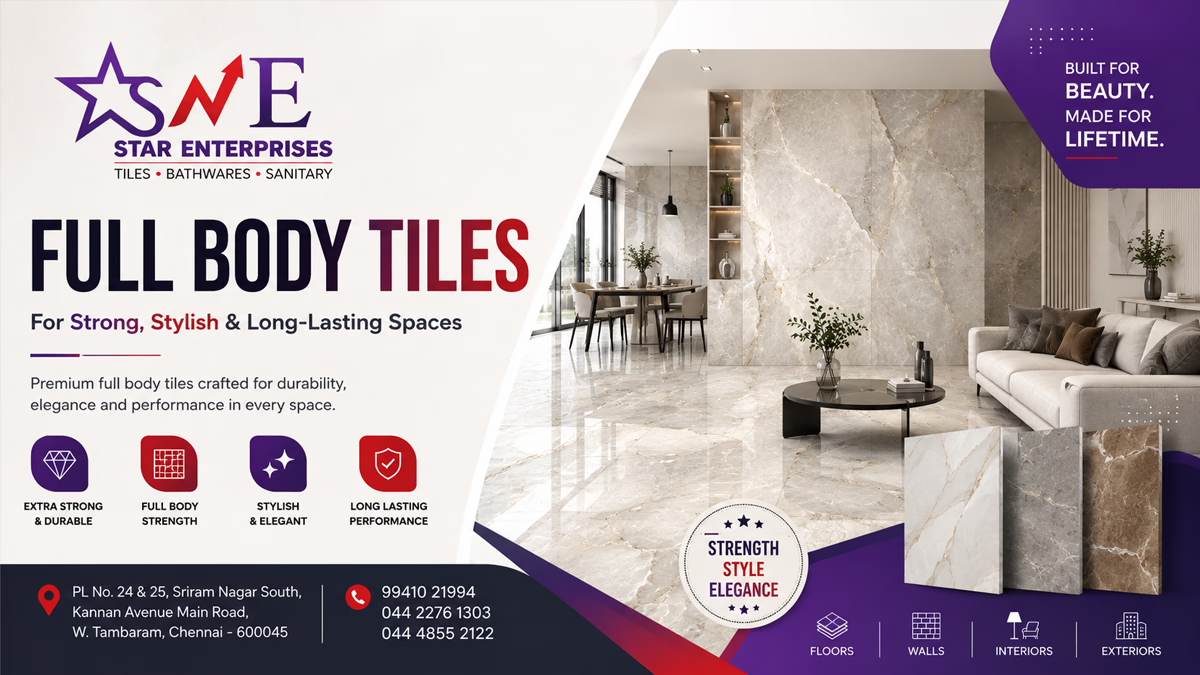
Full Body Tiles for Strong, Stylish & Long-Lasting Spaces
Full body tiles are designed for projects where appearance and dependable flooring performance both matter. They are commonly associated with vitrified tile products in which colour and pattern extend through the body of the tile, making them an attractive option for high-use areas, homes, offices and selected commercial spaces. The exact performance of every product still depends on its technical specification, so buyers should evaluate the individual collection rather than relying on the category name alone.
For a homeowner, choosing full body tiles is not simply a matter of selecting the strongest-looking tile. The right product should suit the room, expected traffic, moisture exposure, design direction, finish, size, maintenance routine and installation conditions. A tile can be visually impressive and still be the wrong choice if it is not intended for the application.
This guide is designed as a complete buying resource for customers researching full body tiles, full body vitrified tiles, full body floor tiles and related flooring options. It explains how full body tiles are made, why they are selected for demanding spaces, how they compare with ceramic, porcelain and other vitrified categories, how to choose designs and finishes, how to estimate quantity and price, and how to turn online research into a confident showroom visit.
For customers searching for full body tiles in Tambaram, the physical showroom experience is especially useful. Seeing several products together allows you to compare surface texture, colour, pattern, size and finish while discussing the technical suitability of each option. Star Enterprises in West Tambaram can be the practical next step after online research, particularly when the project involves a home, renovation, builder requirement or commercial space.
What Are Full Body Tiles?
Full body tiles are dense tile products in which the colour or material character is carried through the body of the tile rather than being limited to a thin decorative surface. The construction makes the category particularly associated with durability and use in demanding flooring environments.
Full body tiles are commonly available within the vitrified tile family. They may be produced in different colours, textures, sizes and surface finishes. Some collections are designed to create natural-stone appearances, while others use subtle solid colours or contemporary patterns.
The important point for buyers is that full body construction does not remove the need to check technical specifications. Water absorption, breaking strength, surface finish, slip characteristics, recommended application and installation requirements can differ between products.
If you are comparing full body vitrified tiles with ceramic or porcelain tiles, consider the complete product specification and intended use. The best tile is the one whose characteristics match the actual environment.
A showroom consultation can help translate a general requirement such as “durable floor tiles” into a more precise product choice.
How Full Body Vitrified Tiles Are Made
The manufacturing process begins with carefully prepared raw materials that are processed into a tile body and formed into the required dimensions. The material is then subjected to high-temperature firing and finishing processes designed to produce a dense tile.
The full body concept relates to the way the colour or material character is distributed through the tile body. This differs from products where the visual surface is primarily created by a glaze or thin decorative layer.
Manufacturing technology can vary between manufacturers and collections, so the exact process and performance characteristics should always be verified from the product information.
For buyers, the practical outcome is more important than the manufacturing terminology. Ask how the exact tile is intended to be used, what technical specifications apply and what installation method is recommended.
When comparing products in a showroom, look at the edge and body as well as the top surface. Discuss the product’s intended application rather than assuming that every full body tile has identical performance.
Why Choose Full Body Tiles?
One major reason customers consider full body tiles is their suitability for demanding flooring applications. Because the material character extends through the tile body, the product can be attractive where long-term wear and visual consistency are important.
They can also provide a clean, architectural appearance. Stone-inspired surfaces, neutral tones and restrained textures work well in contemporary interiors, while darker and more textured options can create stronger character.
Full body tiles can be considered for residential and commercial projects, including living areas, corridors, shops, offices and other spaces where the selected product is technically appropriate.
Another advantage is design flexibility within a durable product category. Customers do not necessarily have to choose between performance and appearance. The right collection can provide both.
However, “full body” should never be treated as a universal guarantee. Always check the individual product’s technical specifications and intended application.
Benefits of Full Body Tiles
Full body tiles can offer several useful characteristics for buyers. Their through-body construction can provide visual continuity when the surface experiences wear, and many products are designed for demanding flooring applications.
They can also offer strong design versatility. Depending on the collection, buyers may find stone-inspired, concrete-inspired, neutral, textured and other contemporary appearances.
Maintenance can be practical when the selected finish is appropriate and the cleaning routine is followed. Like other hard flooring products, performance depends on correct installation and regular care.
Another benefit is their suitability for projects where a floor must work visually with many different materials. Neutral full body flooring can support wood furniture, painted walls, metal details and decorative accents without dominating the room.
The best benefit, however, comes from matching the product to the project. Technical suitability should always come before marketing language.
Full Body Tiles for High-Traffic Areas
High-traffic areas require careful flooring selection because repeated movement can expose surfaces to wear, dirt and impact. Full body tiles are often considered for such environments, but the exact product should be checked for its intended traffic level.
Homes with large families, entrances, corridors and busy common areas can benefit from flooring selected with durability and maintenance in mind. Shops, offices and other commercial environments may require additional consideration of expected traffic, cleaning frequency and load.
The finish also matters. A surface that looks excellent in a low-use room may behave differently in a busy area. Slip characteristics and cleaning should be considered alongside appearance.
Before specifying a product for a high-traffic project, ask for its technical information and application recommendation. A showroom can help narrow the options, but the manufacturer’s specifications should remain the final technical reference.
Full Body Tiles for Homes
Full body tiles can be used in residential projects where homeowners want a strong flooring foundation combined with a contemporary appearance. Living rooms, dining areas, corridors and selected kitchens are common areas to evaluate.
A neutral stone-look tile can provide continuity across an open-plan home. A marble-inspired design can create a more formal appearance. A concrete-inspired surface can suit a minimalist interior.
For bedrooms, homeowners may prefer quieter designs or wood-inspired alternatives. The choice should reflect the room’s mood and practical needs.
The advantage of planning the whole home at once is consistency. Related colours and materials can connect rooms while still allowing each space to have its own character.
Full Body Tiles for Living Rooms
Living rooms are often the most visible area of a home, so flooring has a major effect on the overall interior. Full body tiles can provide a strong base for contemporary, minimalist and premium-inspired designs.
Large-format stone and marble-inspired surfaces can create visual continuity. Neutral grey and beige tones are versatile, while darker options can add drama.
Furniture should influence the tile selection. Strongly patterned furniture can work better with a calmer floor, while simple furniture can allow a more expressive surface.
Lighting is equally important. Glossy surfaces reflect light, while matte surfaces create a softer appearance. Always compare physical samples in the room’s actual lighting where possible.
Full Body Tiles for Bedrooms
Bedrooms usually need a quieter visual atmosphere than public areas of the home. Full body tiles can still work well when the colour and pattern are selected carefully.
Soft stone effects, neutral tones and understated textures can provide a calm foundation. If a wood-look appearance is desired, compare suitable wood-effect tile collections with the broader full body options.
A bedroom floor should also coordinate with wardrobes, beds, curtains, wall paint and lighting. The tile does not need to match every element exactly; it needs to sit comfortably within the overall palette.
For homeowners who frequently change furniture or bedding, a versatile floor can provide greater long-term flexibility.
Full Body Tiles for Kitchens
Kitchen floors need to handle regular movement, cleaning and occasional spills. Full body floor tiles can be considered when the exact product is appropriate for kitchen flooring.
Choose colour and finish according to the kitchen’s cabinets and countertop. Stone and concrete effects can provide a neutral base, while stronger patterns can become a feature.
Slip characteristics should be considered wherever water or other contaminants can reach the floor. Cleaning requirements should also be understood before choosing a heavily textured surface.
For kitchen walls and backsplashes, other tile categories may provide a wider decorative selection. Compare the complete kitchen scheme rather than forcing one tile type onto every surface.
Full Body Tiles for Bathrooms
Bathrooms require particular attention to water, drainage and slip characteristics. Full body tiles may be suitable for some bathroom floors, but the exact product must be intended for wet-area flooring.
The floor should coordinate with wall tiles without becoming visually overwhelming. A neutral full body floor can balance a decorative digital or ceramic wall surface.
For larger bathrooms, stone-inspired designs can create a calm, spa-like atmosphere. Smaller bathrooms often benefit from restrained patterns and practical finishes.
Before installation, confirm the correct slope toward drains, substrate preparation, jointing and installation method. Tile selection and installation planning should be treated as one decision.
Full Body Tiles for Commercial Spaces
Commercial spaces can place greater demands on flooring than many residential rooms. Offices, shops, reception areas, corridors and other public environments may experience high foot traffic, frequent cleaning and movement of furniture or equipment.
Full body tiles can be evaluated for these spaces when the selected product meets the project’s technical requirements. The design should also suit the business environment.
A retail store may need a neutral floor that allows products to remain the visual focus. An office may benefit from a restrained stone or concrete effect. A reception area may use a premium marble-inspired appearance.
Commercial projects should confirm technical ratings, maintenance requirements, supply continuity and installation specifications before final approval.
Full Body Tiles for Shops and Showrooms
Retail and showroom floors need to support both customer movement and visual presentation. The floor should look professional without competing with merchandise or displays.
Neutral stone, concrete and subtle marble effects are often useful design directions. Stronger patterns can be effective in selected zones, but the overall floor should remain coherent.
Because retail floors can experience continuous traffic, product suitability and maintenance are particularly important. Discuss expected traffic with the supplier before finalising the tile.
A practical floor also reduces long-term operational inconvenience, making technical selection just as important as visual design.
Full Body Tiles for Offices
Office flooring should balance professional appearance, maintenance and daily use. Full body tiles can provide a clean architectural base for reception areas, corridors and selected workspaces.
Neutral grey, beige and stone-inspired designs can work with modern furniture. Concrete effects can create a contemporary character, while warmer stone designs can make the environment feel less industrial.
Consider chair movement, entrances, cleaning routines and high-contact areas. The floor should be chosen according to the actual office environment rather than a residential showroom impression alone.
Full Body Tile Designs
Full body tile designs range from understated solid colours to stone-inspired textures and contemporary patterns. The design should be selected according to the architecture and intended mood of the room.
Stone-look full body tiles can create a natural appearance. Marble-inspired designs can add elegance. Concrete-inspired tiles can support modern minimalism. Textured surfaces can create depth without relying on strong colour.
A good design usually has enough variation to avoid appearing repetitive but enough consistency to keep the floor visually connected.
When selecting several tile designs for one property, establish a common colour or material language. This helps different rooms feel like parts of the same home.
Marble-Look Full Body Tiles
Marble-look full body tiles combine the visual appeal of marble-inspired patterns with the characteristics of the selected manufactured tile. They can be used to create elegant floors in suitable residential and commercial spaces.
White and light marble effects can make interiors feel bright. Grey veining can create a contemporary luxury character. Beige marble-inspired surfaces can work with warm furniture and lighting.
The pattern should be evaluated across several pieces. Look for how the veining flows and whether the variation appears natural when repeated.
For a large room, large-format marble designs can reduce visual interruption. For smaller areas, the pattern scale should be chosen carefully so the surface does not feel too busy.
Stone-Look Full Body Tiles
Stone-look full body tiles can create a grounded, natural visual effect. They can work in contemporary, rustic and transitional interiors.
Light stone colours can create an airy appearance. Mid-tone stone can provide practical visual balance. Dark stone can add depth and drama.
Texture and pattern should be evaluated together. A highly textured surface may require more maintenance, while a subtle texture can provide depth without making cleaning unnecessarily difficult.
The best stone-look tile should complement the room’s other materials rather than trying to imitate every detail of natural stone.
Concrete-Look Full Body Tiles
Concrete-inspired full body tiles are popular for minimalist and industrial interiors. Their restrained visual character provides a neutral foundation for wood, metal and contemporary furniture.
Soft grey is a common direction, but warmer concrete-inspired colours can create a more welcoming interior.
Because concrete-look designs are visually understated, they can work well across large areas without dominating the room.
Compare several samples because grey undertones can vary significantly. The right concrete design should work with the wall colour and lighting rather than appearing unexpectedly blue or warm.
Matte Full Body Tiles
Matte full body tiles have a softer visual character because they reduce strong reflections. They can work well in contemporary interiors where a calm, understated surface is preferred.
Matte surfaces can also be practical in selected flooring applications, but buyers should never assume that every matte tile automatically has the same slip performance. Check the exact technical specification.
Maintenance should also be considered. A textured matte surface can require more attention than a smooth matte surface.
The best finish depends on the room, lighting, traffic and cleaning routine.
Polished Full Body Tiles
Polished full body tiles can create a more reflective and premium appearance. They can make colours appear stronger and help light move across the room.
Polished surfaces can work particularly well in living rooms, receptions and other areas where visual impact matters. However, they may show footprints, water marks and dust more clearly.
For wet areas and floors where slip performance is critical, the product specification should be checked carefully.
Do not choose polished simply because it looks luxurious. Consider the actual room and maintenance expectations.
Full Body Tile Colours
Colour selection should begin with the room’s lighting and existing materials. Beige and cream can create warmth. Grey can create a modern character. White can increase visual brightness. Charcoal and darker tones can add depth.
Undertone matters. Two grey tiles can look very different beside the same cabinet because one may be warmer than the other.
For open-plan homes, consistent undertones can help different areas feel connected. For commercial projects, neutral colours may provide greater flexibility for changing branding or furniture.
Always compare physical samples with the project’s actual materials before ordering.
Full Body Tile Sizes
Full body tiles are available in different formats depending on the collection. Common flooring formats can include 600×600, 800×800 and larger formats, while other sizes may be available for specific projects.
Larger tiles can reduce grout lines and create a more continuous appearance. Smaller formats can provide more layout flexibility.
Room dimensions, corners, drainage, installation skill and pattern scale should determine the final size.
For large-format tiles, substrate preparation and handling become particularly important. Confirm installation requirements before ordering.
Large-Format Full Body Tiles
Large-format full body tiles can create a spacious, contemporary appearance because fewer grout joints interrupt the visual field.
They work particularly well in large living rooms, open-plan interiors, receptions and other spaces where continuity is desired.
However, large formats require careful planning. Uneven substrates can make alignment difficult, and cutting around corners or columns needs precise measurement.
Before choosing a large format, confirm that the installer has the appropriate experience and that the room can accommodate the product efficiently.
Full Body Tiles for Small Spaces
Small spaces can still use full body tiles effectively. The key is to control visual interruption and choose a design that supports the scale of the room.
Light neutral colours can help create an open feeling. A consistent tile across connected surfaces can reduce visual fragmentation.
Large formats can sometimes work in small rooms, but drainage, cutting and installation conditions should be checked. Smaller formats can also be appropriate where the layout is complex.
Avoid selecting an extremely busy pattern simply because the sample looks interesting. Small spaces often benefit from restraint.
Full Body Tiles vs Ceramic Tiles
Ceramic tiles and full body tiles belong to broader tile categories with different construction characteristics and typical applications. Ceramic tiles offer a wide range of decorative options, particularly for walls and selected floors. Full body products are commonly associated with dense flooring applications.
The comparison should focus on the exact product and room. Consider traffic, moisture, finish, strength, slip characteristics, maintenance and design.
A project can use both categories. For example, a home might use full body flooring in a living area and ceramic wall tiles in a bathroom.
You can explore the broader Star Enterprises ceramic tiles category when comparing materials.
Full Body Tiles vs Porcelain Tiles
Porcelain tiles are a specific dense ceramic category commonly associated with very low water absorption. Full body tiles describe the distribution of colour or material character through the tile body.
These descriptions can overlap in real products, so they should not be treated as mutually exclusive categories.
When comparing them, examine water absorption, strength, finish, slip characteristics, application, maintenance and installation requirements.
The right choice depends on the project rather than on the category name alone. See the Star Enterprises porcelain tiles page for broader porcelain guidance.
Full Body Tiles vs Vitrified Tiles
Full body tiles are commonly found within the vitrified tile family, so this comparison requires careful terminology. Vitrified describes a dense manufacturing category, while full body describes how the colour or material character extends through the tile body.
A vitrified tile is not automatically full body, and a full body tile is typically considered in relation to vitrified flooring applications.
For a buyer, the useful questions are: what is the exact product, what is its intended application, what are its technical characteristics, and how will it perform in the project?
Explore the broader Star Enterprises vitrified tiles category when comparing flooring options.
Full Body Tiles Price: What Determines Cost?
Full body tiles price depends on several factors, including tile size, design, finish, body characteristics, brand, technical specification, collection and availability.
Large-format products and premium finishes can have different pricing from standard formats. Installation materials, labour, cutting, grout and wastage also contribute to the final project cost.
Compare equivalent products rather than comparing only box prices. Check the area covered per box and the exact product specification.
Because tile collections and market prices change, current pricing should be confirmed for the exact product at Star Enterprises. Avoid making a purchasing decision from an old generic price list.
How to Calculate Full Body Tile Quantity
Start by measuring the actual floor area for each room. Then account for doors, irregular shapes, columns, corners, pattern direction and cutting.
Add a sensible allowance for breakage and wastage. The appropriate allowance depends on the room and installation pattern.
Confirm the coverage of each box before ordering. If several sizes or designs are being used, calculate each product separately.
Keep a record of the product code, size and shade. This information can be useful if additional material is required later.
Full Body Tile Installation Guide
The quality of installation can determine whether a premium full body tile looks excellent or disappointing. Surface preparation, level, alignment, joint width, cutting and grout all matter.
Large-format tiles require particular attention to substrate flatness. The installer should also use appropriate tools and handling methods.
For patterned or directional designs, layout should be planned before fixing. The visual movement should flow naturally across the room.
Wet areas require correct drainage slopes and suitable installation materials. Always follow the manufacturer’s installation instructions and use an experienced installer where the product demands it.
Full Body Tile Maintenance
Maintenance depends on the exact finish and environment. Regular sweeping or vacuuming removes loose dirt, while suitable cleaning keeps the surface presentable.
Avoid harsh chemicals unless the manufacturer confirms that they are safe for the selected tile and grout.
Busy commercial floors may require a more frequent cleaning schedule than residential bedrooms. Kitchens and bathrooms should be cleaned promptly when spills or residues occur.
Textured surfaces can require more attention than smooth surfaces because dirt may settle into surface variation. Maintenance should therefore be considered before choosing the finish.
Full Body Tiles for Renovation Projects
Renovation projects need careful measurement because existing floors can create constraints. Check floor levels, door clearances, skirting, drainage and transitions before selecting the final tile.
If an old floor is being replaced, determine whether the existing substrate is suitable for the new installation. The required height can affect doors and adjoining rooms.
Compare samples with existing furniture, cabinetry and wall colours. A new floor should connect with the existing interior rather than appearing isolated.
Keep product information after installation so replacement tiles can be identified later if necessary.
Full Body Tiles for Builders and Contractors
Builders and contractors need dependable product information and supply planning in addition to appearance. Confirm the exact product code, size, shade, finish, box coverage and application before ordering.
For larger projects, check availability and plan quantities room by room. Consistency between batches should be discussed where the project requires large quantities.
Installation planning should be completed before material reaches the site. This reduces cutting problems and helps maintain the intended visual pattern.
Professional projects should always use the manufacturer’s technical documentation as the final authority for performance requirements.
Full Body Tiles for Interior Designers
Interior designers can use full body tiles to establish a strong flooring foundation. The tile can become a quiet background or a major visual element depending on colour and pattern.
A good material scheme usually has one dominant surface, supporting materials and selected accents. Full body stone, marble and concrete effects can all play different roles within this hierarchy.
Designers should consider scale carefully. A dramatic pattern can become overwhelming when repeated over a large floor.
The best specification balances aesthetics with technical suitability, maintenance and long-term practicality.
How to Choose the Right Full Body Tiles
Start with the room. Identify whether it is residential, commercial, high traffic, wet, dry, indoor or another environment.
Next establish the visual direction: stone, marble, concrete, neutral, textured or another style. Then choose colour and finish.
After the design shortlist is created, check the technical information for intended use, water absorption, strength, slip characteristics and maintenance.
Finally compare size, box coverage, quantity, availability, installation requirements and current price.
This process makes the decision systematic and reduces the risk of selecting a tile based only on appearance.
How to Compare Full Body Tile Samples
Take three or four shortlisted samples and compare them together. Look at colour, pattern variation, texture, gloss and edge appearance.
View the samples from close range and from several metres away. Imagine the entire floor covered with the design.
Place the sample beside cabinets, furniture, paint, countertops and other materials. Check how the undertones interact.
Then ask the showroom team about technical suitability, current availability, box coverage, installation and maintenance. A good comparison should narrow the decision to a small number of confident options.
Full Body Tiles in Tambaram
Customers searching for full body tiles in Tambaram often have strong local commercial intent. They may be looking for full body vitrified tiles, full body floor tiles, a tile shop, a tile showroom or a supplier near their home or project.
A useful local buying experience should combine product information with genuine business information. Customers need to know where they can see the tiles, compare options and discuss their requirements.
Star Enterprises in West Tambaram provides a physical showroom destination for customers who want to move beyond online images and compare actual products.
Local SEO should be built around the real showroom, accurate business information, genuine photographs, directions, products and customer experience rather than creating thin pages for every nearby locality.
Why Visit Star Enterprises for Full Body Tiles?
Full body tile selection benefits from seeing the actual product. A physical showroom allows customers to compare texture, surface finish, colour, size and pattern variation.
At Star Enterprises in West Tambaram, customers can discuss their project requirements and compare full body tiles with other suitable flooring categories when needed.
Bring room photographs, approximate measurements and your preferred design direction. If you are working with a builder, contractor or interior designer, product specifications and quantity requirements can also be discussed.
The objective is to find the right product for the project rather than simply choose the tile with the strongest online photograph.
Full Body Tile Buying Checklist
Before ordering, confirm the intended room and application. Check the exact product code, size, finish, shade, technical specification, box coverage and quantity.
Compare a physical sample under realistic lighting. Consider furniture, walls, cabinets and the overall interior.
Ask about installation requirements, suitable adhesive or fixing method, grout, cutting and maintenance.
Confirm current availability and pricing before finalising the order. For larger projects, keep written records of selected products and quantities.
Finally, retain spare tiles or product information where practical for future repair and replacement needs.
Frequently Asked Questions About Full Body Tiles
These FAQs address common questions about full body tiles, full body vitrified tiles, durability, designs, price, flooring applications and buying in Tambaram.
What are full body tiles?
Full body tiles are tile products in which the colour or material character extends through the tile body. They are commonly associated with dense vitrified flooring products and are often considered for demanding applications.
Are full body tiles durable?
Many full body products are designed for durable flooring applications, but durability is product-specific. Check the manufacturer’s technical specifications, intended application and expected traffic suitability before purchase.
Are full body tiles good for flooring?
Yes, suitable full body products are commonly used for flooring. The exact tile should still be checked for the intended room, traffic, slip characteristics and other technical requirements.
Are full body tiles better than ceramic tiles?
Neither category is automatically better for every project. Full body tiles are commonly selected for demanding flooring, while ceramic tiles offer broad design flexibility for walls and selected floors. Compare the exact products and application requirements.
Are full body tiles the same as vitrified tiles?
Full body describes how colour or material character extends through the tile body, while vitrified describes a dense tile category. Many full body products are vitrified, but the terms are not identical.
Are full body tiles the same as porcelain tiles?
Not necessarily. Porcelain is a specific dense ceramic category, while full body describes the distribution of colour or material through the body. Some products can overlap these characteristics.
What are the best full body tile designs?
Popular directions include stone-look, marble-inspired, concrete-look, neutral and textured designs. The best choice depends on the room, lighting, furniture, maintenance and intended application.
Are matte full body tiles good for floors?
Matte full body tiles can be suitable for flooring when the individual product is designed for floor use. Check its slip characteristics and technical specification rather than relying on the word matte alone.
Are polished full body tiles suitable for homes?
Polished full body tiles can create a reflective, premium appearance and may work well in suitable residential areas. Consider maintenance and slip requirements for the specific room before choosing them.
How much do full body tiles cost?
Price varies by size, finish, design, brand, technical specification, collection and availability. Installation materials, labour and wastage also affect the total project cost. Current pricing should be confirmed for the exact product.
How much tile should I buy?
Measure each room, calculate the area, consider the layout and add an appropriate allowance for cuts and breakage. Confirm the coverage per box before ordering.
Can full body tiles be used in bathrooms?
Suitable full body tiles can be considered for bathroom floors when the exact product is intended for wet-area use and meets the required slip and installation conditions.
Can full body tiles be used in commercial spaces?
Yes, suitable products can be considered for offices, shops, corridors and other commercial environments. Confirm the technical specification and expected traffic level before selection.
Where can I buy full body tiles in Tambaram?
Customers searching for full body tiles in Tambaram can visit Star Enterprises in West Tambaram to compare suitable collections and discuss their flooring requirements.
Where can I find full body tiles near me?
Use the genuine Star Enterprises showroom location and directions to visit the store and compare full body tile options in person.
Final Step: Visit Star Enterprises for Full Body Tiles
The right full body tile is a combination of suitable performance, design, size, finish, maintenance and project value. Start your research online, build a shortlist and then inspect the actual products before making the final decision.
If you are searching for full body tiles in Tambaram, visit Star Enterprises in West Tambaram with your room photographs and approximate measurements. Compare full body vitrified tiles, flooring options and related tile categories according to the needs of your project.
You can continue exploring the Star Enterprises collection through tiles, floor tiles, vitrified tiles, porcelain tiles, ceramic tiles, double charge vitrified tiles, glazed vitrified tiles, living room tiles, bedroom tiles, kitchen tiles, bathroom tiles, commercial solutions and the showroom.
The final decision should never be based on a keyword or trend alone. Choose the exact product that fits the space, verify its application and technical characteristics, compare it physically and then move forward with confidence.
Full Body Tiles and Everyday Wear
Everyday wear is one of the main reasons homeowners and commercial buyers investigate full body flooring. A floor experiences repeated foot movement, dirt carried from outside, furniture movement and occasional impacts. The appropriate product needs to be selected according to the intensity of that use.
A busy entrance deserves different consideration from a lightly used bedroom. Corridors may receive continuous movement even when the rooms beside them do not. Commercial entrances can add another layer of demand because customers, staff and delivery activity can all contribute to wear.
Full body construction can be attractive for such environments, but buyers should still check the product’s actual performance specifications. Construction alone should not replace technical evaluation.
A useful showroom conversation begins with describing the real environment. Tell the team whether the project is a family home, rental property, office, shop, reception area or another space. Explain expected traffic and maintenance routines. That information helps narrow the collection more effectively than simply asking for the “strongest” tile.
Visual wear also depends on colour and pattern. A lightly patterned stone surface may visually conceal everyday dust better than a completely uniform dark surface. That does not mean one design is technically more durable; it simply means appearance and maintenance perception should be considered together.
Full Body Tiles and Scratch Resistance
Scratch resistance is an important consideration for floors that experience furniture movement, grit and frequent use. Buyers should avoid making absolute claims based only on the phrase full body. The relevant technical specification for the exact tile should be checked.
The environment also affects risk. A residential bedroom may have very different scratch exposure from a retail entrance where outdoor dirt is frequently carried inside.
Furniture protection helps any tile floor. Felt pads beneath movable furniture, sensible lifting rather than dragging and regular removal of grit can reduce unnecessary surface abrasion.
When comparing products, ask whether the tile is intended for the expected traffic and what care is recommended. If the project has unusually demanding requirements, request technical documentation before placing a large order.
The most durable flooring decision is usually a combination of suitable product specification, correct installation and sensible everyday care.
Full Body Tiles and Slip Considerations
Slip performance should be considered whenever a floor can become wet or contaminated. Bathrooms, entrances, kitchens, utility areas and some commercial spaces can all create conditions where the floor surface behaves differently from a dry showroom sample.
Do not use a general rule such as “matte is always safe” or “polished is always unsafe.” The relevant information is the tested or specified characteristic of the individual product.
Consider the likely source of moisture, cleaning routine, footwear and slope. In bathrooms, drainage design is particularly important because standing water can create avoidable risk.
Ask the supplier for the relevant technical information and follow the manufacturer’s installation guidance. The final decision should balance appearance with the actual conditions in which the tile will be used.
This is one reason a showroom visit is more useful than choosing a tile solely from an online image.
Full Body Tiles and Grout Planning
Grout is part of the finished floor design and should be considered before ordering. Joint width affects visual rhythm, while grout colour can either blend with the tile or emphasise individual pieces.
A grout colour close to the tile can create a more continuous appearance. A contrasting grout can make the tile geometry more visible. For stone-look designs, a coordinated grout can help maintain a natural visual effect.
Maintenance expectations should also influence the decision. High-use areas can show grout discolouration more readily, so practical cleaning and suitable grout selection matter.
Follow the tile and grout manufacturer’s recommendations for joint width and installation. Do not choose a joint size solely because it appears attractive in a photograph.
When comparing samples at the showroom, ask to see how the recommended grout might look with the selected tile. This can change the perceived character of the entire floor.
Full Body Tiles and Open-Plan Homes
Open-plan homes create a strong case for visual continuity. Because the same floor can extend from living to dining and other connected zones, the tile becomes a major part of the home’s identity.
Full body stone, marble and concrete-inspired surfaces can provide a consistent foundation. Furniture, rugs and lighting can then define individual areas without breaking the floor into too many visual categories.
The challenge is selecting a design that remains comfortable across a large area. A very dramatic pattern may feel exciting in a small sample but overwhelming when repeated throughout the entire open plan.
Neutral designs are often easier to coordinate with changing furniture. If a strong pattern is preferred, consider whether it should be limited to a particular zone.
Planning the floor as a complete composition before ordering can prevent mismatched batches, awkward cuts and inconsistent visual transitions.
Full Body Tiles for Entryways
Entryways receive dirt, footwear, bags, furniture movement and frequent foot traffic. They are therefore an important place to think about practical flooring.
Full body tiles can be evaluated for an entry when the selected product is appropriate for the expected use. Colour and pattern can also influence how everyday dust and marks appear.
A dark, completely uniform surface may show light dust clearly, while a subtly varied stone-inspired pattern may visually disguise small marks. Again, this is an appearance consideration rather than a technical durability claim.
The entry should also connect with the rest of the home. A tile that continues into the living room can create a seamless transition, while a different but complementary tile can define the entrance.
Consider door thresholds, level changes and drainage where the entrance is exposed to outdoor moisture.
Full Body Tiles for Corridors
Corridors can experience more traffic than homeowners initially expect because they connect bedrooms, bathrooms, living spaces and entrances. A suitable full body floor can provide continuity and practical performance.
Long corridors also create a strong visual direction. Tile orientation can influence whether the space feels longer, wider or more structured.
Large formats may reduce grout lines, but the corridor width and cutting requirements should be checked. Smaller formats can sometimes produce a more balanced installation.
Lighting along the corridor can also affect the perceived finish. Glossy surfaces reflect light strongly, while matte surfaces create a quieter appearance.
Choose the tile based on both traffic and visual proportions.
Full Body Tiles for Staircases and Steps
Staircases require special care because horizontal and vertical surfaces, edges and transitions all need to work together. Not every full body tile is automatically suitable for stair applications.
If a project uses full body tiles on steps, confirm the manufacturer’s guidance and the installer’s method for edge treatment and slip considerations.
The design should also provide a clear visual relationship between the tread, riser and surrounding floor. Strongly patterned tiles may require careful matching.
Safety and installation should take priority over visual trends. Discuss the complete staircase detail before ordering large quantities.
Full Body Tiles for Rental Properties
Rental properties need flooring that appeals to a broad audience while remaining practical for repeated occupancy. Neutral full body tile designs can provide a versatile foundation.
Beige, soft grey, stone and restrained marble effects are easier to coordinate with different furniture styles than highly specific patterns.
Maintenance is another consideration. A practical surface can reduce day-to-day effort between tenants.
The goal should be balanced value rather than choosing the most expensive tile available. Compare purchase cost, installation cost, expected use and replacement considerations before finalising the collection.
Full Body Tiles for Independent Homes
Independent homes often provide more flexibility in flooring selection because each room can be planned around the owner’s lifestyle.
A family living room may require a practical and visually calm floor. A formal reception may use a more decorative marble-inspired surface. Bedrooms can use softer colours, while service areas can prioritise easy maintenance.
Using related colours across the home can create continuity even when the tile designs differ. This is often more effective than installing one identical product everywhere.
Plan the entire home before ordering wherever possible. This makes colour coordination, quantity planning and batch management easier.
Full Body Tiles for Apartments
Apartments often have compact rooms and connected spaces, making scale and continuity particularly important. Large-format tiles can sometimes create a cleaner visual field, while carefully chosen smaller formats can provide more layout flexibility.
Consider lift access, delivery routes, floor level, installation timing and storage when planning material for an apartment project.
Because apartments often have limited natural light, tile colour should be tested under the actual lighting. Very dark flooring can change the perceived size of the room, while lighter neutral surfaces can create greater brightness.
The final selection should account for both the apartment’s architecture and the homeowner’s lifestyle.
Full Body Tiles and Natural Stone Alternatives
Natural stone has unique variation and character, while manufactured full body tile collections can provide more controlled design and easier coordination across standard formats. The two materials should be compared according to the project’s priorities.
Natural stone may require specific sealing and maintenance depending on the material. Manufactured tile maintenance can differ significantly.
If a customer wants a stone-inspired appearance but prefers the consistency of tile, a full body stone-look product can be considered where appropriate.
The best choice depends on budget, design, maintenance, installation and performance requirements. A showroom comparison can help make the distinction practical rather than theoretical.
Full Body Tiles and Interior Lighting
Flooring can look different under daylight, warm artificial light and cool artificial light. Full body tiles should therefore be evaluated under realistic conditions.
Polished surfaces can reflect ceiling lights and windows. Matte surfaces produce softer reflections. Stone and marble patterns may reveal different undertones depending on the light source.
If possible, take a physical sample home or compare it against a photograph of the room. Look at the sample at different times of day.
Lighting should also be considered alongside wall paint. A tile that appears neutral in isolation may become warmer or cooler next to a particular paint colour.
This small step can prevent an expensive mismatch.
Full Body Tiles and Furniture Coordination
Furniture can make a tile appear more or less dramatic. Large patterned flooring may compete with patterned sofas, curtains or rugs, while a restrained floor can allow furniture to become the feature.
Wood furniture often works well with warm beige and stone tones. Contemporary metal furniture can work with grey and concrete-inspired surfaces. Dark furniture can benefit from a lighter floor that provides contrast.
Do not try to match every element exactly. A successful interior usually combines related tones with controlled contrast.
Bring furniture photographs or material samples when visiting the showroom. This gives the selection process more context and makes colour comparison easier.
Full Body Tiles and Long-Term Design
Tile flooring can remain in place for many years, while furniture, paint and decorative preferences can change much sooner. Long-term design flexibility is therefore worth considering.
A neutral full body floor can accommodate future colour changes. Strongly trend-led patterns can create more character but may reduce flexibility.
This does not mean homeowners should avoid personality. A decorative feature zone or carefully chosen pattern can provide character while the main floor remains versatile.
Think about the room five years from now, not only how it looks in today’s showroom.
How to Plan a Full Body Tile Project from Start to Finish
A structured buying process can make a tile project much easier. Begin by measuring the spaces and recording the intended use of each room. Separate living, bedroom, kitchen, bathroom, corridor and commercial areas if they have different requirements.
Create a design shortlist based on colour, material appearance and finish. Then remove products that do not match the technical requirements of each room.
Compare physical samples under realistic lighting. Review size and layout, then calculate quantities and wastage.
Before ordering, confirm product code, shade, size, box coverage, availability, current price and installation requirements.
Once the material arrives, inspect the boxes before installation and organise the products according to the room. Keep spare information for future reference.
This process is slower than choosing a tile from a single photograph, but it can save significant time and money later.
Full Body Tile Showroom Questions to Ask
A showroom visit becomes more useful when the buyer has specific questions. Ask whether the exact product is suitable for the intended floor, what technical specifications apply, what finish is available and what maintenance is recommended.
Ask how much area a box covers and whether the product is currently available in the required quantity. Confirm whether different batches or shades could affect a large project.
Ask what installation method and joint width the manufacturer recommends. For large formats, ask whether the installer needs specific handling or substrate preparation.
If price is important, ask for the current rate for the exact product rather than relying on a generic category price.
Finally, ask what related alternatives should be compared. A good showroom should help you understand the trade-offs rather than simply push one product.
Visit Star Enterprises for Full Body Tiles in Tambaram
Ready to compare full body tiles in person? Visit the Star Enterprises showroom in West Tambaram and discuss your room, project requirements, design preferences and flooring needs.
Visit the showroom · Contact Star Enterprises · Tiles showroom in Tambaram