
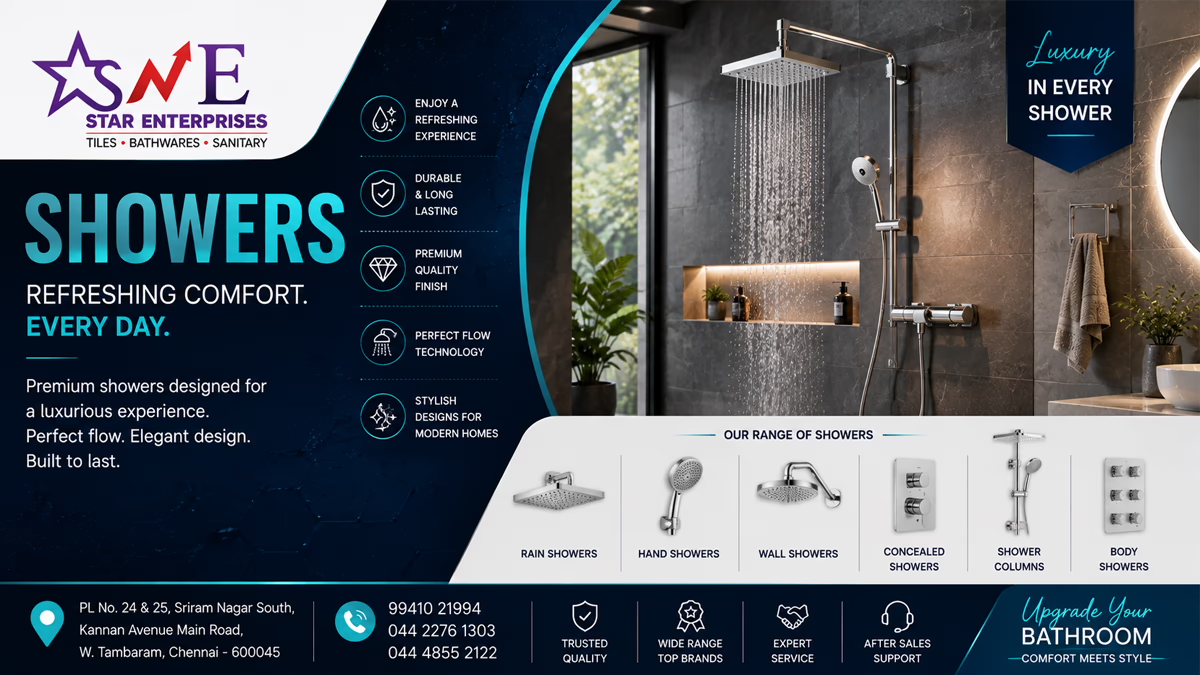
introduction
Complete guide to bathroom showers, rain showers, overhead showers, hand showers, shower systems, mixers, diverters, finishes, installation, maintenance, pricing and showroom selection in Tambaram.
Showers for Modern, Comfortable & Refreshing Bathrooms
A shower is one of the most important functional zones in a bathroom. The right shower should deliver a comfortable spray, work with the home’s water supply and fit naturally into the available space. At the same time, the shower head, mixer, diverter, hand shower, controls and finish can become a major part of the bathroom’s visual design.
Choosing a shower is therefore more than selecting a shower head from a catalogue. Water pressure, flow, hot-water availability, plumbing points, ceiling or wall construction, shower area, drainage, user height and maintenance all need to be considered.
This guide explains the major types of bathroom showers, shower systems, overhead and rain showers, hand showers, mixers, diverters, concealed and exposed installations, finishes, maintenance, pricing and showroom selection.
For customers searching for showers in Tambaram, physical comparison is particularly useful. The size of a shower head, the feel of a control, the shape of a spray plate and the proportions of a complete shower system are difficult to understand accurately from photographs alone.
Before finalising the product, compare the exact dimensions with the real bathroom drawing. A few centimetres can affect the user’s standing position, door clearance, spray coverage and access to the controls.
The strongest decision balances comfort, water performance, compatibility, maintenance, appearance and total installed cost. A shower should not be selected on visual appeal alone.
What Is a Bathroom Shower?
A bathroom shower is a system that delivers water through one or more outlets for bathing. A simple arrangement can contain a shower head and control, while a more advanced system can combine an overhead shower, hand shower, diverter and multiple controls.
The visible shower head is only one part of the system. Behind it are water connections, valves, pipes and sometimes concealed components. The complete system must be compatible with the home’s plumbing and water pressure.
Before selecting a product, identify whether the bathroom has a cold-water-only arrangement or hot-and-cold supply. Also determine whether the installation is new or a replacement. These details affect which shower systems can be installed without major changes.
The manufacturer’s technical drawing should be treated as the final installation reference. Products with similar appearances can have different connection points, pressure requirements and concealed-body dimensions.
Why Shower Selection Matters
A shower is used frequently, so comfort and reliable operation matter as much as appearance. An oversized shower head may not perform well if the water supply cannot provide suitable flow. A poorly positioned control can also be inconvenient when the user is standing in the wet zone.
Good planning starts with the room. Measure the shower area, identify the water points, consider the ceiling height and determine where the user will stand. Then choose the shower type.
This approach helps avoid purchasing a visually attractive product that is difficult to install or unsuitable for the home’s water system.
For renovation work, photograph and measure the existing installation before removal. This provides useful information for comparing replacement connections and deciding whether additional plumbing work is needed.
Types of Bathroom Showers
Bathroom showers include overhead showers, rain showers, hand showers, shower sets, shower systems, exposed showers, concealed showers, wall-mounted showers and ceiling-mounted showers. Some systems have one outlet while others use a diverter to select between multiple outlets.
Each type has different installation requirements. An exposed shower can often work with established plumbing points, while a concealed system needs its internal body installed before the wall is finished.
The best type depends on the bathroom layout, water pressure, plumbing and desired experience rather than on the product’s appearance alone.
A physical showroom comparison is valuable for shower products because head size, control proportions, finish texture and the relationship between multiple outlets are difficult to judge accurately from a screen.
Overhead Showers
An overhead shower releases water from above the user and can provide an even, broad spray. It is one of the most popular choices for contemporary bathrooms.
Overhead showers are available in different diameters and shapes. Larger heads can provide a wider coverage area, but the home’s pressure and flow conditions should be checked before choosing a large model.
The shower arm or ceiling connection must place the head at an appropriate height and position. It should remain within the intended wet zone and avoid directing water outside the shower enclosure.
Before finalising the product, compare the exact dimensions with the real bathroom drawing. A few centimetres can affect the user’s standing position, door clearance, spray coverage and access to the controls.
Rain Showers
Rain showers are designed to create a broad, rainfall-like spray. They can be used as a feature in modern and premium bathrooms.
The term rain shower describes the spray experience rather than guaranteeing a particular pressure or flow. Performance depends on the shower head design, water supply and installation.
Before selecting a large rain shower, confirm the manufacturer’s flow requirements and the home’s available pressure. A well-sized head can provide a more satisfying experience than choosing the largest available model without checking compatibility.
The manufacturer’s technical drawing should be treated as the final installation reference. Products with similar appearances can have different connection points, pressure requirements and concealed-body dimensions.
Hand Showers
A hand shower is a handheld outlet connected through a flexible hose and holder. It provides control over the direction of the water and can be used alone or together with an overhead shower.
Important considerations include hose length, holder location, spray settings, connection and control position. The holder should be reachable without forcing the user to step into an awkward position.
Hand showers can be particularly useful in compact bathrooms because the outlet can be directed precisely where required.
For renovation work, photograph and measure the existing installation before removal. This provides useful information for comparing replacement connections and deciding whether additional plumbing work is needed.
Handheld Shower Sets
A handheld shower set commonly combines a hand shower, hose and holder, sometimes with a wall outlet or control. It can provide a practical alternative to a large overhead shower.
The holder should be installed securely at a comfortable height. The hose should have enough length for normal use without creating excessive loops that can catch on other bathroom elements.
When comparing sets, check the spray pattern, hose material, connection type and replacement availability.
A physical showroom comparison is valuable for shower products because head size, control proportions, finish texture and the relationship between multiple outlets are difficult to judge accurately from a screen.
Shower Systems
A shower system can combine an overhead shower, hand shower, mixer and diverter in one coordinated arrangement. Some systems offer multiple spray functions or additional outlets.
Because several components operate together, the system should be evaluated as a complete unit. Water pressure, flow, hot-water supply and pipe capacity can affect performance.
For a new bathroom, decide the shower system before the concealed plumbing is completed. This allows the installer to place every outlet accurately.
Before finalising the product, compare the exact dimensions with the real bathroom drawing. A few centimetres can affect the user’s standing position, door clearance, spray coverage and access to the controls.
Single-Outlet Shower Systems
A single-outlet system sends water through one shower head or hand shower. It can be a practical solution for bathrooms where simplicity and straightforward maintenance are priorities.
The system should still provide comfortable control and adequate flow. A simple shower can be highly effective when the head is correctly sized for the water supply.
Single-outlet designs can also reduce the number of concealed components compared with multi-outlet systems.
The manufacturer’s technical drawing should be treated as the final installation reference. Products with similar appearances can have different connection points, pressure requirements and concealed-body dimensions.
The strongest decision balances comfort, water performance, compatibility, maintenance, appearance and total installed cost. A shower should not be selected on visual appeal alone.
Multi-Outlet Shower Systems
Multi-outlet systems can provide an overhead shower, hand shower or other outlet combinations. A diverter or separate controls determine which outlet receives water.
The plumbing must be designed to support the complete system. If several outlets are intended to operate simultaneously, confirm that the water heater, pump and pipework can provide suitable flow.
Complexity should be justified by actual use. A multi-outlet system is useful when the household values the additional functions and the installation supports them.
For renovation work, photograph and measure the existing installation before removal. This provides useful information for comparing replacement connections and deciding whether additional plumbing work is needed.
Shower Mixers
A shower mixer controls the water supplied to the shower and can combine hot and cold water. Mixer designs range from straightforward exposed controls to concealed systems.
The mixer should be positioned where the user can reach it comfortably. For showers with hot water, the controls should also be intuitive.
Confirm the mixer body, connection spacing and installation depth before wall finishing. Similar-looking controls can use different concealed mechanisms.
A physical showroom comparison is valuable for shower products because head size, control proportions, finish texture and the relationship between multiple outlets are difficult to judge accurately from a screen.
Single-Lever Shower Mixers
Single-lever shower mixers use one handle to control flow and temperature. They can provide a clean appearance and simple operation.
Handle clearance is important. The user should be able to move the lever without striking a wall, glass panel or other fixture.
The internal cartridge should be compatible with the water system and installed according to the manufacturer’s instructions. If the fitting becomes stiff or begins to drip, service the mechanism rather than forcing the handle.
Before finalising the product, compare the exact dimensions with the real bathroom drawing. A few centimetres can affect the user’s standing position, door clearance, spray coverage and access to the controls.
Thermostatic Shower Controls
Thermostatic shower controls are designed to regulate temperature more consistently within the conditions supported by the product. They can be useful where maintaining a stable shower temperature is important.
The exact operating requirements vary by product, so check the manufacturer’s specifications for pressure, temperature and water supply.
Thermostatic systems can be more complex than a basic mixer and should be installed by a competent professional familiar with the product.
The manufacturer’s technical drawing should be treated as the final installation reference. Products with similar appearances can have different connection points, pressure requirements and concealed-body dimensions.
Diverters for Showers
A diverter directs water between two or more outlets. In a bathroom shower system, it may switch between an overhead shower and hand shower.
The diverter should match the number of outlets and the intended operating arrangement. A concealed diverter must be installed accurately before wall finishing.
Ask for the exact technical drawing and identify the hot, cold and outlet connections before installation.
For renovation work, photograph and measure the existing installation before removal. This provides useful information for comparing replacement connections and deciding whether additional plumbing work is needed.
Two-Way Diverters
Two-way diverters are used when water needs to be directed between two outlets or functions. A common example is an overhead shower and a hand shower.
The control should clearly indicate which outlet is active. If both outlets are intended to operate together, confirm that the product is actually designed for that function rather than assuming a diverter will provide simultaneous flow.
A physical showroom comparison is valuable for shower products because head size, control proportions, finish texture and the relationship between multiple outlets are difficult to judge accurately from a screen.
Three-Way and Multi-Function Diverters
Multi-way diverters can control several shower outlets or functions. They are useful in larger bathrooms and premium shower systems where users want more flexibility.
Because more outlets require more planning, the plumbing layout should be finalised early. The installer needs to know which outlet corresponds to each position.
Service access should also be considered for concealed systems.
Before finalising the product, compare the exact dimensions with the real bathroom drawing. A few centimetres can affect the user’s standing position, door clearance, spray coverage and access to the controls.
Concealed Showers
Concealed shower systems hide much of the plumbing and valve body behind the wall. Only the selected controls and outlets remain visible, creating a clean minimalist appearance.
Concealed installations require accurate planning of wall depth, waterproofing, tile thickness, control position and outlet location. The concealed body should be installed at the manufacturer’s specified depth.
These systems are best selected before waterproofing and tiling. Retrofitting them after the wall is finished can be significantly more disruptive.
The manufacturer’s technical drawing should be treated as the final installation reference. Products with similar appearances can have different connection points, pressure requirements and concealed-body dimensions.
Exposed Showers
Exposed shower systems leave the main valve and pipe connections visible. They can be practical for renovations because the existing plumbing may be easier to access.
Exposed products can still look modern when the collection has clean geometry and a coordinated finish. They may also simplify inspection and replacement.
Before choosing an exposed replacement, measure the existing connection positions and confirm that the new product matches them.
For renovation work, photograph and measure the existing installation before removal. This provides useful information for comparing replacement connections and deciding whether additional plumbing work is needed.
The strongest decision balances comfort, water performance, compatibility, maintenance, appearance and total installed cost. A shower should not be selected on visual appeal alone.
Wall-Mounted Showers
Wall-mounted showers attach to a wall using an appropriate shower arm, bracket or mounting system. The head can be positioned according to the user’s height and shower enclosure.
The wall must be suitable for the mounting arrangement, and concealed or exposed pipework should be planned correctly.
A wall-mounted overhead shower can work in both compact and spacious bathrooms when the spray remains within the intended wet zone.
A physical showroom comparison is valuable for shower products because head size, control proportions, finish texture and the relationship between multiple outlets are difficult to judge accurately from a screen.
Ceiling-Mounted Showers
Ceiling-mounted showers create a visually integrated overhead shower arrangement. They can look especially clean in modern bathrooms with a defined shower zone.
The ceiling connection must be planned before the ceiling or tile work is completed. The outlet should be accurately positioned over the user.
Consider maintenance access and the water pressure requirements of the selected head before installation.
Before finalising the product, compare the exact dimensions with the real bathroom drawing. A few centimetres can affect the user’s standing position, door clearance, spray coverage and access to the controls.
Shower Arms
A shower arm connects an overhead shower head to the water supply and establishes its position. Wall-mounted arms and ceiling connections are available in different shapes and lengths.
Arm projection should place the shower head in the correct location without moving the water outside the enclosure.
For a replacement, measure the existing connection and confirm the thread and fitting requirements. For a new bathroom, position the arm according to the final shower layout.
The manufacturer’s technical drawing should be treated as the final installation reference. Products with similar appearances can have different connection points, pressure requirements and concealed-body dimensions.
Shower Heads
The shower head determines much of the spray experience. Shape, size, nozzle arrangement, spray pattern and flow characteristics all influence performance.
A large shower head can provide broad coverage but may need suitable flow. A smaller head may work effectively where pressure is limited.
Compare the shower head with the home’s water supply rather than selecting based only on diameter or appearance.
For renovation work, photograph and measure the existing installation before removal. This provides useful information for comparing replacement connections and deciding whether additional plumbing work is needed.
Shower Spray Patterns
Different shower heads can offer different spray patterns, from focused streams to wider sprays. Hand showers may offer multiple settings that allow users to change the experience.
Spray patterns should match the intended bathroom use. A broad spray can be relaxing, while a more focused spray can be practical for certain cleaning tasks.
Check the actual pattern at a showroom where a working display is available, or review the manufacturer’s technical information.
A physical showroom comparison is valuable for shower products because head size, control proportions, finish texture and the relationship between multiple outlets are difficult to judge accurately from a screen.
Shower Flow Rate
Flow rate is an important consideration when choosing a shower. The actual flow depends on the head, water pressure, supply system and restrictions within the plumbing.
A high-flow shower may require more water-heating capacity. A flow-limited head can be more appropriate where water availability is constrained.
Always compare the manufacturer’s stated specifications with the actual home’s conditions before purchasing.
Before finalising the product, compare the exact dimensions with the real bathroom drawing. A few centimetres can affect the user’s standing position, door clearance, spray coverage and access to the controls.
Water Pressure and Shower Performance
Water pressure has a major effect on shower performance. A shower head designed for higher pressure may not provide the expected experience on a low-pressure supply.
Determine whether water is supplied by an overhead tank, direct municipal line, pump or another arrangement. If pressure is uncertain, ask a qualified plumber to assess it.
Do not assume that a larger head will create stronger water pressure. The head cannot manufacture pressure that the system does not provide.
The manufacturer’s technical drawing should be treated as the final installation reference. Products with similar appearances can have different connection points, pressure requirements and concealed-body dimensions.
Showers with Water Heaters
Showers supplied by a water heater need compatible temperature, pressure and flow conditions. The heater’s capacity should be considered alongside the shower head and household usage.
For instant heaters, confirm that the shower fitting and flow requirements suit the heater. For storage heaters, consider the amount of hot water available for the intended use.
Professional installation is recommended for water-heating and electrical systems because the complete setup must meet applicable safety requirements.
For renovation work, photograph and measure the existing installation before removal. This provides useful information for comparing replacement connections and deciding whether additional plumbing work is needed.
Showers with Pumps
A pump may be used in some homes to improve water pressure, depending on the plumbing system. If a shower is intended to operate with a pump, confirm that the pump and shower components are compatible.
Multiple outlets can increase the required flow. The system should be designed around the expected simultaneous use rather than simply adding a larger pump.
A qualified plumber should assess the complete water system before changes are made.
A physical showroom comparison is valuable for shower products because head size, control proportions, finish texture and the relationship between multiple outlets are difficult to judge accurately from a screen.
The strongest decision balances comfort, water performance, compatibility, maintenance, appearance and total installed cost. A shower should not be selected on visual appeal alone.
Hot & Cold Shower Systems
Hot and cold shower systems mix two water supplies to achieve a comfortable temperature. The pipe positions and control must be designed correctly.
Check which side is hot and which is cold according to the product instructions. Incorrect connections can make controls confusing or affect performance.
For concealed systems, label and test connections before the wall is closed.
Before finalising the product, compare the exact dimensions with the real bathroom drawing. A few centimetres can affect the user’s standing position, door clearance, spray coverage and access to the controls.
Cold-Water Shower Systems
Cold-water shower systems use a single water supply and can be appropriate where hot water is not required or is supplied separately. They are generally simpler than hot-and-cold mixer systems.
The shower head should still be selected according to the available pressure and desired flow.
Confirm the plumbing arrangement before choosing a replacement so the product matches the existing installation.
The manufacturer’s technical drawing should be treated as the final installation reference. Products with similar appearances can have different connection points, pressure requirements and concealed-body dimensions.
Showers for Small Bathrooms
Small bathrooms require careful shower planning because the wet zone, toilet, basin and door may all compete for space. Compact shower heads and well-positioned controls can improve usability.
An enclosure or screen can help contain water, but the shower head should still be positioned so spray remains within the wet zone.
Choose the shower system after measuring the room and marking the user’s standing position.
For renovation work, photograph and measure the existing installation before removal. This provides useful information for comparing replacement connections and deciding whether additional plumbing work is needed.
Showers for Master Bathrooms
Master bathrooms can accommodate larger shower zones and more elaborate systems. An overhead rain shower combined with a hand shower can create a comfortable premium arrangement.
The system should be proportional to the shower enclosure and water supply. A large system is only beneficial if the plumbing can deliver suitable performance.
Coordinate the finish with the basin tap, toilet controls and bathroom accessories.
A physical showroom comparison is valuable for shower products because head size, control proportions, finish texture and the relationship between multiple outlets are difficult to judge accurately from a screen.
Showers for Guest Bathrooms
Guest showers should be intuitive and practical. Simple controls and a clearly positioned hand shower can make the room comfortable for visitors.
Neutral finishes are easy to coordinate with different tiles. Avoid overly complicated controls if users are unlikely to need multiple functions.
Make sure the shower head and controls are accessible without interfering with the shower door.
Before finalising the product, compare the exact dimensions with the real bathroom drawing. A few centimetres can affect the user’s standing position, door clearance, spray coverage and access to the controls.
Showers for Apartments
Apartment bathrooms may have fixed plumbing points, compact dimensions and building-specific water pressure. Before changing the shower, identify the existing connections and water source.
An exposed replacement can sometimes minimise construction, while a concealed system may require wall work.
Check access for installation and future service, particularly in compact bathrooms where equipment and tools may be difficult to position.
The manufacturer’s technical drawing should be treated as the final installation reference. Products with similar appearances can have different connection points, pressure requirements and concealed-body dimensions.
Showers for Villas
Villa bathrooms can use larger shower areas and coordinated premium systems. Different bathrooms may have different shower requirements depending on whether they are master, guest or utility spaces.
Plan each shower individually while maintaining a consistent design language across the property.
For concealed systems, coordinate the plumbing drawings with the exact product models before construction.
For renovation work, photograph and measure the existing installation before removal. This provides useful information for comparing replacement connections and deciding whether additional plumbing work is needed.
Showers for New Construction
New construction allows the shower to be designed from the beginning. The shower head, mixer, diverter, hand shower and drainage can all be positioned together.
This is the ideal stage to choose concealed systems because the wall can be prepared for the exact internal body.
Keep technical drawings available for the plumbing team and verify finished tile and ceiling levels before final outlet heights are fixed.
A physical showroom comparison is valuable for shower products because head size, control proportions, finish texture and the relationship between multiple outlets are difficult to judge accurately from a screen.
Showers for Bathroom Renovation
Renovation requires an assessment of existing water points, wall conditions, waterproofing and drainage. A simple shower replacement may require little construction, while changing to a concealed system can involve significant wall work.
Photograph and measure the existing shower before removal.
If tiles are being replaced, finalise the shower system before the new wall finish is installed so concealed components can be positioned correctly.
Before finalising the product, compare the exact dimensions with the real bathroom drawing. A few centimetres can affect the user’s standing position, door clearance, spray coverage and access to the controls.
The strongest decision balances comfort, water performance, compatibility, maintenance, appearance and total installed cost. A shower should not be selected on visual appeal alone.
Shower Enclosures
A shower enclosure helps contain water and separate the wet zone from the rest of the bathroom. Glass screens, doors and other configurations can be selected according to room size.
The shower head should be positioned so the spray remains inside the enclosure. The door swing should not conflict with the shower controls or nearby sanitaryware.
Waterproofing and floor drainage remain important even when an enclosure is installed.
The manufacturer’s technical drawing should be treated as the final installation reference. Products with similar appearances can have different connection points, pressure requirements and concealed-body dimensions.
Wet and Dry Bathroom Zones
Separating wet and dry zones can improve bathroom organisation. The shower remains in the wet zone while the basin, vanity and other products are protected from unnecessary water exposure.
The shower head, enclosure, drain and floor slope should work together to contain water.
A well-planned wet zone can also make cleaning easier and reduce the spread of water across the bathroom floor.
For renovation work, photograph and measure the existing installation before removal. This provides useful information for comparing replacement connections and deciding whether additional plumbing work is needed.
Shower Drainage
A shower requires effective drainage because water is continuously released during use. The drain position, floor slope and outlet capacity should be planned with the shower enclosure.
A large shower head can release substantial water, so the drain should be capable of handling the expected flow.
If water remains on the floor after showering, investigate slope, blockage and drainage capacity rather than relying on a surface cleaning solution.
A physical showroom comparison is valuable for shower products because head size, control proportions, finish texture and the relationship between multiple outlets are difficult to judge accurately from a screen.
Shower Floor and Anti-Skid Tiles
The shower floor needs a surface appropriate for a wet environment. Anti-skid bathroom tiles can help provide a more practical floor finish when selected and installed correctly.
Tile size, grout joints and floor slope also affect drainage and cleaning.
Coordinate the shower drain and tile layout before installation so the floor can be finished neatly while maintaining the required slope.
Before finalising the product, compare the exact dimensions with the real bathroom drawing. A few centimetres can affect the user’s standing position, door clearance, spray coverage and access to the controls.
Showers and Bathroom Tiles
Shower hardware interacts strongly with bathroom wall and floor tiles. Chrome can work with many tile palettes, while matte black can create contrast against light surfaces.
Tile layout should account for shower controls and wall outlets. Randomly placed controls can interrupt an otherwise clean tile design.
For concealed shower systems, determine the tile thickness and finished wall level before installing the internal body.
The manufacturer’s technical drawing should be treated as the final installation reference. Products with similar appearances can have different connection points, pressure requirements and concealed-body dimensions.
Showers and Bathroom Fittings
A shower is part of the broader bathroom fittings system. Mixer, diverter, hand shower, overhead shower, angle valves and accessories need to be compatible.
Matching finishes can create a coordinated look. The technical connection between components is even more important than their appearance.
Where several products come from different collections, verify that the connections and functions are compatible before installation.
For renovation work, photograph and measure the existing installation before removal. This provides useful information for comparing replacement connections and deciding whether additional plumbing work is needed.
Showers and Sanitaryware
The shower should be planned alongside the toilet and basin because all three compete for bathroom space. In compact bathrooms, the toilet projection and basin depth can determine the available shower footprint.
A good plan keeps the shower spray away from sanitaryware where possible.
For complete bathroom projects, selecting sanitaryware and shower products together can reduce dimensional conflicts.
A physical showroom comparison is valuable for shower products because head size, control proportions, finish texture and the relationship between multiple outlets are difficult to judge accurately from a screen.
Showers and Wash Basins
The basin and shower should not obstruct each other. A shower door can interfere with the basin if the layout is too tight.
The basin tap and shower control should be positioned so both are easy to operate.
Where the bathroom is narrow, a compact basin combined with a carefully positioned shower can preserve circulation space.
Before finalising the product, compare the exact dimensions with the real bathroom drawing. A few centimetres can affect the user’s standing position, door clearance, spray coverage and access to the controls.
Showers and Toilets
Toilet placement affects the usable shower area and enclosure position. Avoid placing a shower control where it becomes difficult to reach because of the toilet or glass panel.
In wet bathrooms, manage spray and drainage so the toilet zone does not receive unnecessary water.
Use a floor plan before fixing the final shower outlet and toilet position.
The manufacturer’s technical drawing should be treated as the final installation reference. Products with similar appearances can have different connection points, pressure requirements and concealed-body dimensions.
The strongest decision balances comfort, water performance, compatibility, maintenance, appearance and total installed cost. A shower should not be selected on visual appeal alone.
Shower Finishes
Common shower finishes include polished chrome, matte black, brushed metal and other decorative options. The finish should coordinate with basin taps, toilet controls and accessories.
Consider cleaning and long-term appearance as well as colour. Some finishes may show water spots more visibly than others.
Ask for the manufacturer’s care instructions for the exact finish before using cleaning chemicals.
For renovation work, photograph and measure the existing installation before removal. This provides useful information for comparing replacement connections and deciding whether additional plumbing work is needed.
Chrome Shower Fittings
Chrome is a versatile shower finish and works with many bathroom tile colours. Its reflective appearance can add brightness to a compact bathroom.
Chrome shower heads and controls can coordinate easily with chrome basin mixers and accessories.
Regular gentle cleaning can help prevent mineral buildup and preserve the reflective appearance.
A physical showroom comparison is valuable for shower products because head size, control proportions, finish texture and the relationship between multiple outlets are difficult to judge accurately from a screen.
Matte Black Shower Fittings
Matte black shower fittings create strong visual contrast and suit many contemporary bathrooms. They can work especially well against white, grey, beige or light stone-look tiles.
For a cohesive design, repeat the black finish in selected accessories or other fittings rather than using it randomly.
Follow the manufacturer’s cleaning guidance and avoid abrasive materials that may damage the coating.
Before finalising the product, compare the exact dimensions with the real bathroom drawing. A few centimetres can affect the user’s standing position, door clearance, spray coverage and access to the controls.
Brushed and Satin Shower Fittings
Brushed and satin finishes offer a softer appearance than highly reflective chrome. They can suit contemporary, transitional and premium bathroom interiors.
Compare the actual finish across shower controls, basin mixers and accessories because products from different collections can vary slightly.
Physical samples are useful when the finish is a major part of the design decision.
The manufacturer’s technical drawing should be treated as the final installation reference. Products with similar appearances can have different connection points, pressure requirements and concealed-body dimensions.
Modern Shower Designs
Modern shower design often favours clean controls, concealed plumbing and simple geometric shower heads. A restrained system can look more sophisticated than a bathroom filled with unrelated hardware.
The shower should align visually with the vanity, sanitaryware and tile grid.
Modern design also means practical operation. Controls should remain accessible and understandable, even when the goal is minimalist appearance.
A physical showroom comparison is valuable for shower products because head size, control proportions, finish texture and the relationship between multiple outlets are difficult to judge accurately from a screen.
Luxury Shower Experience
A luxury shower experience comes from comfort, reliable water delivery, suitable temperature control, good spray coverage and a well-designed environment. Multiple outlets can add flexibility, but they are not automatically necessary.
The shower area should have appropriate lighting, drainage, waterproofing and storage.
When budgeting for luxury, consider the complete system rather than spending most of the budget on the visible shower head.
Before finalising the product, compare the exact dimensions with the real bathroom drawing. A few centimetres can affect the user’s standing position, door clearance, spray coverage and access to the controls.
Shower Cleaning
Regular cleaning helps maintain shower performance and appearance. Wipe water and soap residue from visible surfaces and clean the shower head according to manufacturer guidance.
Mineral deposits can reduce spray quality if nozzle openings become blocked.
Avoid abrasive pads and unapproved chemicals, particularly on coated finishes. A gentle maintenance routine is usually easier than removing heavy buildup later.
The manufacturer’s technical drawing should be treated as the final installation reference. Products with similar appearances can have different connection points, pressure requirements and concealed-body dimensions.
Shower Head Maintenance
Shower heads should be checked periodically for uneven spray or reduced flow. Mineral deposits can collect around nozzle openings.
Use the manufacturer’s recommended cleaning method. Some heads have removable or flexible nozzles, while others require a different approach.
If reduced flow continues after cleaning, inspect the filter, valve, pipework and water supply rather than assuming the shower head alone is responsible.
For renovation work, photograph and measure the existing installation before removal. This provides useful information for comparing replacement connections and deciding whether additional plumbing work is needed.
The strongest decision balances comfort, water performance, compatibility, maintenance, appearance and total installed cost. A shower should not be selected on visual appeal alone.
Shower Mixer Maintenance
Mixer maintenance can involve cleaning the exterior, checking handle movement and servicing the cartridge when required. A stiff handle should not be forced.
If the mixer drips after being closed, the cartridge or seal may need attention. Use compatible replacement parts.
For concealed systems, service through the designed access point and avoid opening finished walls unless necessary.
A physical showroom comparison is valuable for shower products because head size, control proportions, finish texture and the relationship between multiple outlets are difficult to judge accurately from a screen.
Shower Diverter Maintenance
Diverters should switch outlets smoothly. Difficulty changing between outlets or unexpected flow from another outlet may indicate wear, mineral buildup or an internal service issue.
Do not force the diverter handle. Identify the product model and use appropriate service components.
A serviceable diverter system is particularly important when the shower has several concealed outlets.
Before finalising the product, compare the exact dimensions with the real bathroom drawing. A few centimetres can affect the user’s standing position, door clearance, spray coverage and access to the controls.
Shower Hoses and Holders
Flexible hoses should be long enough for comfortable hand-shower use and should not be sharply bent. Holders need secure fixing so the hand shower remains stable.
Inspect hose connections periodically for leaks or deterioration.
If the hose becomes stiff or damaged, replace it with a compatible product rather than attempting an improvised repair.
The manufacturer’s technical drawing should be treated as the final installation reference. Products with similar appearances can have different connection points, pressure requirements and concealed-body dimensions.
Shower Leak Prevention
Correct installation, compatible connections and appropriate sealing are essential for preventing leaks. Do not rely on excessive tightening to stop a leak because threads and fittings can be damaged.
After installation, run the shower at normal operating pressure and inspect visible connections.
For concealed systems, test the internal plumbing before the wall is permanently finished. This can prevent costly rework.
For renovation work, photograph and measure the existing installation before removal. This provides useful information for comparing replacement connections and deciding whether additional plumbing work is needed.
Shower Installation
Shower installation should be carried out by a competent plumber or installer using the manufacturer’s instructions. The process may include water connections, concealed bodies, outlet arms, heads, controls, holders and sealing.
The installer should know the final tile and wall thickness for concealed components.
After installation, test flow, temperature, diverter operation and drainage. Check that water remains inside the intended wet zone.
A physical showroom comparison is valuable for shower products because head size, control proportions, finish texture and the relationship between multiple outlets are difficult to judge accurately from a screen.
Concealed Shower Installation
Concealed shower installation begins with the internal valve body and pipework. The correct depth and orientation are critical because the finished control must sit correctly relative to the wall surface.
Waterproofing should be integrated with the installation. The shower outlets and controls should be located according to the final tile layout.
Before closing the wall, test the plumbing thoroughly and photograph the concealed arrangement for future reference.
Before finalising the product, compare the exact dimensions with the real bathroom drawing. A few centimetres can affect the user’s standing position, door clearance, spray coverage and access to the controls.
Exposed Shower Installation
Exposed shower installation can be simpler where the existing plumbing matches the new product. Confirm connection spacing, pipe direction and shower-arm position before installation.
Use suitable seals and compatible connectors. Avoid forcing a fitting into a mismatched connection.
After installation, check for leaks and confirm that the shower head and hand shower are stable and comfortable to use.
The manufacturer’s technical drawing should be treated as the final installation reference. Products with similar appearances can have different connection points, pressure requirements and concealed-body dimensions.
Shower Height Planning
Shower height should be selected according to the users, ceiling height and shower head design. An overhead head should be high enough to be comfortable while remaining practical to clean and service.
Hand-shower holders should be reachable and should allow the head to be removed easily.
Controls should be positioned where the user can operate them without standing directly under a cold or hot initial stream if the system allows separate control.
For renovation work, photograph and measure the existing installation before removal. This provides useful information for comparing replacement connections and deciding whether additional plumbing work is needed.
Shower Control Placement
Shower controls should be easy to reach and should not be blocked by glass doors, shelves or other fixtures. In a concealed system, the control position should also align with the tile layout.
If the bathroom has a thermostatic or mixer control, place it where temperature and flow can be adjusted comfortably.
Consider children, older users and the actual household rather than using a generic height without checking the room.
A physical showroom comparison is valuable for shower products because head size, control proportions, finish texture and the relationship between multiple outlets are difficult to judge accurately from a screen.
The strongest decision balances comfort, water performance, compatibility, maintenance, appearance and total installed cost. A shower should not be selected on visual appeal alone.
Shower Storage and Niches
Shower storage can include shelves, corner units or built-in niches. A niche should be planned before waterproofing and tiling because it changes the wall construction.
Keep products within comfortable reach without creating a collision point with the user.
Niche surfaces should have suitable drainage or slope where required so water does not remain unnecessarily on horizontal surfaces.
Before finalising the product, compare the exact dimensions with the real bathroom drawing. A few centimetres can affect the user’s standing position, door clearance, spray coverage and access to the controls.
Showers for Families
Family bathrooms may be used by people with different heights and preferences. A hand shower can provide flexibility, while an overhead shower offers a simple shared experience.
Controls should be easy to understand and accessible. If children use the bathroom, consider safe control placement and temperature management.
The shower floor should also be planned for frequent wet use and easy cleaning.
The manufacturer’s technical drawing should be treated as the final installation reference. Products with similar appearances can have different connection points, pressure requirements and concealed-body dimensions.
Showers for Older Users
Bathrooms used by older adults may benefit from carefully planned shower access, reachable controls, stable hand-shower holders and appropriate support features. Specific accessibility requirements depend on the user and should be planned with a qualified professional.
Avoid relying on a decorative shower system alone. The complete wet-zone layout should support safe movement and practical operation.
Where necessary, integrate support rails and other accessibility products into the design before wall finishing.
For renovation work, photograph and measure the existing installation before removal. This provides useful information for comparing replacement connections and deciding whether additional plumbing work is needed.
Showers for Accessible Bathrooms
Accessible shower design requires consideration of entry, movement, controls, support and water management. The exact dimensions should be designed for the user’s mobility requirements and applicable standards.
Hand showers can provide flexible control, while appropriately positioned controls can reduce unnecessary reaching.
For accessibility-focused projects, involve an appropriate professional early rather than adapting a standard bathroom after installation.
A physical showroom comparison is valuable for shower products because head size, control proportions, finish texture and the relationship between multiple outlets are difficult to judge accurately from a screen.
Showers for Rental Properties
Rental bathrooms often benefit from simple shower systems that are easy to maintain and replace. Exposed products can be practical where plumbing points already exist.
Neutral finishes provide flexibility for future bathroom updates.
Keep the exact model information and purchase details so maintenance staff can identify replacement hoses, heads or cartridges when needed.
Before finalising the product, compare the exact dimensions with the real bathroom drawing. A few centimetres can affect the user’s standing position, door clearance, spray coverage and access to the controls.
Showers for Hotels and Guesthouses
Hotel and guesthouse showers must balance design, repeated operation and maintenance. Controls should be intuitive for guests, while maintenance teams should be able to service common components efficiently.
Standardising shower systems across rooms can simplify spare parts and training.
Before installation, confirm the water system can support the selected shower configuration across the expected number of simultaneous users.
The manufacturer’s technical drawing should be treated as the final installation reference. Products with similar appearances can have different connection points, pressure requirements and concealed-body dimensions.
Showers for Offices and Commercial Spaces
Commercial showers can experience frequent use and cleaning. Product selection should consider durability, maintenance access and the building’s water system.
Simple, intuitive controls are valuable in shared environments. Standardised fittings can make service and replacement easier.
Commercial projects should follow applicable plumbing, accessibility and building requirements through the responsible professionals.
For renovation work, photograph and measure the existing installation before removal. This provides useful information for comparing replacement connections and deciding whether additional plumbing work is needed.
Showers and Water Efficiency
Water-efficient shower products can help manage consumption when selected appropriately for the water system. Flow restrictors and efficient spray designs can influence the amount of water used.
The best result comes from balancing flow with user comfort. Excessive flow is not automatically a better shower experience.
Check the manufacturer’s flow information and maintain the system so leaks do not waste water.
A physical showroom comparison is valuable for shower products because head size, control proportions, finish texture and the relationship between multiple outlets are difficult to judge accurately from a screen.
Showers and Sustainability
Sustainable bathroom planning can include sensible water use, durable products, repairable components and long service life. Choosing a shower that is appropriate for the home’s pressure can reduce the temptation to compensate with excessive flow.
Maintenance also matters. A fitting that can be serviced instead of discarded can offer better long-term value.
Sustainability should be considered alongside comfort and reliability rather than as a separate design exercise.
Before finalising the product, compare the exact dimensions with the real bathroom drawing. A few centimetres can affect the user’s standing position, door clearance, spray coverage and access to the controls.
The strongest decision balances comfort, water performance, compatibility, maintenance, appearance and total installed cost. A shower should not be selected on visual appeal alone.
Shower Price
Shower prices vary significantly according to the type of shower, head size, mixer, diverter, finish, collection and number of outlets. A basic hand-shower set and a complete concealed multi-outlet system represent very different installations.
Installation and plumbing work can add substantially to the project cost, especially for concealed systems.
Compare the total installed requirement rather than comparing only the visible shower head price.
The manufacturer’s technical drawing should be treated as the final installation reference. Products with similar appearances can have different connection points, pressure requirements and concealed-body dimensions.
How to Build a Shower Budget
Start by listing the required components: shower head, mixer, hand shower, diverter, hose, holder, arm and any concealed body or additional outlet. Then identify installation, plumbing changes, waterproofing and enclosure costs.
Separate essential functions from premium upgrades. If water pressure is limited, investing in a compatible system may provide more value than buying an oversized head.
For multiple bathrooms, create a room-by-room product schedule to prevent quantity and finish errors.
For renovation work, photograph and measure the existing installation before removal. This provides useful information for comparing replacement connections and deciding whether additional plumbing work is needed.
How to Choose the Best Shower
Choose a shower in this order: measure the shower zone, identify the water source, check pressure and hot-water conditions, choose the outlet type, confirm plumbing, compare dimensions and spray functions, then select the finish and budget.
For concealed systems, finalise the model before the wall is finished. For replacements, compare the new product with existing connection points.
A good shower is one that delivers the desired experience without creating unnecessary installation or maintenance problems.
A physical showroom comparison is valuable for shower products because head size, control proportions, finish texture and the relationship between multiple outlets are difficult to judge accurately from a screen.
Showers and Bathroom Safety
A shower area combines water, wet flooring and electrical or heating equipment in many homes, so installation quality is essential. Waterproofing, drainage, appropriate flooring and safe placement of electrical equipment should be treated as part of the complete bathroom design.
Do not make electrical modifications yourself. Use qualified professionals for electrical and water-heating work.
Shower controls should also be positioned for comfortable operation without unnecessary reaching or slipping.
Before finalising the product, compare the exact dimensions with the real bathroom drawing. A few centimetres can affect the user’s standing position, door clearance, spray coverage and access to the controls.
Showers and Waterproofing
Waterproofing protects the building around the wet zone. It should be planned beneath the finished tiles and integrated with the shower area, wall penetrations and drainage.
A high-quality shower fitting cannot compensate for poor waterproofing.
During renovation, inspect existing waterproofing where practical before covering it with new finishes. New concealed outlets should be installed using appropriate methods for the waterproofing system.
The manufacturer’s technical drawing should be treated as the final installation reference. Products with similar appearances can have different connection points, pressure requirements and concealed-body dimensions.
Showers and Bathroom Ventilation
Ventilation helps manage humidity and condensation in bathrooms. It does not replace correct waterproofing or cleaning, but it can improve the room environment.
Shower systems should be positioned so water remains within the intended wet zone, reducing unnecessary moisture on mirrors and walls.
Keep ventilation openings unobstructed and maintain exhaust equipment according to its manufacturer’s instructions.
For renovation work, photograph and measure the existing installation before removal. This provides useful information for comparing replacement connections and deciding whether additional plumbing work is needed.
Showers for Indian Bathrooms
Indian bathrooms often combine showers with toilets, health faucets and compact basins. This makes shower placement and water management particularly important.
A hand shower can provide flexibility, while an overhead shower can create a comfortable bathing experience. The right combination depends on the room and water system.
Select shower products based on actual plumbing and pressure conditions rather than generic assumptions about Indian bathrooms.
A physical showroom comparison is valuable for shower products because head size, control proportions, finish texture and the relationship between multiple outlets are difficult to judge accurately from a screen.
Showers for Chennai Homes
Homeowners in Chennai should consider the actual water supply, pressure, cleaning routine and bathroom environment when choosing a shower. Mineral deposits can affect shower heads and controls, so finish-compatible maintenance is important.
Where a pump or tank supplies water, verify the operating conditions before selecting a large or multi-outlet shower.
For renovation work, inspect existing plumbing and waterproofing before installing new shower hardware.
Before finalising the product, compare the exact dimensions with the real bathroom drawing. A few centimetres can affect the user’s standing position, door clearance, spray coverage and access to the controls.
Showers in Tambaram
Customers searching for showers in Tambaram often want to compare overhead showers, rain showers, hand showers, mixers and complete shower systems. Physical comparison helps customers understand size, finish, control shape and overall proportions.
Star Enterprises in West Tambaram provides a local showroom destination for bathroom product selection. Bring bathroom photographs, measurements and information about the water supply when possible.
This makes it easier to discuss suitable products rather than selecting a shower based only on a photograph.
The manufacturer’s technical drawing should be treated as the final installation reference. Products with similar appearances can have different connection points, pressure requirements and concealed-body dimensions.
The strongest decision balances comfort, water performance, compatibility, maintenance, appearance and total installed cost. A shower should not be selected on visual appeal alone.
Shower Showroom in Tambaram
A shower showroom visit can be useful when several products appear similar online. Customers can compare shower-head sizes, control designs, finishes and coordinated sets.
At Star Enterprises, shower selection can be considered alongside bathroom fittings, taps, sanitaryware, wash basins and tiles. This can help create a consistent bathroom design.
Ask about exact dimensions, water-pressure requirements, installation, maintenance, current availability and current pricing.
For renovation work, photograph and measure the existing installation before removal. This provides useful information for comparing replacement connections and deciding whether additional plumbing work is needed.
Showers Near Me
A search for showers near me often indicates immediate product comparison or buying intent. Visiting a local showroom allows the customer to inspect the physical product and discuss compatibility.
Customers around Tambaram can visit Star Enterprises in West Tambaram with bathroom measurements and photographs.
Physical comparison is particularly helpful for shower systems because the size and proportions of the complete arrangement can be difficult to understand from catalogue images.
A physical showroom comparison is valuable for shower products because head size, control proportions, finish texture and the relationship between multiple outlets are difficult to judge accurately from a screen.
Shower Buying Checklist
Before ordering a shower, confirm the shower-zone dimensions, water source, pressure, hot-water arrangement, outlet type, mounting method, dimensions, flow requirements and plumbing connections.
Then check the finish, maintenance requirements, service components, current price and availability.
For concealed systems, verify the concealed body and technical drawing before wall finishing. Keep all product documentation after installation.
Before finalising the product, compare the exact dimensions with the real bathroom drawing. A few centimetres can affect the user’s standing position, door clearance, spray coverage and access to the controls.
Common Shower Buying Mistakes
Common mistakes include buying a large rain shower without checking pressure, choosing a concealed system after tiling, ignoring hot-water compatibility, placing controls behind a door and mixing finishes from unrelated collections.
Another mistake is focusing only on the shower head while forgetting the mixer, diverter, arm, hose and installation components.
Treat the complete shower system as one project and verify every component before ordering.
The manufacturer’s technical drawing should be treated as the final installation reference. Products with similar appearances can have different connection points, pressure requirements and concealed-body dimensions.
How to Compare Showers in a Showroom
Start by comparing systems with the same application. Look at shower-head diameter, spray pattern, control operation, finish and overall proportions.
Ask whether the system is suitable for your water pressure and hot-water supply. For concealed systems, ask for the internal body requirements.
Record model numbers and dimensions for your final shortlist. This prevents confusion when several products have similar designs.
For renovation work, photograph and measure the existing installation before removal. This provides useful information for comparing replacement connections and deciding whether additional plumbing work is needed.
Complete Bathroom Solution with Showers
A shower works best when it is selected as part of the complete bathroom. Coordinate the shower with the toilet, basin, taps, accessories, vanity, tiles, enclosure and drainage.
This approach reduces conflicting finishes and makes plumbing planning easier.
At the showroom stage, compare the complete bathroom palette rather than choosing each product independently. The result should be comfortable, functional and visually coherent.
A physical showroom comparison is valuable for shower products because head size, control proportions, finish texture and the relationship between multiple outlets are difficult to judge accurately from a screen.
Long-Term Shower Value
Long-term value includes reliable water delivery, comfortable controls, serviceability, suitable finish and correct installation. A premium shower that cannot operate properly on the home’s pressure is not a good investment.
Repairability is also important. Ask about common replacement components and retain the exact model information.
Good waterproofing, drainage and cleaning are part of the shower’s long-term performance.
Before finalising the product, compare the exact dimensions with the real bathroom drawing. A few centimetres can affect the user’s standing position, door clearance, spray coverage and access to the controls.
Final Shower Selection Process
Use a practical seven-step process: measure the shower area, identify the water supply, check pressure and hot-water conditions, select the shower type, verify plumbing, compare physical products and then confirm price and availability.
For concealed systems, complete the product decision before the wall is closed. For replacements, document the existing connections before removal.
This process helps turn a design idea into a shower system that is actually suitable for the bathroom.
The manufacturer’s technical drawing should be treated as the final installation reference. Products with similar appearances can have different connection points, pressure requirements and concealed-body dimensions.
Visit Star Enterprises for Showers in Tambaram
If you are looking for showers in Tambaram, visit Star Enterprises in West Tambaram with your bathroom measurements, photographs and water-supply information. Compare overhead showers, rain showers, hand showers, mixers, diverters and complete shower systems in person.
You can also coordinate the shower with [bathroom fittings](/bathroom-fittings/), [taps and faucets](/taps-faucets/), [sanitaryware](/sanitaryware/), [toilets and closets](/toilets-closets/), [wash basins](/wash-basins/), [bathroom tiles](/bathroom-tiles/), [bathroom floor tiles](/bathroom-floor-tiles/), [bathroom wall tiles](/bathroom-wall-tiles/) and [bathroom solutions](/bathroom-solutions/).
Ask about exact dimensions, water-pressure requirements, hot-water compatibility, installation, maintenance, current availability and current pricing before ordering. The objective is a shower that performs comfortably, fits the bathroom correctly and supports the overall design.
For renovation work, photograph and measure the existing installation before removal. This provides useful information for comparing replacement connections and deciding whether additional plumbing work is needed.
The strongest decision balances comfort, water performance, compatibility, maintenance, appearance and total installed cost. A shower should not be selected on visual appeal alone.
Showers FAQ
What is a bathroom shower?
A bathroom shower is a water-delivery system used for bathing. It may contain a shower head, hand shower, mixer, diverter and other components.
What is an overhead shower?
An overhead shower delivers water from above the user and is available in different sizes, shapes and spray designs.
What is a rain shower?
A rain shower is designed to provide a broad, rainfall-like spray. Its actual performance depends on the shower design and water supply.
What is a hand shower?
A hand shower is a handheld shower outlet connected with a hose and holder, providing flexible control over water direction.
What is a shower diverter?
A diverter directs water between different shower outlets, such as an overhead shower and hand shower.
Are concealed showers good?
Concealed showers can provide a clean minimalist appearance but require accurate plumbing, wall preparation and service planning.
Are exposed showers good for renovations?
Exposed showers can be practical for renovations where existing plumbing points can be reused or accessed easily.
How does water pressure affect a shower?
Water pressure affects spray performance and flow. The shower should be selected according to the actual home’s water supply.
Can a large rain shower work with low pressure?
It depends on the product and water system. Check the manufacturer’s pressure and flow requirements before selecting a large head.
How do I choose a shower?
Measure the shower area, identify the water and hot-water supply, check pressure, choose the shower type, verify plumbing and then compare design, finish and price.
How much does a shower cost?
Price varies by shower type, head size, mixer, diverter, finish, collection and installation requirements.
Do showers need maintenance?
Yes. Regular cleaning of the shower head, controls and visible connections can help maintain performance and appearance.
Can I install a concealed shower during renovation?
Yes, but concealed systems may require wall work. The internal body should be planned before waterproofing and tiling.
Where can I buy showers in Tambaram?
Customers searching for showers in Tambaram can visit Star Enterprises in West Tambaram to compare suitable shower products.
Where can I find a shower showroom in Tambaram?
Star Enterprises in West Tambaram provides a local showroom destination for customers comparing showers and bathroom products.
What should I take to a shower showroom?
Bring bathroom photographs, measurements, information about the water source and hot-water system, and details of any existing shower connections.
Visit Star Enterprises for Showers in Tambaram
Compare overhead showers, rain showers, hand showers, mixers, diverters and complete shower systems at Star Enterprises, West Tambaram.
Sanitaryware · Bathroom Fittings · Taps & Faucets · Toilets & Closets · Wash Basins · Bathroom Tiles · Bathroom Floor Tiles · Bathroom Wall Tiles · Showroom · Contact