
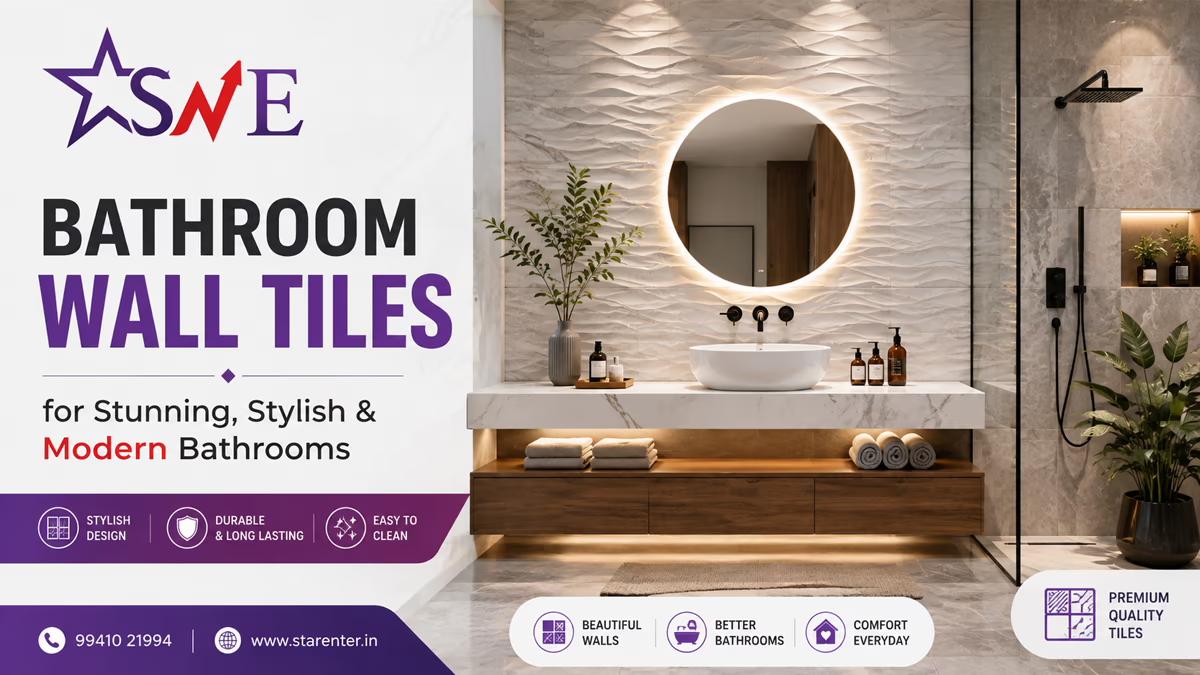
Introduction
Walk into any bathroom and the first thing your eye lands on isn’t the tap, the mirror, or the shower head — it’s the walls. They’re the biggest surface in the room, the backdrop to everything else, and the one decision that decides whether a bathroom feels like a showroom photograph or a room you’re quietly tired of. If you’re renovating or building fresh in Chennai, choosing bathroom wall tiles is not a small line item to rush through at the end of a project. It’s the decision everything else gets judged against.
This guide walks through everything worth knowing before you buy — materials, designs, colours, finishes, sizes, layout patterns, safety, budget, and the small mistakes that quietly ruin an otherwise good bathroom. And because tile colour and texture genuinely look different on a screen than they do under real bathroom lighting, we’ll also talk about why the final decision is almost always better made standing in front of the actual tile, not scrolling past it. At Star Enterprises’ tiles showroom in West Tambaram, Chennai, that’s exactly what you can do — walk in, hold the tile, see it under real light, and decide with confidence.
Why Bathroom Wall Tiles Matter More Than You Think
It’s easy to assume floor tiles carry more weight in a bathroom’s overall look, simply because you notice them underfoot. In practice, wall tiles do more visual work. You see a bathroom’s walls from the moment you open the door, at eye level, in full light, every single time you walk in — while floor tiles are viewed at an angle, often partly hidden by fixtures, a bath mat, or your own feet.
Wall tiles also carry the functional load that floor tiles don’t: they protect plaster and brickwork from constant water exposure, splashback, and humidity — which matters enormously in a coastal, humid city like Chennai where bathrooms stay damp for longer stretches than in drier climates. A wall tile isn’t just decoration sitting on the surface; it’s doing a genuine waterproofing job, which is exactly why getting the material, size, and finish right isn’t only about aesthetics.
And because wall tiles cover such a large, continuous surface, small choices compound fast. A slightly warmer white than you intended, spread across four walls, changes the entire mood of the room. A grout line colour that seemed fine on a 4-inch sample can visually chop up a wall of large-format tiles into something busier than you pictured. This is precisely the kind of decision that benefits from seeing the actual material in person rather than trusting a photo — something we’ll come back to later in this guide.
There’s also a quieter, more personal reason wall tiles matter so much: a bathroom is one of the few rooms in a home that’s genuinely private, used first thing in the morning and last thing at night, often the one space where you’re briefly alone with your own thoughts. A bathroom that feels calm, well-lit, and well put together changes how that daily routine feels, in a way that’s easy to underestimate until you’ve lived with a bathroom that gets it right — or one that doesn’t.
Design Inspiration by Bathroom Type
Not every bathroom in a home needs to be tiled the same way, and thinking about wall tiles room-by-room, rather than as one blanket decision for the whole house, usually produces a more satisfying result.
Master Bathroom
This is usually the room worth investing the most thought into, since it’s used daily and often seen by guests occasionally too. Large-format marble-look or plain matte-finish tiles, a coordinated feature wall behind the vanity, and a slightly more premium material like porcelain or vitrified tend to be the strongest fit here, especially if the master bathroom includes a separate shower enclosure that benefits from extra moisture resistance.
Guest Bathroom or Powder Room
A guest bathroom is a genuinely good place to be a little bolder, since it’s used more occasionally and doesn’t need to suit everyday practical wear in quite the same way. A patterned accent wall, a richer colour, or a textured tile that might feel like too much in a daily-use bathroom can work beautifully here, making a strong first impression for visitors without needing to live with it every single morning.
Children’s or Family Bathroom
Durability and easy cleaning matter more here than anywhere else in the house. Glossy, light-coloured, larger-format tiles that show marks less and wipe clean quickly tend to hold up best against daily family use, and a slightly more forgiving grout colour (mid-tone rather than stark white) hides everyday scuffs without needing constant attention.
Utility or Compact Attached Bathrooms
For smaller attached or utility bathrooms, the small-bathroom principles covered later in this guide apply directly — a single light, large-format tile, minimal pattern, and a tile that continues cleanly from floor to a reasonable wall height without unnecessary breaks in colour or texture.
Understanding Your Material Options: Ceramic, Porcelain & Vitrified
Before design and colour, it helps to understand what you’re actually buying, because “bathroom wall tile” isn’t one product — it’s a category built from a few very different base materials, each with its own strengths.
Ceramic Tiles
Ceramic remains the most common choice for bathroom walls, and for good reason. It’s easier to cut and install than denser materials, comes in an enormous range of colours, patterns, and finishes, and tends to be the most budget-friendly option without looking budget. Because bathroom walls aren’t walked on, ceramic’s slightly softer surface — a disadvantage on floors — simply isn’t an issue here. If you’re exploring the full range of what’s available, our ceramic tiles collection is a good starting point for wall-specific patterns and colourways.
Porcelain Tiles
Porcelain is denser, less porous, and generally more resistant to moisture absorption over time than standard ceramic — a genuine advantage in a room that stays humid for hours after every shower. It costs a little more, but the durability difference is real, especially in shower-enclosure walls that see near-constant water contact. Our porcelain tiles range covers both plain and textured finishes suited to bathroom walls.
Vitrified Tiles
Vitrified tiles are manufactured through a high-temperature vitrification process that makes them extremely low-porosity and durable — commonly associated with flooring, but increasingly used on bathroom walls too, particularly in larger-format, marble-look, or stone-look designs where a seamless, premium finish is the goal. If you like the idea of a wall that reads as natural stone without stone’s maintenance headaches, it’s worth browsing our vitrified tiles range alongside your ceramic and porcelain shortlist.
None of these materials is objectively “best” — the right one depends on your budget, the specific wall (a full shower enclosure has different demands than a half-height splashback), and the look you’re going for. This is one of the most useful conversations to have in person at the showroom, where you can compare weight, surface feel, and finish side by side rather than guessing from a catalogue image.
A Quick Side-by-Side Comparison
If you’re weighing these three materials against each other for the first time, it helps to think in terms of trade-offs rather than a single winner. Ceramic gives you the widest design choice and the friendliest price point, which makes it easy to be a little more adventurous with pattern or colour without a large financial commitment. Porcelain sits a step up in durability and moisture resistance, which pays off specifically in zones that stay wet for long stretches, like inside a shower enclosure or directly behind a basin that sees constant splashback. Vitrified tends to be the choice when the goal is a large, seamless, premium-looking wall — particularly for marble-look or stone-look finishes — where minimal grout lines and a high-end appearance matter more than squeezing the absolute lowest price out of the project.
A sensible approach many homeowners take is mixing materials deliberately rather than picking just one for the whole bathroom — a durable porcelain or vitrified tile in the shower enclosure where moisture exposure is highest, paired with a more economical ceramic tile on the drier walls elsewhere in the room. This isn’t a compromise; it’s often the more thoughtful decision, putting the higher-performance material exactly where it earns its cost.
Bathroom Wall Tile Designs & Styles Worth Considering
Once you’ve settled on a material family, the design conversation really opens up. Here’s a breakdown of the styles we see working well in Chennai homes right now, from understated to statement-making.
Plain & Minimal Tiles
A single, solid colour across the wall — whites, warm greys, soft beiges, sage, or pale blue-greens are current favourites. Minimal tiles are forgiving: they don’t date quickly, they pair with almost any fittings or accessories, and they let other elements of the bathroom (a statement mirror, brass fittings, a patterned floor) do the visual talking. If you’re renovating on a schedule and don’t want to overthink the wall tile decision, plain tiles are the safest, most future-proof choice.
Textured & 3D Tiles
Raised-surface tiles with a subtle 3D pattern — waves, ridges, geometric relief — add depth without needing bold colour. These work particularly well as a single feature wall behind a vanity or inside a shower niche rather than across an entire small bathroom, where too much texture in a confined space can start to feel heavy.
Patterned & Decorative Tiles
Moroccan-inspired, geometric, or floral patterned tiles bring genuine personality into a bathroom. The trick with pattern is restraint — a full patterned wall behind a mirror, or a border running along the shower area, tends to look far more intentional than pattern covering every surface in the room.
Marble & Stone-Look Tiles
Porcelain and vitrified tiles printed with veined marble or natural stone patterns are one of the most requested looks right now — they deliver a genuinely premium, hotel-bathroom feel without the sealing, staining, and upkeep that real marble demands in a wet room. Large-format marble-look tiles with minimal grout lines are especially effective at making a bathroom feel expensive.
Subway Tile & Brick-Bond Layouts
Rectangular tiles laid in an offset “brick bond” pattern — the classic subway tile look — remain popular because they suit almost any bathroom style, from traditional to contemporary. Laying the same rectangular tile vertically instead of horizontally is a simple trick that visually adds height to a low-ceilinged bathroom.
Mosaic Accents
Small-format mosaic tiles, often used as a shower niche liner, feature strip, or border between wall zones, add detail and shine without the cost or maintenance of covering full walls in mosaic. They’re a good way to bring in a bolder colour or metallic finish without it overwhelming the room.
Terrazzo & Speckled-Look Finishes
A newer addition to the design conversation, terrazzo-look tiles — featuring flecks of colour scattered through a neutral base — bring a playful, slightly retro character that works especially well in guest bathrooms or as a floor-to-wall combination, since the pattern hides everyday marks unusually well while still looking deliberately styled rather than accidental.
Two-Tone & Contrast Band Walls
Splitting a wall into two horizontal zones — a darker or bolder tone on the lower half, paired with a lighter tone above, divided by a trim strip or simple grout line — is an effective way to bring in richer colour without it overwhelming a room, and works particularly well in bathrooms with lower ceilings where a full dark wall might feel heavy.
Choosing the Right Colour for Your Bathroom Walls
Colour is where most people either play it too safe or get too adventurous, and both are avoidable with a bit of planning. As a general rule, lighter tones — white, soft grey, pale sand, gentle sage — make a bathroom feel larger and brighter, which matters a great deal in bathrooms with a single small window or no natural light at all, common in many Chennai apartment layouts.
Darker colours aren’t off-limits, but they read best in larger bathrooms, or used deliberately as a contrast band, a feature wall, or a lower-half tile with a lighter upper half — rather than covering every wall floor-to-ceiling in a small space. Warm undertones (creams, warm greys) tend to feel cosier; cool undertones (blue-greys, white with a cool cast) feel crisper and more clinical-modern. Neither is right or wrong — it’s a matter of matching the mood you want.
One detail that trips people up: tile colour genuinely shifts depending on lighting. A tile that looks warm white under a shop’s fluorescent lighting can look distinctly cooler under your bathroom’s LED fixtures, or vice versa. We go into this in far more depth — including which colours suit north-facing versus low-light bathrooms — in our dedicated bathroom tile colours guide, worth a read before you commit.
Matte or Glossy — Choosing the Right Finish
Finish changes a bathroom’s character almost as much as colour does. Glossy tiles reflect light, which helps brighten a room and makes cleaning marks and soap residue easier to wipe away — for these reasons, glossy or semi-gloss remains the most common choice specifically for bathroom walls.
Matte tiles hide water spots and fingerprints better, and give a quieter, more contemporary, almost stone-like look that’s become popular in newer builds. The trade-off is that matte surfaces can be marginally more effort to keep looking spotless in high-splash zones like directly behind a basin. Most bathrooms end up best served by a glossy or semi-gloss wall tile paired with a matte floor tile — glossy walls for brightness and easy cleaning, matte floors for slip resistance underfoot. We’ve laid out the full comparison, including specific recommendations by bathroom type, in our matte vs glossy bathroom tiles guide.
Wall Tile Sizes: What Actually Works for Your Bathroom
Tile size affects a bathroom’s perceived proportions more than most people expect going in. Larger-format tiles — 300x600mm and above — reduce the total number of grout lines on a wall, and fewer grout lines generally read as a cleaner, more spacious, more expensive-looking finish. This is now the most common recommendation for bathroom walls of almost any size, including compact ones, where the instinct used to be “smaller tiles for smaller rooms” — that instinct has actually reversed in current design thinking.
Smaller tiles and mosaics still have their place — shower niches, borders, accent strips, or tight corners around fittings where a large tile would need excessive cutting. Used as an accent rather than the main wall covering, small-format tiles add detail without the “busy” effect that covering an entire small bathroom in mosaic tends to create.
If you’re working with an especially compact bathroom — a common reality in many Chennai apartments — sizing decisions deserve real attention, and we’ve written a full breakdown in our bathroom tile size guide, along with a dedicated small bathroom tiles guide covering layout tricks specifically for compact spaces.
Wall Tile Strategy for Small Bathrooms
Small bathrooms deserve their own section because the rules genuinely shift. Beyond size, a few other choices make an outsized difference in a compact bathroom: carrying the same tile from wall onto a small ledge or shelf to avoid visual breaks, keeping grout colour close to the tile colour rather than in high contrast, and resisting the urge to use more than two tile designs in one small room.
A single light-coloured large-format tile, run floor to ceiling on at least the main wall, is consistently one of the simplest ways to make a small bathroom feel taller and less boxed-in. If a bold pattern or colour is non-negotiable for you, keep it contained to one wall or one niche, and let the remaining walls stay plain — this gives you the personality without sacrificing the sense of space. Our small bathroom tiles guide covers this in much more visual detail, with layout-specific advice.
Safety First: Anti-Skid Considerations Near Wet Zones
Wall tiles themselves don’t need slip resistance the way floor tiles do — but the point where a wall tile transitions into a wet shower floor, a step, or a low tiled ledge absolutely does. It’s a detail that’s easy to overlook when you’re focused on how a tile looks on the wall, and it matters more than most homeowners realise, especially in households with older family members or young children.
If your bathroom design includes a step-down shower area, a tiled bench, or a low wall that doubles as a seat, it’s worth discussing anti-skid options for those specific surfaces alongside your wall tile choice, rather than treating them as separate decisions made later. Our anti-skid bathroom tiles range is designed specifically for these transition zones and wet-area floors, and pairing it thoughtfully with your chosen wall tile keeps the whole bathroom both good-looking and genuinely safe to use.
Matching Wall Tiles with Floor Tiles
Wall and floor tiles don’t need to match exactly — in fact, an exact match across every surface can flatten a bathroom’s sense of depth. What matters more is that they feel coordinated: similar undertones, a shared design language, and finishes that make functional sense for where they sit (glossy or semi-gloss walls, matte or textured floors for grip).
A dependable combination that works across most bathroom styles: a plain or lightly textured wall tile in a light neutral, paired with a slightly darker or more textured floor tile — the floor grounds the room visually while the wall keeps it feeling open. If you’re planning both surfaces together, it’s worth browsing our bathroom floor tiles range alongside your wall tile shortlist rather than choosing one and then hunting for a floor tile that “goes with it” afterward — planning both together from the start almost always produces a more cohesive result.
2026 Bathroom Wall Tile Trends We’re Seeing in Chennai Homes
Design trends shift gradually rather than overnight, but a few directions have become noticeably more common in recent renovation and new-build projects across Chennai. Large-format tiles continue to dominate over smaller, grid-heavy layouts, driven largely by the “fewer grout lines, cleaner look” preference that now applies to bathrooms of nearly every size, not just larger ones. Warm neutrals — soft beige, warm greige, muted taupe — are increasingly chosen over stark cool white, giving bathrooms a slightly softer, more lived-in feel rather than a purely clinical one.
Marble-look and stone-look porcelain and vitrified tiles remain strongly in demand, largely because they deliver a visibly premium result at a fraction of natural stone’s cost and maintenance burden — a combination that’s hard to beat for most renovation budgets. On the finish side, matte and honed-look surfaces are gaining ground relative to high-gloss, particularly in master bathrooms where a quieter, more contemporary look is preferred over a shinier, more traditional one. And where pattern is used at all, it’s increasingly concentrated — a single confident feature wall or niche — rather than spread thin across an entire room, reflecting a broader shift toward fewer, more deliberate design statements instead of many small decorative touches competing for attention.
A Note on Vastu & Traditional Preferences
Many homeowners in Tamil Nadu factor Vastu principles into their renovation planning, including bathroom placement, colour choices, and material selection. If this matters to your household, it’s worth raising directly during your showroom visit or with your architect — preferences here vary quite a bit from family to family, and rather than guessing at general rules, a direct conversation about your specific home and priorities will get you a far more useful answer than generic guidance ever could.
Grout Selection & Long-Term Maintenance
Grout colour is one of the most underestimated decisions in a tile project. A grout colour close to the tile itself creates a seamless, larger-looking wall; a contrasting grout colour deliberately highlights the tile’s shape and layout pattern — both are valid choices, but they produce noticeably different results from the exact same tile.
For long-term maintenance, a few habits go a long way: wipe down glossy tiles regularly to prevent soap scum buildup, use a mild non-abrasive cleaner rather than harsh acidic cleaners that can dull grout and, over time, some glazed finishes, and reseal grout periodically in high-moisture zones like inside a shower enclosure. None of this is complicated, but it’s worth knowing before you tile, since some finishes and grout colours are simply easier to keep looking fresh than others over years of daily use.
How Lighting Changes the Way a Tile Looks
Lighting is arguably the single most underrated factor in how a bathroom wall tile actually reads once installed, and it’s worth understanding before you fall in love with a tile under one specific light source. Warm-toned LED lighting (generally around 2700K–3000K) tends to bring out warmth in a tile, making off-whites and beiges feel cosier but occasionally shifting a cooler grey tile toward a slightly muddier tone than intended. Cool-toned or daylight LEDs (4000K and above) sharpen whites and greys, giving a crisper, more clinical look, but can occasionally make warm-toned tiles feel a little flat or washed out.
Natural light adds another layer entirely — a bathroom with a north-facing window will receive cooler, more consistent daylight, while a south or west-facing window brings warmer, more variable light through the day. None of this means there’s a single “correct” lighting setup, but it does mean the tile you fall for under a shop’s fluorescent tube lighting may look meaningfully different once it’s on your own bathroom wall under your own fixtures.
The practical takeaway: wherever possible, take a sample tile home and view it under your actual bathroom lighting, at different times of day, before finalising a full order. It’s a small extra step that prevents one of the most common — and most expensive — sources of post-installation disappointment.
Layout Patterns Worth Discussing With Your Tiler
The same tile laid in a different pattern can produce a genuinely different room. A few layouts worth knowing before you brief your tiler:
- Straight/stack lay — tiles aligned in clean grid rows and columns; the most minimal, contemporary option, and the best choice for large-format tiles where you want as few visual interruptions as possible.
- Brick bond (offset) — the classic subway-tile pattern, each row offset by half a tile; versatile and forgiving of minor wall imperfections.
- Vertical stack — the same rectangular tile turned on its side; a simple, effective way to add visual height to a low-ceilinged bathroom.
- Herringbone — tiles laid at an angle in an interlocking zigzag; a striking, higher-effort pattern best reserved for a single feature wall or shower niche rather than an entire bathroom.
- Vertical accent strip — a narrow band of contrasting tile (often mosaic) running vertically through an otherwise plain wall, breaking up a large surface without a full pattern change.
Layout choice affects both the finished look and the labour cost — patterns like herringbone typically involve more cutting and installation time than a straight lay. Worth factoring into your budget conversation early, not after the tiles are already bought.
Budgeting for Bathroom Wall Tiles
A realistic budget conversation starts with total wall area, not tile price per square foot in isolation. A larger bathroom with a modestly priced tile can easily cost more overall than a small bathroom with a premium tile, simply because of surface area. It helps to measure your actual wall area (minus doors, windows, and fittings) before comparing tile options, so you’re comparing genuine like-for-like totals rather than sticker price per box.
A few ways to manage budget without compromising the final look: use a premium tile as a feature wall or shower-niche accent while a more economical plain tile covers the remaining walls; choose a larger format tile, which can reduce both material wastage and installation labour compared to smaller, more intricate layouts; and always order a buffer — typically an extra 10% above your measured area — to cover cutting wastage, breakage, and future repairs, since exact-batch matches can become unavailable months or years later.
Chennai’s Climate & What It Means for Your Tile Choice
Chennai’s humidity is genuinely relevant to a wall tile decision, not just a footnote. Bathrooms here stay damp for longer stretches after use than in drier climates, which makes moisture-resistant materials — porcelain and vitrified in particular — a genuinely practical upgrade in shower-enclosure walls that see near-constant water contact, not just a marketing point.
Ventilation matters just as much as the tile itself. Even the best wall tile won’t prevent a persistently damp bathroom from developing grout discolouration or a musty smell if there’s no functioning exhaust fan or window. If you’re renovating, it’s worth treating ventilation and tile choice as one combined decision rather than two separate ones — a well-ventilated bathroom lets you get away with a wider range of tile finishes, while a poorly ventilated one narrows your safer choices considerably.
Working With Your Contractor or Tiler
Even the right tile can be let down by a rushed installation conversation. Before work begins, walk your contractor or tiler through the layout pattern you want (straight lay, brick bond, herringbone, vertical stack), share exact measurements for each wall including door and window cut-outs, and confirm grout colour and joint width in writing rather than leaving it to be decided on-site. It’s also worth asking specifically where cut tiles will be placed — a good tiler plans cuts to fall in the least visible corners rather than centred on a feature wall, but this only happens if it’s discussed upfront rather than assumed.
If you’re using a patterned or directional tile — anything with visible veining, a clear grain, or an intentional design orientation — flag this clearly, since these need to be laid in a consistent direction across the wall to avoid an obviously mismatched, patchwork look once grouted.
What to Expect During Installation
Bathroom wall tiling typically follows waterproofing and any plumbing rough-in work, and precedes fitting of the final basin, taps, and accessories. Surface preparation — ensuring walls are level, clean, and properly primed — matters as much as the tiling itself, since tiles laid on an uneven surface can develop lippage (uneven edges) that’s both visually obvious and occasionally sharp underfoot near the floor line.
Depending on the size of the bathroom and the complexity of the chosen layout, wall tiling generally takes anywhere from a couple of days for a straightforward small bathroom to closer to a week for a larger bathroom with intricate patterns, multiple tile types, or extensive cutting around fittings. Grout is typically left to cure for at least 24–48 hours before the bathroom is used, and longer before harsh cleaning products are introduced, so it’s worth building this into your renovation timeline rather than assuming the bathroom is usable the moment tiling finishes.
Cost Planning: A Realistic Breakdown
Rather than fixating on a single “tile price,” it helps to think about a bathroom wall tile budget in three parts: the tile material itself, installation labour (which varies by layout complexity — a herringbone or mosaic pattern costs more in labour than a straight lay of the same tile), and finishing materials like grout, trims, and edge profiles, which are easy to forget when budgeting but add up across a full bathroom.
A practical way to plan: measure total wall area first, get a labour quote based on your preferred layout pattern before finalising the tile itself, and build in the 10% buffer quantity as part of the material cost from the start rather than treating it as an unplanned extra later. Mixing a premium tile as a feature-wall accent with a more economical tile for the remaining walls remains one of the most effective ways to get a high-end look without a high-end budget across the entire room.
It’s also worth asking directly about current pricing and any ongoing offers when you visit — tile pricing shifts with material availability and season, and a face-to-face conversation at the showroom will always give you more accurate, current numbers than relying on older price lists or estimates found elsewhere.
Sustainability & Long-Term Value
Tiles are, by nature, one of the more durable finishing choices available for a bathroom — a well-installed ceramic, porcelain, or vitrified wall tile can comfortably last decades without needing replacement, unlike painted walls or wallpaper, which typically need refreshing every few years in a humid environment. Choosing a slightly more durable material upfront, particularly for high-moisture zones like shower enclosures, is often the more sustainable and more cost-effective decision over the life of the bathroom, even where the initial price is a little higher.
Because tile ranges and specific batches change over time, holding onto a small number of spare tiles from your original order — beyond just the buffer used during installation — is a simple way to make future repairs seamless, rather than facing a discontinued design if a single tile ever cracks years down the line.
Timing Your Bathroom Renovation
In Chennai, many homeowners plan bathroom renovations around the drier months, when humidity is comparatively lower and grout and adhesive have an easier time curing properly. It’s not a strict rule, and renovations happen year-round successfully, but if your timeline has flexibility, avoiding the peak of the monsoon season can make the installation process smoother and slightly reduce the curing-time buffer you need to plan for.
It’s also worth timing your showroom visit before you’ve committed to a fixed renovation start date wherever possible — tile availability, especially for larger-format or imported-look designs, can vary, and knowing your material is in stock (or confirming lead time for it) before your contractor is booked and waiting avoids unnecessary delays once work has already begun.
Common Mistakes to Avoid
- Choosing tile colour from a phone screen alone. Screens shift colour temperature; the same tile can look noticeably different under your bathroom’s actual lighting, and what reads as a crisp white on screen can turn out warmer or cooler once it’s on your wall.
- Mixing too many patterns or colours. One statement element — a patterned wall, a marble-look feature, a bold grout colour — is usually enough; two or three competing statement choices tend to fight each other rather than complement one another.
- Under-ordering tiles. Skipping the buffer quantity often means a mismatched batch later when the original run is no longer in stock, forcing an awkward patch repair with a slightly different shade.
- Ignoring wet-zone transitions. Beautiful wall tiles paired with a slippery step or ledge is a safety issue waiting to happen — plan anti-skid surfaces alongside your wall tile, not as an afterthought once the rest of the bathroom is finished.
- Choosing wall and floor tiles in separate shopping trips, weeks apart. It’s far easier to get a coordinated look when both are chosen side by side, in the same visit, under the same lighting, than trying to match a floor tile to a wall tile purchased weeks earlier from memory.
- Assuming a tile rated for walls is automatically fine for floors, or vice versa. Always confirm the specific use-rating of a tile rather than assuming based on how it looks — the visual difference between a wall-rated and floor-rated version of a similar-looking tile can be minimal to the eye.
- Skipping the grout conversation until installation day. Grout colour changes a tile’s finished appearance more than people expect; deciding it on-site under time pressure often produces a result that doesn’t match what was actually intended.
- Not accounting for cut-tile placement. Leaving this undiscussed with your tiler can mean visible narrow cut pieces landing in a prominent spot, like directly beside a mirror, purely because it wasn’t planned for in advance.
Coordinating Tiles With Fittings & the Rest of Your Bathroom
Wall tiles don’t exist in isolation — they sit alongside your basin, taps, shower fittings, mirror, and storage, and the strongest-looking bathrooms are almost always the ones where these elements were chosen with each other in mind rather than in sequence, one after another, with no reference to what came before. A cooler-toned tile pairs naturally with chrome or matte-black fittings, while a warmer-toned tile tends to suit brass, gold, or warm bronze finishes — getting this pairing right is a small detail that makes a disproportionately large difference to how “finished” a bathroom ultimately feels.
Storage and mirror choices matter here too. A large mirror against a plain, light wall tile amplifies the sense of space a light colour palette already creates, while an ornate or heavily framed mirror can compete visually with a bold patterned tile if the two aren’t considered together. If you’re planning fittings and tiles together, or want broader design guidance for the room as a whole, our bathroom fittings range and bathroom solutions page cover the complementary side of the project, and our general bathroom hub is a useful starting point if you’re planning the space from scratch rather than tile-first.
Why Seeing Tiles in Person Makes All the Difference
Every point in this guide comes back to the same underlying truth: bathroom wall tiles are a physical, tactile, light-dependent product, and no photograph — however good — fully captures how a tile will look on your actual walls, under your actual lighting, next to your actual fittings. Colour temperature shifts. Gloss levels catch light differently in person than on a backlit screen. Texture is genuinely something you need to run a hand across to understand.
This is exactly why a showroom visit isn’t just a formality before you buy — it’s the single step most likely to prevent an expensive mismatch between what you pictured and what actually ends up on your walls. At Star Enterprises’ tiles showroom in West Tambaram, Chennai, you can hold sample tiles up against real bathroom-style lighting, see full boards of large-format tiles rather than a single small swatch, and compare wall and floor options side by side in the space of one visit — something no website, however detailed, can fully replace.
Our team can also walk you through practical questions specific to your bathroom — wall area, water exposure, whether a feature wall makes sense for your layout, and which finishes have worked well for other homes with a similar bathroom size and light level. It’s a genuinely useful step to take before finalising your order, not after.
If you’re comparing multiple materials — say, a porcelain marble-look tile against a vitrified alternative, or a ceramic tile against a slightly pricier porcelain option for a shower wall — bringing both options into direct comparison under one roof, rather than trying to remember how one tile looked from a visit weeks ago while judging a new one today, makes the final decision considerably easier and considerably more confident. And if you’re planning wall and floor tiles together, or wall tiles alongside fittings, having everything in one place to compare side by side saves multiple separate shopping trips and the guesswork of matching things from memory.
There’s no obligation to decide on the spot, either — many customers visit once to shortlist, take samples home to view under their own lighting, and return once they’re confident. That unhurried approach almost always produces a better long-term result than a rushed decision made under time pressure at the tail end of a renovation timeline.
[VERIFY BEFORE PUBLISHING: exact showroom address, phone number, and opening hours to be inserted here, matched exactly to the Google Business Profile listing.]
A Simple Checklist Before You Buy
- Measure your actual wall area, minus doors, windows, and fittings.
- Shortlist 2–3 materials (ceramic, porcelain, or vitrified) based on your budget and how much water exposure each wall gets.
- Decide on a primary finish — glossy or matte — for the walls, and check it against your planned floor tile finish.
- Pick a tile size suited to your bathroom’s actual dimensions, not just personal preference in isolation.
- Choose a grout colour deliberately — matching for a seamless look, or contrasting to highlight the layout pattern.
- Plan wet-zone transitions and anti-skid needs alongside the wall tile, not separately.
- Order a 10% buffer quantity above your measured area.
- See the shortlisted tiles in person, under real lighting, before finalising the order.
Frequently Asked Questions
Which wall tiles are best for a bathroom?
Porcelain or ceramic tiles rated for wet-area wall use are the most common and reliable choice, typically in a glossy or semi-gloss finish for easier cleaning and better light reflection. The “best” specific tile depends on your bathroom’s size, light levels, and budget — which is exactly why seeing a shortlist in person tends to produce a better final decision than picking from photos alone.
What size wall tiles work best for a small bathroom?
Larger-format tiles, generally 300x600mm and above, tend to work best even in compact bathrooms, since fewer grout lines create a cleaner, less broken-up look that makes the space feel larger. Smaller tiles are better reserved for accents — niches, borders, or feature strips — rather than covering the entire small bathroom.
Are matte or glossy tiles better for bathroom walls?
Glossy or semi-gloss tiles are the more common choice for bathroom walls, since they reflect light and wipe clean easily. Matte tiles hide water spots better and give a more understated, contemporary look, and are often the better choice for bathroom floors specifically, where slip resistance matters more than on the walls.
Which colours make a small bathroom look bigger?
Light, soft tones — white, pale grey, sand, soft sage — generally make a bathroom feel more open and bright, particularly useful in bathrooms with limited natural light. Darker tones aren’t off-limits but work best as an accent or contrast rather than covering every wall in a small space.
Do bathroom wall tiles need to be waterproof?
Wall tiles themselves are largely non-porous by design, but the tile is only one part of a waterproof wall — proper waterboard backing, tanking, and sealed grout all matter just as much. Denser materials like porcelain and vitrified offer additional moisture resistance, which is particularly useful in Chennai’s humid climate.
Can the same tile be used on both bathroom walls and floors?
Only if that specific tile is rated for both wall and floor use — wall and floor tiles are tested differently for slip resistance, and a tile suited to a wall isn’t automatically safe underfoot. Always confirm the use-rating before buying a single tile for both surfaces.
How do I match wall tiles with floor tiles?
Aim for coordinated undertones and a shared design language rather than an identical match — a common approach is a lighter, glossier wall tile paired with a slightly darker, more textured floor tile for both visual grounding and better grip underfoot.
How many wall tiles should I order for my bathroom?
Measure your total wall area minus doors, windows, and fixtures, then add roughly 10% extra to cover cutting wastage, breakage, and future repairs. Ordering the exact measured amount often leaves no margin if a tile breaks during installation or needs replacing later.
What’s the difference between ceramic, porcelain, and vitrified wall tiles?
Ceramic is the most budget-friendly and widely available option with the broadest design range. Porcelain is denser and more moisture-resistant, a genuine advantage in consistently wet zones. Vitrified tiles undergo a high-temperature process that makes them extremely low-porosity, often used for large-format, marble-look, or premium finishes on walls today.
Are patterned or textured wall tiles a good idea for a whole bathroom?
Pattern and texture tend to work best used selectively — a single feature wall, a shower niche, or a border — rather than covering every surface, which can start to feel visually overwhelming in a typically compact room like a bathroom.
Where can I see bathroom wall tiles in person in Tambaram?
At Star Enterprises’ tiles showroom in West Tambaram, Chennai, where you can browse a range of bathroom wall tile materials, designs, colours, and finishes in person, and compare wall and floor options together under real lighting before you decide.
What should I check before finalising a bathroom wall tile order?
Confirm the tile’s wet-area/wall-use rating, double-check your measured wall area against the size and quantity you’re ordering, view the tile under lighting similar to your actual bathroom, and finalise a grout colour alongside the tile rather than as an afterthought.
How long does bathroom wall tiling take to install?
A straightforward small bathroom with a simple straight-lay pattern can typically be tiled in a couple of days, while a larger bathroom with an intricate layout, multiple tile types, or extensive cutting can take closer to a week. Grout curing time — usually at least 24–48 hours before normal use — should be added on top of the installation days themselves.
Should I choose the same tile for the shower area and the rest of the bathroom walls?
It’s not required, but it does simplify both the buying decision and the finished look. Many homeowners use the same wall tile throughout for consistency, then differentiate the shower area with a mosaic accent, a niche liner, or a contrasting trim rather than switching the main tile entirely.
Can I mix two different wall tiles in one bathroom?
Yes, and it’s a common way to add visual interest — a plain tile across most walls with a patterned, textured, or marble-look tile on a single feature wall is one of the most effective ways to combine variety with a calm, uncluttered overall look.
Is it worth choosing a more expensive tile for a small bathroom since less material is needed overall?
This is one of the more practical budgeting insights homeowners often miss — because total wall area in a small bathroom is naturally lower, the overall cost difference between a mid-range and a premium tile is often smaller in absolute terms than people expect, which makes a small bathroom a genuinely good place to spend a little more on a tile you really love.
Do darker bathroom wall tiles show water marks more than lighter tiles?
It depends more on finish than colour alone — a glossy dark tile tends to show water spots and fingerprints more visibly than a matte dark tile, since the reflective surface highlights every mark. If a darker colour is what you want, a matte or textured finish can help reduce how noticeable everyday marks are.
What’s a reasonable buffer quantity to order above my measured wall area?
Around 10% above your exact measured area is a commonly used buffer, covering cutting wastage during installation, occasional breakage, and a small reserve for future repairs without needing to source a new batch that may no longer match.
Ready to See Your Options in Person?
Reading about bathroom wall tiles only gets you so far — the real decision happens when you can see colour, texture, and finish under genuine light, next to the fittings and floor tiles you’re considering alongside them. That’s exactly the experience Star Enterprises’ tiles showroom in West Tambaram, Chennai, is built for.
Whether you already have a clear design in mind or you’re still narrowing things down between a few materials and finishes, our team can talk you through what’s worked well in similar bathrooms and help you leave with a decision you’re genuinely confident in — not just one that looked fine in a photo. Browse examples of past work in our portfolio, or find full showroom details on our tiles showroom in Tambaram page, and stop by whenever suits you.