
Introduction
Porcelain tiles come up constantly in tile research, but the term itself causes more confusion than most people expect — partly because “porcelain” is sometimes used as a strict technical classification, and sometimes used more loosely as a market label that overlaps significantly with “vitrified.” This guide sets out to actually clarify that, along with covering the practical side: what porcelain tiles are, how they’re made, the main design and format options, how they genuinely compare to ceramic and vitrified tiles, and how to choose the right one for a specific room. Wherever a claim depends on a specific product’s density, water absorption or classification, we’ll flag that clearly, because those details vary by manufacturer and matter more than the “porcelain” label on its own.
This is a research-and-comparison resource, not a sales page. If you’re already comparing porcelain against other tile types before a showroom visit, this is a reasonable place to start.
What Are Porcelain Tiles?
Porcelain tiles are a category of ceramic tile manufactured from a refined mixture of clay and minerals — commonly including kaolin clay and feldspar — pressed and fired at a high temperature to produce a dense, low-porosity tile body. In many classification systems, porcelain is treated as a more tightly defined sub-category within the broader vitrified tile family, tested against specific water-absorption benchmarks that distinguish it from more general-purpose ceramic or vitrified products.
That’s the technical starting point — but it’s worth being upfront about something that matters a great deal in practice: how strictly the “porcelain” label is applied varies. Some manufacturers reserve it for tiles that meet a specific, tested water-absorption threshold. Others use “porcelain” and “vitrified” in ways that overlap substantially in day-to-day commercial use, particularly in the Indian tile market, where the two terms are sometimes used close to interchangeably depending on the brand’s own labelling conventions. Neither usage is simply “wrong” — they reflect different classification traditions. What this means practically is that the label alone doesn’t tell you everything about a specific tile’s performance; the actual specification sheet does.
Because of their generally dense, low-porosity structure, porcelain tiles are widely used for flooring, and their manufacturing process supports a broad range of finishes and printed designs — a big part of why they’ve become a mainstream choice across residential and commercial interiors.
How Are Porcelain Tiles Made?
The broad manufacturing process for porcelain tiles follows a similar sequence to other pressed ceramic tiles, though the raw material mix and firing conditions are calibrated to produce the denser body associated with the category. As with any tile manufacturing overview, treat this as a general outline — exact methods, temperatures and equipment vary between manufacturers and product lines.
- Raw material selection. A refined blend of clays (often including kaolin, valued for its fine particle size and purity), feldspar and silica is selected. The purity and fineness of these materials is one of the factors that distinguishes porcelain-grade material from a more general ceramic body mix.
- Grinding and blending. Materials are ground to a fine, consistent particle size and blended thoroughly — finer, more consistent particles generally support a denser final product.
- Pressing. The blended powder is pressed into tile blanks under high hydraulic pressure, reducing air gaps within the material before firing.
- Drying. Pressed blanks are dried to remove moisture, reducing the risk of cracking or warping during firing.
- Firing. Tiles are fired at high temperature — porcelain tile manufacturing generally uses higher firing temperatures than standard ceramic tile production, which is central to achieving the category’s characteristic low porosity.
- Surface treatment. Depending on the product, tiles may be polished, left unglazed, digitally printed and glazed, or textured, all of which affect the finished tile’s appearance and practical behaviour.
- Sizing, cutting and quality sorting. Finished tiles are cut to size, checked for dimensional accuracy, and graded before packing.
If a specific manufacturing or firing detail matters to your decision, that’s worth confirming directly with the manufacturer or supplier rather than assuming it based on general category knowledge, since production methods genuinely differ across brands and product lines.
Key Characteristics of Porcelain Tiles
As with the manufacturing process, actual performance depends on the specific product — but here’s what the category is generally associated with, and what’s worth checking for any specific tile you’re considering.
Density and Water Absorption
Porcelain tiles are generally associated with lower water absorption than standard ceramic tiles, owing to their finer material composition and higher firing temperature. Some classification systems set a specific water-absorption threshold to qualify as “porcelain,” though — as discussed above — commercial usage of the term doesn’t always follow this strictly. The water absorption rating on a specific product’s specification sheet is the detail worth checking rather than relying on the category label.
Durability
The dense body typical of porcelain tiles generally supports good resistance to everyday wear, making the category a common choice for higher-traffic floors. Resistance to scratching, chipping and staining, however, depends on the specific finish and glaze (where applicable), and shouldn’t be assumed uniformly across every porcelain product.
Surface Finish
Porcelain tiles are manufactured in a range of finishes — polished, matte, glossy, textured and unglazed among them — each with different visual and practical characteristics, covered in more detail later in this guide.
Design Range
Modern porcelain tile manufacturing, particularly through digital printing techniques, supports an extensive design range, from realistic marble- and stone-look patterns to plain, contemporary colour options.
Maintenance
Lower porosity generally makes porcelain tiles easier to keep clean day-to-day than more porous tile types, though — as with durability — the specific finish affects the right cleaning approach, which is covered in the maintenance section further down.
Categories Within Porcelain Tiles
Rather than a single fixed classification system, porcelain tiles are more usefully understood through a handful of practical distinctions manufacturers commonly use — surface treatment, finish and format being the most relevant for a buyer.
Glazed vs Unglazed (Full Body) Porcelain
Glazed porcelain tiles carry a printed and glazed surface layer over the dense porcelain body, allowing for detailed designs — this is where most marble-look and stone-look patterns come from. Unglazed, or full-bodied, porcelain tiles carry colour consistently through the entire thickness of the tile rather than as a surface layer, which means wear marks are generally less visually noticeable, since the material beneath the surface closely matches the top. Both fall within the broader porcelain category; the choice between them is really a choice about how deep you want the design or colour to run, and how much visual pattern detail you want versus a simpler, more consistent tone. If full-body characteristics are what you’re specifically after, our full body tiles page covers that concept independently of the porcelain-versus-vitrified terminology question, and our full body vitrified tiles page covers the vitrified-labelled version of the same idea.
By Finish
Polished, matte, textured and lappato (a semi-polished finish) are the main finish categories you’ll encounter across porcelain ranges, each suited to different rooms and different practical priorities — covered in depth in the finishes section below.
By Format
Porcelain is manufactured across a very wide size range, from smaller mosaic-style formats up to large-format slabs, discussed further in the sizes section of this guide.
Porcelain Floor Tiles
This page covers porcelain tiles as a broad product category — the material, its classification, design range, and use across walls, floors and different rooms. Porcelain floor tiles is a related but narrower topic, focused specifically on flooring: format sizing suited to floors, slip and traffic considerations, substrate and installation requirements for floors, and floor-specific maintenance.
That said, flooring is genuinely one of the most common applications for porcelain tiles, given the category’s typical density and durability characteristics, so a few points are worth touching on here. Larger formats are popular for floors because they reduce the number of grout lines and can make a space feel more continuous, though they require a well-prepared, flat substrate. Finish matters a great deal for floors specifically — a highly polished porcelain floor can be more slip-sensitive when wet, which is worth checking against the manufacturer’s guidance before choosing it for a kitchen or an area exposed to moisture. For the full depth on flooring-specific formats, installation guidance and floor performance considerations, visit our dedicated porcelain floor tiles page. For a broader look across all floor tile materials, our general floor tiles page is a useful starting point.
Porcelain Tiles for Different Rooms
Living Room
Living rooms typically see higher traffic and are often the most visually prominent room in a home, which is part of why large-format, marble-look and stone-look porcelain tiles are frequently chosen here — fewer grout lines and a consistent surface help reinforce a sense of visual continuity, particularly in open-plan layouts. See our living room tiles page and, for flooring specifically, our living room floor tiles page.
Bedroom
Bedrooms generally see lighter foot traffic, which opens up more flexibility in finish and design — many people lean toward warmer tones or a softer, less reflective finish here for a calmer feel, though this comes down to personal preference. Our bedroom tiles and bedroom floor tiles pages cover this in more depth, and our bedroom solutions page looks at the room as a complete project.
Kitchen
Kitchens combine moderate-to-high traffic with a higher likelihood of spills, so both slip consideration and ease of cleaning matter more here than in most other rooms. It’s worth checking a specific porcelain product’s finish and manufacturer guidance for kitchen floor suitability, since not every attractive finish is equally practical near cooking areas. Our kitchen tiles and kitchen floor tiles pages go deeper on this.
Bathroom
Porcelain tiles are used in many bathrooms, but suitability for wet-area application depends heavily on the specific product’s finish and slip-resistance rating — not every porcelain tile is designed or rated for wet floor use. This is a case where checking the manufacturer’s specific guidance genuinely matters more than in most other rooms. Our bathroom tiles and bathroom floor tiles pages address this directly.
Porcelain Tiles for Commercial Spaces
Commercial environments generally see more continuous and heavier foot traffic than residential spaces, along with different cleaning routines and sometimes specific safety or hygiene requirements depending on the business type. Porcelain tiles are commonly used in commercial settings because of their general density and durability, but suitability isn’t automatic across every commercial application — a retail floor, a restaurant kitchen and an office lobby all have different practical demands. The right choice depends on the specific traffic pattern, the product’s specifications, installation method and maintenance routine for that business, rather than an assumption that any porcelain tile suits any commercial use. Our commercial solutions page covers this in more depth.
Porcelain Tile Designs
Digital printing technology has significantly expanded what’s possible with porcelain tile design, particularly in the glazed category. Common design families include:
- Marble-look: Replicates the veining and depth of natural marble for a premium, classic look without the maintenance demands of real marble — covered in more detail below.
- Stone-look: Patterns inspired by natural stone textures like travertine, slate or granite, often chosen for a grounded, textured appearance.
- Concrete-look: Flat, matte, industrial-inspired patterns popular in contemporary and minimalist interiors.
- Wood-look: Mimics timber plank and grain patterns, offering warmth with the practical characteristics of a porcelain tile rather than solid wood.
- Plain and solid-tone: Single-colour tiles, often used for a clean, minimal aesthetic or as a neutral base alongside patterned accents.
- Geometric and patterned: Repeating motifs used to add visual interest, sometimes inspired by traditional tile art.
Design choice works best alongside consideration of the room’s furniture, wall colour, lighting and overall flooring palette, rather than in isolation. Lighting in particular changes how a design reads — a pattern that looks striking under bright showroom lighting can appear noticeably different under your home’s actual lighting, which is one of several reasons physical samples are worth reviewing before finalising a choice.
Marble-Look Porcelain Tiles
Marble-look porcelain has become one of the most popular design directions in the category, largely because digital printing can now reproduce the veining, translucency and subtle colour variation of natural marble with considerable realism. It’s worth being clear, though, that marble-look porcelain is a different material from natural marble — it’s a printed and glazed porcelain surface designed to resemble marble’s appearance, not the stone itself, and its practical characteristics (maintenance, durability, cost considerations) follow porcelain tile behaviour rather than natural stone behaviour.
This design tends to work particularly well in larger, well-lit rooms where the veining pattern has room to read clearly, and pairs naturally with contemporary and classic-contemporary furniture styles alike. In smaller spaces, a busier veining pattern can sometimes feel visually heavy, so it’s worth viewing a large sample panel rather than a small swatch before deciding.
Stone-Look Porcelain Tiles
Stone-look porcelain draws on the texture and tonal variation of natural stones like travertine, slate and granite, generally offering a more grounded, earthy aesthetic than the more polished marble-look category. This design direction is popular in both contemporary and more traditional interiors, and often pairs well with warmer, natural material accents elsewhere in a room — wood furniture, woven textiles and similar. As with any patterned tile, viewing a full sample rather than judging from a small swatch or photo is worth doing before committing.
Wood-Look Porcelain Tiles
Wood-look porcelain tiles replicate timber plank patterns and grain texture, offering a warm, natural aesthetic while generally being easier to maintain in humid or wet-prone areas than solid wood flooring would be. This makes wood-look porcelain a popular choice for bedrooms and living rooms where a warmer look is desired, and it’s sometimes used in kitchens or other areas where solid wood flooring would raise more maintenance concerns. Plank format and grain direction both affect how convincing and how spacious the final look reads, and this is a design where viewing a properly laid sample area — rather than a single tile — gives a much better sense of the finished effect.
Porcelain Tile Colours
Common porcelain tile colour families include white and off-white, cream and beige, grey through to charcoal, warm brown and earthy tones, and black or other deep tones used more selectively for accents. Practical factors worth weighing alongside personal taste: rooms with limited natural light generally read differently with light versus dark tiles; existing or planned furniture and wall colours should generally coordinate with the flooring rather than compete with it; and colour continuity between connected spaces (an open living-dining area, for instance) tends to support a more cohesive overall look. There’s no colour that’s objectively “best” — the right choice depends on your specific space, light conditions and design goals.
Porcelain Tile Sizes
Porcelain tiles are manufactured across an unusually wide size range, from small mosaic-style formats up to large-format slabs that can span a metre or more on a side.
- Smaller formats mean more grout lines across a given area, which can suit spaces with more corners and cuts, or a more traditional, segmented visual style.
- Medium formats offer a practical middle ground for a wide range of room sizes and layouts.
- Large formats significantly reduce grout-line visibility, often preferred for a more seamless, spacious look — particularly effective in open-plan living areas — but they require a flatter, well-prepared substrate and more experienced handling during installation.
Room scale is worth factoring in: a very large format in a small room can occasionally look disproportionate, while it can work very effectively in an open living or dining space. None of these formats is universally “better” — it’s a genuinely practical decision based on your room’s dimensions, layout and how your installer plans the tile placement, including cuts at the edges.
Porcelain Tile Finishes
| Finish | Visual Effect | Practical Considerations |
|---|---|---|
| Polished | High shine, glass-like reflective surface | Reads as premium and reflects light well; can be more slip-sensitive when wet — worth checking suitability for wet-prone areas |
| Matte | Flat, non-reflective surface | Softer, more understated look; generally offers more grip than a highly polished surface, though this varies by product |
| Glossy | Smooth, shiny surface, often from a glaze layer | Common in glazed designs; cleaning approach and slip characteristics should be checked against the specific product |
| Textured | Tactile surface relief, often mimicking natural stone or wood grain | Frequently chosen where additional underfoot grip is a priority; can affect ease of cleaning |
| Lappato (semi-polished) | Partial polish creating a soft sheen with some texture retained | A middle ground between full polish and matte, offering a distinctive look; slip and cleaning characteristics still worth checking per product |
No single finish is universally “the best” — each involves a trade-off between appearance, light reflection, grip and cleaning approach, and the right choice depends on the specific room. Manufacturers publish slip-resistance and maintenance guidance for their specific products, which is the detail worth checking rather than assuming based on finish name alone.
Porcelain vs Ceramic Tiles
| Aspect | Porcelain Tiles | Ceramic Tiles |
|---|---|---|
| Manufacturing | Fired at higher temperature from a refined, fine-particle clay mix, producing a denser body | Generally fired at lower temperatures from a broader clay mix, producing a more porous body |
| Water absorption | Generally lower, though this varies by specific product and classification standard used | Generally higher, which is part of why ceramic is more commonly used for walls in some cases |
| Typical use | Widely used for floors, particularly higher-traffic areas, due to density characteristics | Widely used for both walls and floors, especially where cost efficiency or a specific design finish is a priority |
| Design range | Very wide, including polished, matte, textured and highly detailed printed designs | Also a wide range, particularly strong for wall-tile design options |
| Cost | Pricing varies significantly by brand, finish and format — always confirm current pricing with your supplier | Pricing varies significantly by brand, finish and format — always confirm current pricing with your supplier |
Neither category is universally superior — porcelain tends to be favoured for floors where density and lower absorption matter more, while ceramic remains a strong, versatile choice for walls and many floor applications, particularly where budget or a specific design finish is the priority. To explore ceramic directly, see our ceramic tiles page and ceramic floor tiles page.
Porcelain vs Vitrified Tiles
This is the comparison that needs the most terminology care, and it deserves a direct, non-simplistic answer. In some technical classification systems, porcelain tiles are treated as a specific, more tightly defined sub-category of vitrified tile — manufactured to particular density and water-absorption standards that go beyond the general vitrification process. In other usage, particularly in parts of the Indian tile market, “porcelain” and “vitrified” are used as broadly overlapping or even near-interchangeable commercial terms, with the specific label depending on the individual manufacturer’s own classification and marketing conventions.
Because classification genuinely varies by market and manufacturer, statements like “porcelain is always superior to vitrified” or “porcelain and vitrified are completely different materials” aren’t accurate as blanket claims. What’s more useful — and more reliable — is looking directly at the technical specification sheet for the specific product you’re comparing: its stated water absorption rating, density, and the manufacturer’s own classification, rather than relying on the category label alone. If you’re specifically researching vitrified-labelled products and want to understand that category’s own sub-types (full body, double charge, glazed), our vitrified tiles guide covers that in depth, with vitrified floor tiles for flooring-specific detail.
Porcelain vs Full Body Tiles
“Porcelain” and “full body” describe two different aspects of a tile, and they aren’t mutually exclusive categories — a tile can genuinely be both. “Porcelain” generally refers to the material composition and manufacturing process (a dense, low-porosity clay-and-mineral body fired at high temperature), while “full body” refers to whether colour and pattern run consistently through the entire thickness of the tile, as opposed to sitting only in a surface glaze layer. An unglazed porcelain tile is, in effect, a full-body tile made from porcelain material. If you want to explore the full-body concept as its own topic — including how it applies outside strictly porcelain-labelled products — our full body tiles page covers that, and our full body vitrified tiles page covers the vitrified-labelled version specifically.
Advantages and Considerations
Potential Advantages
- Generally lower water absorption than standard ceramic tiles, useful for many floor applications.
- A dense tile body that, for many products, holds up well to residential and moderate commercial foot traffic.
- Wide design range across finishes, patterns and formats, including realistic marble-, stone- and wood-look options.
- Generally easier day-to-day cleaning than more porous tile types, due to lower porosity, though this still depends on finish and installation.
- Available across an unusually broad size range, from small formats to large slabs.
Important Considerations
- Not every porcelain-labelled product performs identically — density, water absorption and classification vary by manufacturer, so checking the specification sheet is more reliable than trusting the label alone.
- Some finishes, particularly highly polished surfaces, can be more slip-sensitive when wet — a real factor for kitchens and bathrooms.
- Cutting dense porcelain tiles, especially large-format ones, requires experienced installers and appropriate tools.
- Replacing an individual damaged tile later can be difficult if the exact product, batch or shade is no longer in production — worth factoring into how many extra tiles you buy upfront.
- Cost varies meaningfully by brand, finish and format, and should always be confirmed directly with your supplier rather than assumed.
- Suitability for a specific room, particularly wet areas, depends on the individual product’s finish and rating, not the “porcelain” label alone.
How to Choose Porcelain Tiles: A Practical Decision Framework
- Identify the application. Floor, wall, or both — this shapes which format and finish are appropriate from the outset.
- Decide floor vs wall use specifically, since the practical priorities differ meaningfully between the two.
- Review product specifications. Check water absorption, finish rating, and the manufacturer’s stated classification.
- Consider water exposure. Particularly relevant for kitchens, bathrooms and outdoor areas.
- Consider traffic. A hallway, kitchen or commercial entrance sees different wear than a guest bedroom.
- Choose a size. Based on room dimensions, layout and how much grout-line visibility you want.
- Choose a colour. Factor in natural light, existing furniture and wall tones.
- Choose a finish. Balance appearance against practical grip and cleaning needs for that room.
- Choose a design. Marble-look, stone-look, wood-look, plain or patterned, matched to your interior style.
- Coordinate with furniture and interiors rather than choosing the tile in visual isolation.
- Review physical samples under conditions as close as possible to your actual room’s lighting.
- Confirm installation requirements, especially substrate preparation for large-format tiles.
- Calculate quantity, including a reasonable wastage allowance for cuts and future repairs.
- Confirm the final selection, including batch consistency and shade matching across boxes, before purchase.
Porcelain Tiles for New Homes
For a new-build project, porcelain tiles are often planned across the whole ground floor as a coordinated flooring strategy rather than room by room in isolation — particularly in open-plan layouts where living, dining and kitchen areas flow into one continuous space. Large-format, neutral or stone-look porcelain is a common choice here for exactly this reason: fewer grout lines and a consistent palette help reinforce the sense of continuity that open-plan design relies on. Coordinating the flooring choice with wall colours, cabinetry and other finishes early in the planning process — rather than after those decisions are locked in — tends to lead to a more cohesive final result, and reviewing physical samples alongside your other material choices (paint swatches, cabinet finishes) before ordering is worth the extra step.
Porcelain Tiles for Renovation Projects
Renovation work brings practical considerations a new build doesn’t have to deal with. If you’re replacing existing flooring, matching tile thickness as well as colour matters, since a mismatch in height between old and new flooring can create an uneven transition at doorways or room boundaries. Existing subfloor condition is also worth checking before installation, particularly for large-format porcelain, which needs a well-prepared, flat substrate to sit correctly. If you’re renovating in phases, buying a small additional buffer quantity from the same batch is a reasonable precaution, since matching an exact shade later — if the original product has since been updated or discontinued — can be difficult. For any renovation involving structural or substrate changes, a professional installation assessment before ordering tiles is generally a sound step, since it can surface issues like uneven subfloor levels early, when they’re far easier to address.
Porcelain Tile Maintenance
- Regular cleaning: Routine sweeping or vacuuming to remove dust and grit helps prevent surface scratching over time, particularly relevant for polished finishes.
- Spills: Wiping up spills reasonably promptly is good general practice, especially in kitchens and dining areas.
- Grout care: Grout lines can accumulate dirt over time even between low-porosity tiles, and generally need periodic cleaning separate from the tile surface.
- Finish-specific cleaning: Polished, matte, glossy, textured and lappato finishes can respond differently to certain cleaning products — always check the manufacturer’s care guidance for your specific product.
- Avoiding unsuitable cleaning products: Some cleaning agents aren’t recommended for certain finishes and can dull shine or affect the surface over time. Follow the manufacturer’s specific guidance rather than a generic household routine.
- Sealing (where applicable): Some unglazed or textured porcelain products may benefit from periodic sealing; whether this applies to your chosen tile is worth confirming with the manufacturer or installer.
Common Porcelain Tile Buying Mistakes
- Choosing purely on appearance without checking whether the specific product is genuinely suited to the application.
- Ignoring technical specifications and assuming all porcelain-labelled products perform identically.
- Selecting the wrong finish for the space — particularly polished finishes in wet-prone rooms without checking slip guidance.
- Choosing the wrong size for the room, leading to excessive cutting or a disproportionate look.
- Poor colour coordination with existing or planned furniture, walls and lighting.
- Ignoring grout colour and width, which affect the overall look more than many buyers expect.
- Buying without viewing physical samples, relying on photos or screen colours that can look different under real lighting.
- Ordering an insufficient quantity, underestimating cuts, wastage or future repair needs.
- Confusing terminology — assuming “porcelain” and “vitrified” always mean strictly different things, or always mean the same thing, rather than checking the specific product’s classification.
- Not discussing installation requirements upfront, particularly for large-format tiles that need a well-prepared substrate.
How Much Porcelain Tile Do You Need?
Estimating quantity generally follows the same logical chain regardless of tile type: start with your room’s floor or wall area, then account for cutting and wastage, then finalise based on how the installer plans the layout. Room shape and the number of corners, fixtures or alcoves affect how much cutting is needed; larger-format tiles can sometimes mean more wastage in smaller or irregularly shaped rooms, since a large tile may need significant cutting to fit a small remaining space; and certain layout patterns (diagonal or offset patterns, for instance) typically require more cutting than a straightforward grid layout. Because these factors vary so much by project, we won’t state a universal wastage percentage here — the most reliable approach is to confirm the exact quantity, including a reasonable wastage margin, with your supplier or installer once they’ve reviewed your specific room dimensions and layout.
Why Seeing Porcelain Tiles at a Showroom Makes a Real Difference
Photographs and website images are a genuinely useful starting point for narrowing down options, but they have real limitations. Colour can shift depending on screen calibration and photo lighting. Scale is hard to judge accurately from a small image. Surface finish — the subtle difference between, say, matte and lappato — is often difficult to fully appreciate without handling the tile directly. And how a specific porcelain design looks alongside other tiles you might be combining it with is much easier to judge with physical samples side by side than through separate product photos.
This is where a physical showroom visit adds real, practical value: seeing colour under consistent lighting, understanding true scale, feeling the surface finish, and comparing combinations directly. It’s also an opportunity to ask specific questions about a product’s water absorption rating, finish, and recommended applications directly, rather than relying solely on general category research.
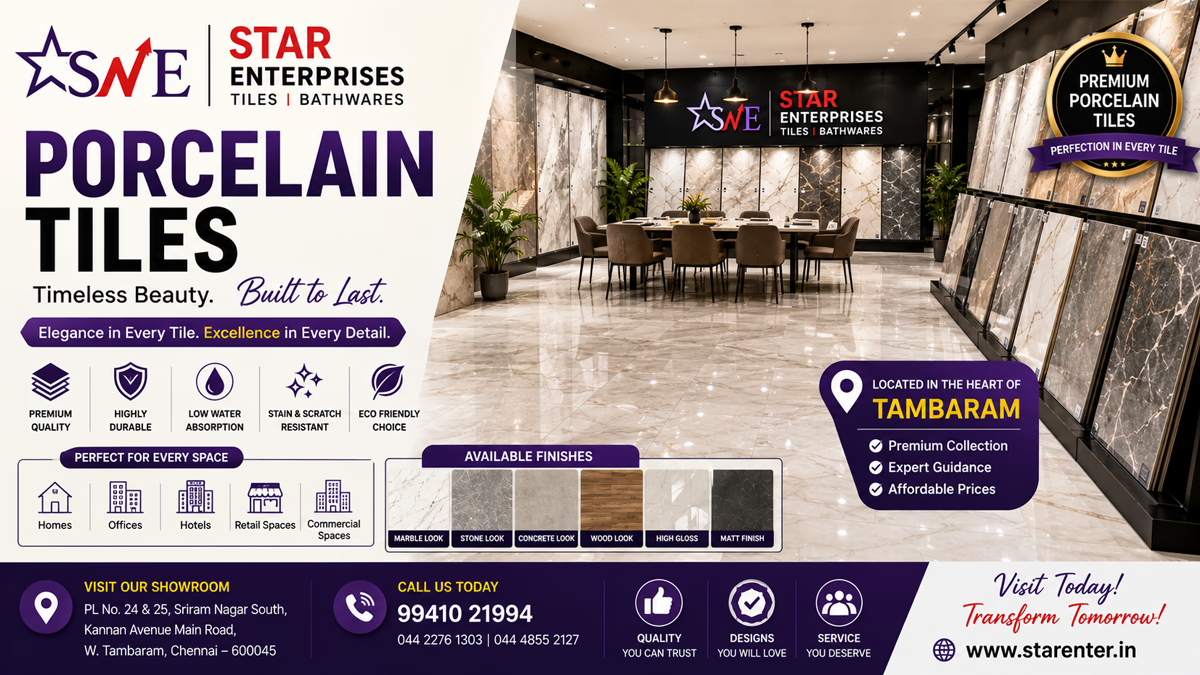
Explore Porcelain Tiles at Star Enterprises, Tambaram
Star Enterprises operates as a tiles showroom serving Tambaram and the wider Chennai area, with porcelain tiles forming part of the range available for browsing and comparison in person — alongside ceramic and vitrified options, so you can compare across categories directly rather than relying on general descriptions. If you’ve been researching porcelain tile types, designs and how they compare to ceramic and vitrified tiles using this guide, the natural next step is seeing the actual products, checking specifications directly, and comparing shortlisted options side by side under real lighting conditions.
Whether you’re planning flooring for a new home, renovating an existing space, or sourcing tiles for a commercial project in or around Tambaram, a showroom visit lets you move from research to a confident, informed decision. You can find more on visiting the showroom on our tiles showroom in Tambaram page, and browse examples of completed work across different spaces on our portfolio page.
Frequently Asked Questions
What exactly are porcelain tiles?
Porcelain tiles are made from a refined clay and mineral mixture — often including kaolin clay — pressed and fired at high temperature to produce a dense, generally low-porosity tile body. In some classification systems, porcelain is treated as a specific sub-category of vitrified tile tested against particular water-absorption standards, though commercial usage of the term varies by manufacturer.
Where can porcelain tiles be used in a home?
Porcelain tiles are used across living rooms, bedrooms, kitchens, and many bathrooms, as well as commercial spaces. Suitability for wet areas specifically depends on the individual product’s finish and slip-resistance rating, so it’s worth checking that detail for bathroom and kitchen floor applications rather than assuming any porcelain tile works.
Are porcelain tiles better than ceramic tiles?
Not universally — it depends on the application. Porcelain tiles generally have lower water absorption and a denser body, making them a common choice for floors, particularly higher-traffic ones. Ceramic tiles remain a strong, versatile option for walls and many floor applications, especially where budget or a specific design finish is the priority. The right choice depends on your specific space and requirements.
What’s the real difference between porcelain and vitrified tiles?
Classification varies by market and manufacturer. In some systems, porcelain is a specific, more tightly defined sub-category of vitrified tile with particular density and water-absorption standards. In other, especially common commercial usage, the two terms overlap substantially. Rather than relying on the label alone, check the actual water absorption rating and specification sheet of the specific product you’re considering.
How should I choose a porcelain floor tile for my home?
Start with the room’s traffic level and moisture exposure, then narrow down size and finish accordingly — a polished finish suits a lower-traffic, dry room better than a wet-prone kitchen or bathroom floor, for instance. Checking the product’s specification sheet and viewing physical samples are the most reliable final steps before deciding.
Which porcelain tile sizes and finishes are most popular for homes?
Medium and large formats are widely used for living areas and open-plan spaces because they reduce grout-line visibility, while smaller formats suit rooms with more corners and cuts. Matte and lappato finishes are frequently chosen for a softer, less reflective look, while polished finishes remain popular where a more formal, premium appearance is the priority — the right combination depends on your specific room and preferences.
How do I maintain and clean porcelain tiles?
Routine sweeping or vacuuming to remove grit, prompt cleaning of spills, and periodic grout cleaning are good general practices. Care routines vary by finish — polished, matte, glossy, textured and lappato surfaces can respond differently to certain cleaning products, so it’s best to follow the manufacturer’s specific care guidance for your product.
Can I use the same porcelain tile for both floor and wall applications?
Some porcelain products are rated for both floor and wall use, while others are designed specifically for one or the other. This depends on the individual product’s thickness, weight and finish rating, so it’s worth confirming with the manufacturer or supplier before planning to use the same tile across both applications in a room.
Where can I explore and compare porcelain tiles near Tambaram?
Star Enterprises is a tiles showroom serving Tambaram and the broader Chennai area, with porcelain tiles available alongside ceramic and vitrified options for direct, side-by-side comparison. Seeing physical samples under real lighting is a useful step before finalising any tile decision — details on visiting are available on our tiles showroom in Tambaram page.