
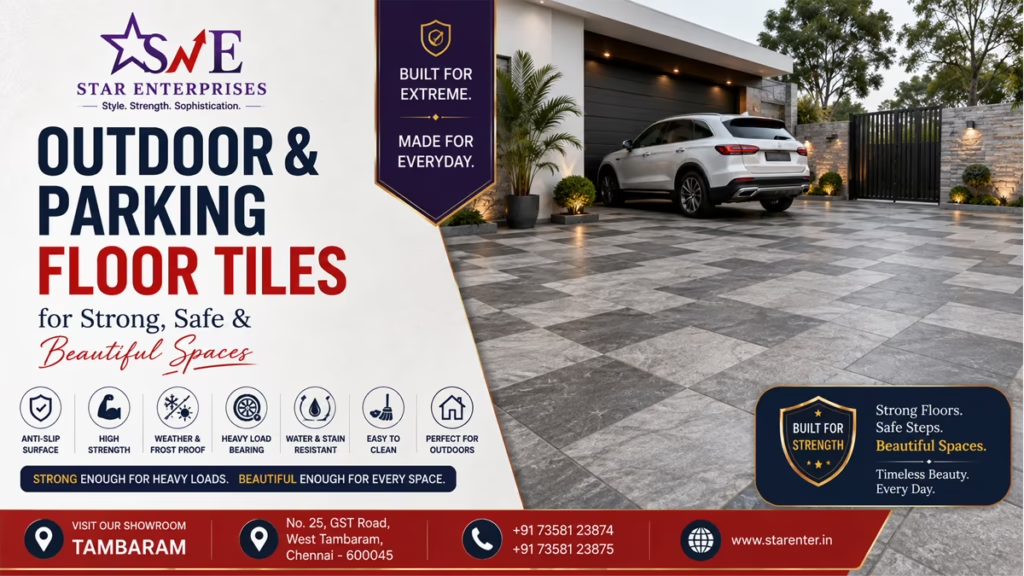
Outdoor and parking areas face a completely different set of conditions than any room inside the house — vehicle movement, rain, dust, mud, temperature swings and constant exposure to the elements, day after day. Choosing outdoor & parking floor tiles is not the same decision as picking a living room or kitchen tile, because a floor exposed to cars, weather and outdoor contamination needs to be evaluated on product specification and intended application, not just appearance.
This guide walks through what actually makes a tile suitable for outdoor or parking use, the categories commonly available, how driveways differ from walkways and pedestrian entrances, what to check specifically before flooring a car parking area, and what affects maintenance and cost. Because vehicle areas carry real practical stakes, this guide leans on verification and manufacturer specifications rather than assumptions — by the end, you’ll know exactly what to check before you buy.
How to Choose the Right Outdoor & Parking Floor Tiles
Outdoor and parking flooring decisions carry more practical weight than indoor choices, so a careful, methodical approach matters:
- Identify the application. A pedestrian walkway, an entrance, and a car parking area all have different requirements, even within the same property.
- Determine whether vehicles will use the surface. This single factor changes the entire specification you need to look for.
- Assess expected load and traffic. Occasional car use, daily parking and heavier vehicle traffic all place different demands on flooring.
- Check product specifications. Confirm the specific tile is recommended by the manufacturer for your intended outdoor or parking application.
- Consider outdoor exposure. Rain, heat, dust and temperature changes all affect how a floor performs over time.
- Consider surface and traction requirements. Wet, muddy or oily conditions change how a surface behaves underfoot and under tyres.
- Assess drainage. Outdoor water management is central to a well-performing exterior floor.
- Choose size. Larger areas like driveways and parking bays have different practical sizing needs than a narrow walkway.
- Choose colour. Practical considerations like dirt and dust visibility matter as much as aesthetics outdoors.
- Choose finish. Matte and textured finishes are common outdoors, but suitability still depends on the specific product.
- Consider cleaning. Outdoor floors deal with mud, oil and dust regularly, so factor in realistic maintenance.
- Calculate quantity. Measure the actual area carefully, including any slopes or irregular edges.
- Allow for cutting and wastage. Outdoor areas often involve more irregular shapes and edges than indoor rooms.
- Check installation requirements. Substrate preparation and correct installation matter enormously for outdoor and parking performance.
- Confirm availability. Check current stock for your chosen product, size and quantity.
- Request current pricing. Get an accurate quote for your specific project before finalising.
What Makes a Good Outdoor or Parking Floor Tile?
Vehicle Load and Intended Application
Pedestrian outdoor flooring and vehicle parking are genuinely different applications, and it’s important not to treat them as interchangeable. Vehicle loads can be substantially higher than foot traffic, and the way that load is distributed and repeated over time matters too. Product specification, the tile’s body characteristics, the substrate underneath, and the overall installation system all play a role in whether a floor performs well under vehicle use. Rather than assuming any outdoor-rated tile is automatically suitable for cars, always check the manufacturer’s intended-use recommendation for your specific application before proceeding.
Surface and Traction Considerations
Outdoor surfaces regularly deal with rain, mud, dust and tyre contact, all of which can affect traction differently than a dry indoor floor. Surface texture and finish both play a role, but traction also depends on footwear, tyre condition, water, contaminants and the specific conditions at the time. Rather than relying on absolute claims, check the manufacturer’s slip or traction specification for the intended outdoor or vehicle application.
Weather and Outdoor Exposure
Outdoor tiles face rain, heat, UV exposure, dust and temperature variation over time, and how well a product handles these conditions depends on its specific composition and rating. It would be inaccurate to say any tile is automatically suitable for every climate or weather condition — outdoor performance should be confirmed against the actual product specification rather than assumed from the general “outdoor tile” label.
Drainage and Installation
Proper slope, drainage and substrate preparation are just as important as the tile itself for outdoor performance. A well-specified tile installed on a poorly prepared substrate, or without adequate drainage, is unlikely to perform well regardless of the product’s individual quality. Joints and grout, where used, also need to suit outdoor conditions.
Cleaning and Maintenance
Outdoor and parking floors accumulate dirt, dust, mud, oil and tyre marks as a matter of course, so realistic maintenance expectations matter when choosing a product and finish.
Types of Outdoor & Parking Floor Tiles
Parking Tiles
Parking tiles are products specifically intended for vehicle-use areas, but not all parking tiles are identical — specifications vary by manufacturer, thickness and body composition, so it’s important to confirm a given product’s intended application and load characteristics rather than assuming all parking-labelled tiles perform the same way.
Outdoor Vitrified Tiles
Vitrified tiles are used in various outdoor applications, but suitability for exterior or vehicle use varies significantly by product, so it’s worth checking the specific tile’s outdoor rating before use. See our vitrified tiles range for a broader overview, and our vitrified floor tiles page for flooring-specific options.
Full Body Vitrified Tiles
Full body vitrified tiles carry consistent composition through the tile’s thickness, which can be relevant for heavier-use applications, though actual suitability for parking or outdoor use still depends on the specific product’s rating. See our full body vitrified tiles page for more detail.
Outdoor Porcelain Tiles
Porcelain tiles are used outdoors in some product ranges, but this should only be assumed where the specific tile is rated or recommended by the manufacturer for outdoor use. Explore our porcelain tiles page for more.
Paver-Style and Heavy-Duty Options
Paver-style and other heavy-duty flooring options represent a distinct category from standard indoor-style tiles, and are sometimes used in driveway and parking contexts. A paver-style product should not be assumed interchangeable with a general floor tile — check the specific product’s intended application before comparing it against other options.
Popular Outdoor & Parking Tile Designs
Stone-Look Tiles
Stone-look tiles bring a natural outdoor appearance and tend to integrate well with landscaping, exterior walls and garden areas.
Concrete-Look Tiles
Concrete-look tiles suit modern driveways and contemporary exteriors, offering a clean, understated appearance that pairs well with minimalist architecture.
Natural and Earthy Designs
Natural and earthy-toned designs help an outdoor floor blend visually with surrounding greenery and garden elements.
Plain and Neutral Tiles
Plain, neutral tiles offer practical visual flexibility, coordinating easily with different exterior colour schemes and architectural styles.
Patterned and Textured Designs
Patterned and textured designs can add visual interest to walkways and entrances where appropriate, though it’s worth noting that a design choice affects appearance only — it does not by itself determine structural or traction performance, which depends on the product’s actual specification.
Best Colours for Outdoor & Parking Tiles
Grey
Grey is a practical, modern choice for outdoor and parking areas, generally coordinating well with a range of building exteriors and landscaping styles.
Beige and Earth Tones
Beige and earth tones create a natural exterior appearance and tend to work well alongside greenery and garden landscaping.
Brown
Brown tones pair naturally with earthy landscaping and traditional exterior styles.
Dark Colours
Darker outdoor tiles can create a dramatic appearance and may help mask tyre marks and dust to some degree, though it should not be assumed that dark tiles are automatically hotter or less safe than lighter ones without checking the specific product; heat perception outdoors depends on multiple factors, including material and direct sun exposure.
Mixed and Patterned Designs
Mixed and patterned designs can help visually mask everyday dirt and dust between cleans, though this is a practical styling observation rather than a guaranteed performance benefit.
Matte, Textured and Other Outdoor Tile Finishes
Matte finishes offer a practical, low-glare appearance suited to most outdoor settings, while textured finishes add a tactile surface quality that some buyers prefer for walkways and entrances. Other outdoor-specific finishes may be available depending on the product range.
It’s important not to equate texture with guaranteed slip resistance. A textured surface may offer different traction characteristics than a smooth one, but actual performance depends on the manufacturer’s tested specification for the intended application, along with real-world conditions like water, mud and footwear or tyre contact. Always check the manufacturer’s slip or traction specification for your specific outdoor or parking use rather than assuming based on finish alone.
Choosing the Right Tile Size for Outdoor and Parking Areas
Tile size affects layout, cutting, drainage and overall appearance differently outdoors than indoors, given the larger areas and irregular edges typically involved.
- Layout — larger areas like driveways and parking bays may suit larger formats, while walkways and entrances often work well with more moderate sizes.
- Cutting and wastage — outdoor spaces frequently have irregular edges, slopes and features that increase cutting requirements regardless of tile size.
- Installation — larger tiles require more precise substrate preparation and installation to lay flat and stable outdoors.
- Drainage — tile size and joint spacing can affect how water moves across the surface, which matters more outdoors than indoors.
- Visual appearance — the right size should feel proportionate to the space, whether it’s a compact entrance or a large parking area.
- Vehicle vs pedestrian areas — the appropriate size and specification can differ between a car parking zone and an adjoining pedestrian walkway, even on the same property.
There’s no single size that’s automatically best for every outdoor or parking application — the right choice depends on the specific product, the installation system, and the layout of your space.
Outdoor Walkways, Entrances and Driveways
These three zones share some considerations but have genuinely different demands, and it’s worth planning for each specifically rather than treating outdoor flooring as one uniform decision.
Walkways
Walkways deal primarily with pedestrian traffic and weather exposure. Surface and cleaning considerations matter, but the load demands are generally lower than areas that see vehicles.
Entrances
Entrances combine appearance with practical demands — they’re often the first visual impression of a property, while also dealing with dirt, rain and regular foot traffic, so both design and durability deserve attention here.
Driveways
A driveway is not simply a larger walkway — vehicle movement, turning forces, sustained load and substrate strength all become relevant considerations. Drainage and product specification matter significantly more for a driveway than for a pedestrian-only path, so this is an area where verifying the manufacturer’s recommended application is particularly important.
Car Parking Floor Tiles: What to Check Before Buying
Car parking flooring deserves its own careful checklist, since the stakes of getting this wrong are higher than in most other flooring decisions.
- Intended vehicle application. Confirm the specific product is recommended by the manufacturer for the type of vehicle use you expect.
- Load. Consider the vehicle type and expected frequency of use, and discuss this with your supplier rather than assuming.
- Surface. Consider traction under wet or contaminated conditions, referencing the manufacturer’s specification rather than the finish alone.
- Substrate. The supporting base beneath the tile is critical to how well the floor performs under vehicle weight over time.
- Installation. Correct installation practices directly affect long-term performance, particularly for vehicle areas.
- Drainage. Water must be managed properly to avoid pooling, staining and long-term surface issues.
- Maintenance. Consider realistic exposure to oil, mud, dust and tyre marks when choosing colour and finish.
- Manufacturer specification. Always verify technical suitability for parking use directly with the manufacturer or supplier before finalising your choice — this is the single most important step in the entire process.
Outdoor Tile Cleaning and Maintenance
No outdoor or parking floor is maintenance-free, but a consistent routine keeps most products performing well over time:
- Regular sweeping removes loose dirt, leaves and debris before they accumulate.
- Routine cleaning with appropriate methods — light hosing or pressure cleaning where suitable — helps manage everyday dirt and dust.
- Removing oil contamination promptly helps prevent staining, particularly in parking areas.
- Mud removal after wet weather keeps surfaces looking presentable and prevents buildup.
- Managing tyre marks may require specific cleaning approaches depending on the tile’s finish.
- Drainage cleaning ensures water continues to move away from the surface properly over time.
- Grout and joint maintenance matters for outdoor areas exposed to weather and contamination.
- Suitable cleaning products should always be checked against the manufacturer’s recommendation before use.
Outdoor & Parking Floor Tiles Price
It wouldn’t be accurate to quote a fixed price here, since cost depends on several project-specific factors:
- Tile or product category — parking tiles, outdoor vitrified, full body vitrified and porcelain options are typically priced differently.
- Size — different formats can carry different per-unit or per-square-foot costs.
- Design — detailed finishes can cost more than simpler, plain options.
- Finish — matte, textured and other outdoor-specific finishes can carry different production costs.
- Specification — products rated for vehicle or heavier outdoor use may be priced differently from standard pedestrian-only options.
- Quantity — your total outdoor or parking area affects overall project cost.
- Application — driveway and parking projects often involve more preparation work than a simple walkway.
- Installation — labour costs for laying the tiles are separate from the tile cost itself, and outdoor work often takes longer than comparable indoor work.
- Substrate preparation — outdoor and parking areas frequently require base preparation, levelling and drainage work beyond the tiles alone.
- Wastage — outdoor areas often involve more irregular cutting than indoor rooms.
- Transportation — delivery distance and logistics affect the final landed cost.
- Availability — current stock and demand can influence pricing at any given time.
For outdoor and parking projects, it’s worth distinguishing between the tile cost and the complete parking-floor project cost, which may include base preparation, levelling, drainage, installation, adhesive and other materials, and finishing work. For current outdoor and parking floor tile prices, designs and availability, contact Star Enterprises.
Common Buying Mistakes to Avoid
- Buying indoor tiles for outdoor use. Indoor-only products are generally not designed for the weather and load conditions outdoor areas face.
- Assuming every vitrified tile is suitable for parking. Specifications vary significantly between products, even within the same broad category.
- Choosing based only on appearance. A tile that looks right in a catalogue may not be specified for your actual application.
- Ignoring vehicle load. Not confirming a product’s suitability for your expected vehicle type and frequency of use is a significant risk.
- Ignoring substrate. The base beneath the tile matters as much as the tile itself for outdoor and parking performance.
- Ignoring drainage. Poor water management can undermine even a well-chosen tile over time.
- Ignoring surface and traction. Always check the manufacturer’s specification rather than assuming based on finish alone.
- Choosing an unsuitable finish. The right finish depends on your specific application and conditions, not appearance alone.
- Buying without checking specifications. This is the single most avoidable mistake in outdoor and parking flooring decisions.
- Calculating quantity incorrectly. Outdoor areas often have irregular shapes that are easy to underestimate.
- Ignoring wastage. Cutting around edges, slopes and features typically generates more wastage outdoors than indoors.
- Focusing only on tile price. The cheapest option isn’t always the most suitable once substrate, installation and long-term performance are factored in.
- Using unsuitable installation methods. Outdoor and parking installation has different requirements than standard indoor tiling, and this should be handled by an experienced installer.
Explore Outdoor & Parking Floor Tiles at Star Enterprises in Tambaram
Given how much depends on getting the application right, a direct conversation and physical sample comparison are especially valuable for outdoor and parking projects. Star Enterprises, based in West Tambaram, Chennai, gives you the chance to compare a range of outdoor and parking floor tile designs in person, from practical stone-look and concrete-look options to textured, driveway-appropriate finishes.
Whether you’re flooring a residential driveway, an entrance walkway, or a car parking area, the team can help you compare product specifications against your intended application, discuss your vehicle use and outdoor conditions, and answer questions about current pricing and availability. Visit our tiles showroom in Tambaram to start comparing options for your project.
Explore More Tile Categories
If you’d like to compare the broader tile categories behind these outdoor and parking options, see our outdoor and parking tiles range, or look specifically at vitrified tiles and full body vitrified tiles for heavier-use applications. For a related exterior category, explore elevation tiles.
To see the full range together and discuss your specific application, visit our tiles showroom in Tambaram.
Frequently Asked Questions
Which Tiles Are Best for Outdoor Flooring?
Outdoor vitrified tiles, full body vitrified tiles, and outdoor-rated porcelain tiles are all commonly used for exterior flooring, but the deciding factor is whether the specific product is rated by the manufacturer for outdoor use — not the broad category alone. Always confirm the specification before choosing.
Which Tiles Are Best for Car Parking Areas?
Parking areas need products specifically recommended for vehicle use, since load demands are significantly different from pedestrian flooring. Suitability depends on the specific product’s technical specification, substrate and installation system, so always verify this directly with the manufacturer or supplier before choosing.
What Should I Check Before Buying Parking Tiles?
Check the manufacturer’s intended vehicle application, expected load, surface and traction specification, substrate requirements, drainage planning, and installation guidance. Verifying these details before purchase is the most important step in choosing a suitable parking tile.
Are Outdoor Floor Tiles Suitable for Driveways?
Some outdoor floor tiles are suitable for driveways, but this depends on the specific product being rated for vehicle use rather than pedestrian outdoor use alone. Driveways involve vehicle movement, turning forces and sustained load, so the specification requirements are higher than for a walkway.
Are Outdoor Tiles Slip-Resistant?
Slip performance depends on the specific product’s tested specification, along with real-world conditions like water, mud, footwear and tyre contact — it is not something that can be assumed from a finish description alone. Always check the manufacturer’s slip or traction rating for your intended outdoor or parking application.
What Tile Size Is Best for Outdoor and Parking Areas?
There’s no single size that’s automatically best — larger formats can suit spacious driveways and parking bays, while walkways and entrances often work well with more moderate sizes. The right choice depends on the specific product, installation system and layout of your space.
How Do I Maintain Outdoor and Parking Floor Tiles?
Regular sweeping, routine cleaning, prompt removal of oil and mud, and periodic drainage and grout checks all help keep outdoor and parking floors performing well. No outdoor flooring is entirely maintenance-free, so it’s worth factoring realistic upkeep into your choice of colour and finish.
How Much Do Outdoor and Parking Floor Tiles Cost?
Cost depends on the product category, size, design, finish, specification and quantity required, along with substrate preparation, drainage and installation, so it varies considerably by project. For current outdoor and parking floor tile prices, designs and availability, contact Star Enterprises.
Where Can I Buy Outdoor and Parking Floor Tiles in Tambaram?
Star Enterprises in West Tambaram, Chennai offers a range of outdoor and parking floor tile options to compare in person. Visit our tiles showroom in Tambaram to explore current options and discuss your project.
Planning a New Outdoor or Parking Floor in Tambaram? Visit Star Enterprises to discuss your application, vehicle use, outdoor conditions, design and quantity, and to check current availability and pricing at the tiles showroom in Tambaram.