
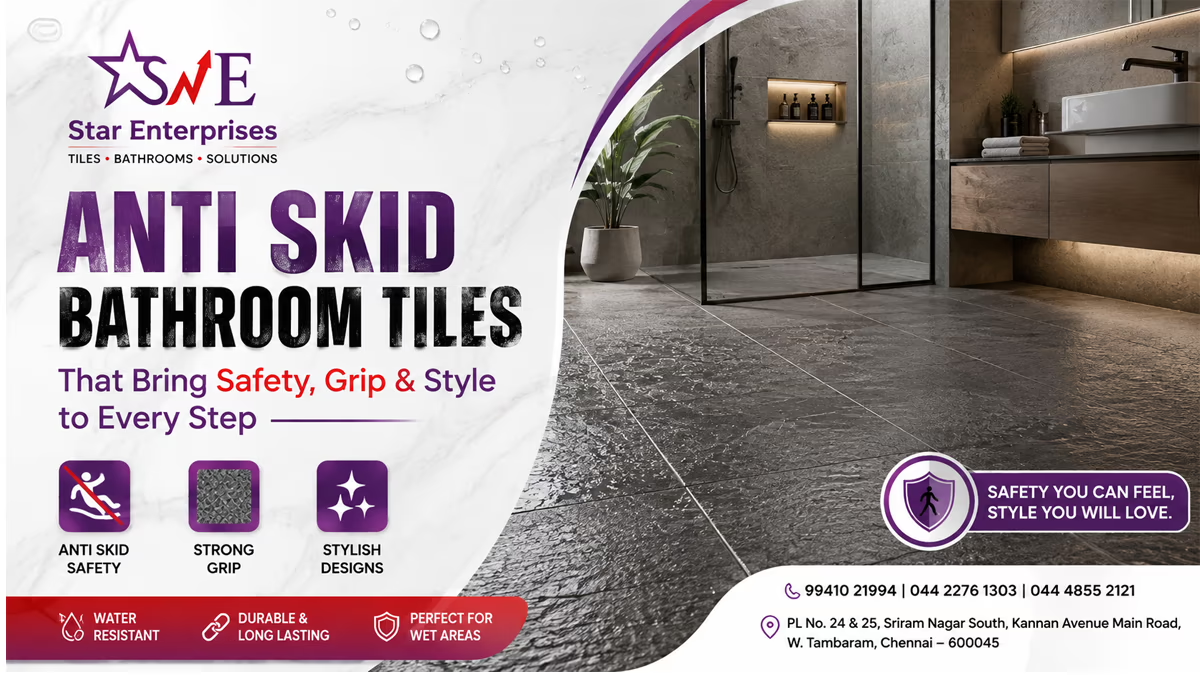
Introduction
A bathroom floor gets wet every single day, often several times a day, and it is one of the few surfaces in a home where bare feet meet water, soap and shampoo residue at the same time. That combination is exactly why anti skid bathroom tiles matter so much more than most people realise when they first start planning a renovation. Choosing the right floor is not just a design decision — it is a practical one that affects how confidently every member of the household moves through that space, from children finishing a bath to grandparents stepping out of the shower.
This guide walks through everything a homeowner genuinely needs before choosing anti-skid bathroom flooring: what the term actually means, how slip resistance is tested and rated, which finishes and sizes work best for different bathrooms, how installation and drainage affect real-world safety, and what to check before you buy. It closes with practical guidance on exploring options locally around Tambaram and Chennai.
Quick Answer: What Are Anti Skid Bathroom Tiles?
Anti skid bathroom tiles are floor tiles manufactured or finished with a surface texture — such as a matte, structured, or micro-textured face — that is designed to increase traction underfoot in wet conditions, compared with a smooth, highly polished tile. They reduce the likelihood of slipping when the floor is wet, but no tile removes the need for good drainage, correct installation, and sensible cleaning habits.
What Are Anti Skid Bathroom Tiles?
At its core, an anti-skid tile is simply a floor tile whose surface has been engineered — through texture, glaze technology, or a structured pattern — to offer more friction against a shoe sole or a bare foot than a standard smooth, glossy tile would. Ordinary glossy tiles are manufactured primarily for visual shine and easy cleaning; when a thin film of water sits on that glassy surface, the contact between skin and tile drops dramatically, and grip goes with it.
An anti-skid floor tile, by contrast, has a deliberately broken surface at a microscopic or visible level. This can take the form of a soft matte finish, a sandy or stone-like texture, small raised patterns, or a structured relief that channels water away from the point of contact. The result is a floor that behaves very differently underfoot the moment water is introduced, which is precisely the situation a bathroom floor faces constantly.
Why Anti Skid Bathroom Tiles Matter for Wet Floors
Bathrooms are unusual rooms because they combine water, soap, shampoo, and bare feet on a daily basis. Even a well-drained floor will have moments of standing water — right after a shower, while brushing teeth over a splashing tap, or during the transition from a wet shower zone to a dry vanity area. Soap and shampoo residue make this worse, because they can leave a thin, slippery film on a smooth surface that isn’t obvious to the eye.
Households with young children and older adults feel this risk most directly. Children often move quickly and are still developing balance and coordination, while older adults may have reduced mobility, slower reflexes, or existing joint concerns that make a fall more consequential. Even for a fit, careful adult, a poorly chosen bathroom floor turns an ordinary morning routine into a small daily risk. Choosing a floor built for wet-area use is one of the simplest, most permanent ways to reduce that everyday risk — without needing to think about it again once it’s installed.
How Anti Skid Bathroom Tiles Provide Better Grip
Slip resistance on a wet tile floor comes from the interaction of several factors working together, not from any single feature in isolation.
- Microtexture — extremely fine surface roughness that helps break the water film at the point of contact, letting skin or a shoe sole make more direct contact with the tile.
- Macrotexture — larger, often visible texture or relief patterns that create channels for water to move away rather than pool under the foot.
- Water film thickness — a thin film behaves very differently to standing water; drainage and slope directly influence how much water sits on the surface at any moment.
- Footwear or bare feet — grip performance differs between bare skin, wet slippers, or bathroom sandals, which is one reason a single rating can’t describe every real-world scenario.
- Cleaning residue — soap scum and hard-water deposits can reduce the effective grip of even a well-textured tile if it isn’t cleaned regularly.
No single characteristic guarantees safety on its own. A well-chosen anti-skid tile, correctly installed with proper slope and drainage, and kept reasonably clean, is what actually delivers dependable everyday performance.
Anti Skid vs Normal Bathroom Floor Tiles
| Factor | Anti-Skid Tile | Normal / Glossy Tile |
|---|---|---|
| Wet-floor grip | Generally higher, due to textured or matte surface | Generally lower, especially when highly polished |
| Appearance | Matte, stone-like, or structured look | Reflective, glossy sheen |
| Cleaning | May need slightly more attention in deep texture | Usually easier to wipe clean |
| Best use | Bathroom floors, shower areas, wet zones | Bathroom walls, dry-area floors |
| Maintenance | Routine cleaning of texture and grout | Routine wiping and polishing |
The comparison isn’t about one being universally “better” — it’s about matching the tile to its application. A glossy tile that looks stunning on a bathroom wall is rarely the right choice underfoot in a shower.
Matte vs Glossy vs Anti Skid Bathroom Tiles
These three terms get used loosely, and mixing them up is one of the most common buying mistakes. Matte refers to a low-sheen finish — it usually offers better grip than a glossy finish, but not every matte tile is formally tested or specified as anti-skid for floor use. Glossy refers to a reflective, polished finish, prized for walls and dry areas, but generally unsuitable for a wet bathroom floor. Anti-skid is a functional description tied to the tile’s tested or intended performance in wet conditions, and it can appear in matte, textured, or structured finishes.
In short: don’t assume “matte” automatically means “anti-skid,” and don’t assume every glossy tile is unsafe in every context — check what the manufacturer specifies the tile for. For a deeper side-by-side comparison of these two finishes across the whole home, see our dedicated guide on matte vs glossy bathroom tiles.
What Is the Best Finish for a Bathroom Floor?
Matte, textured, and structured anti-skid surfaces are generally the most practical choices for a bathroom floor, while smooth polished finishes are better suited to walls or dry-area flooring elsewhere in the home. Within the textured category, options range from a gentle matte with light texture to a pronounced stone-look or structured relief. The right choice depends less on personal taste alone and more on the tile’s tested performance and its intended application, which should always be confirmed with the manufacturer or retailer before purchase.
What Do R9, R10 and R11 Mean?
The R-rating system (R9 through R13) comes from a specific slip-resistance test method, most commonly associated with DIN 51130, which measures how a test surface performs under defined test conditions — including a specific test ramp angle, a particular test medium, and standardised footwear. R9 indicates a lower rated incline angle before slipping occurs under that test, while higher classifications like R10, R11, R12 and R13 indicate progressively steeper angles.
| Rating | General Test Result | Typical Consideration |
|---|---|---|
| R9 | Lower slip-resistance angle under test | Often used in lighter-duty or dry-leaning areas |
| R10 | Moderate slip-resistance angle under test | Commonly discussed for general bathroom floor use |
| R11 | Higher slip-resistance angle under test | Often discussed for wetter or higher-risk zones |
It’s important to understand what this rating does not tell you: it is not a universal barefoot bathroom safety score, and it does not mean a tile is guaranteed safe in every household situation. The test uses specific, standardised conditions that may not exactly mirror how water, soap, and bare feet interact on your actual floor. R11 does not automatically outrank every R10 tile for every application, and neither rating is a substitute for checking the manufacturer’s stated intended use. Always ask a retailer or manufacturer which test standard and rating apply to a specific product before assuming it fits your bathroom.
What Is DCOF / Coefficient of Friction?
DCOF stands for Dynamic Coefficient of Friction, a separate measurement system (commonly referenced via ANSI A137.1 in some markets) that quantifies the friction between a test foot and a wet tile surface under controlled conditions. A higher DCOF number generally indicates more measured resistance to sliding under that specific test.
DCOF and the R-rating system are different test methodologies with different conditions, and their numbers are not directly interchangeable — a tile’s R9/R10/R11 classification cannot simply be converted into a DCOF figure, or vice versa. If a product lists a DCOF or R-rating, ask which standard was used, under what conditions it was tested, and what application the manufacturer recommends it for. That manufacturer documentation is the most reliable way to interpret any single number.
What Is the Best Anti Skid Rating for Bathroom Tiles?
There is no single rating that is correct for every bathroom. The right specification depends on the actual environment: a shower floor with constant water exposure has different practical needs than a vanity area that stays mostly dry, and a household with young children or elderly residents may reasonably prioritise a higher-grip finish than a low-traffic guest bathroom. Rather than fixating on one number, it’s more useful to describe your intended application to a manufacturer or retailer — shower floor, general bathroom floor, wet-area walkway — and let them point you to a tile that is specified and tested for that use. Statements like “R11 is mandatory for every bathroom” are an oversimplification; the right answer depends on your specific space and how it’s used.
Best Anti Skid Bathroom Tiles for Indian Homes
Indian bathrooms present a distinct set of everyday conditions worth planning around: frequent water use throughout the day, humidity that can leave floors damp for longer, hard-water mineral deposits that build up over time, regular soap and shampoo residue, and monsoon-season humidity that affects the whole home. Many Indian bathrooms are also compact, multi-use spaces shared by the whole family, which raises the practical stakes of getting the floor right the first time.
For these conditions, a textured or matte anti-skid finish that is easy to clean, resistant to hard-water staining, and specified for wet-area floor use tends to be the most practical starting point — paired with a finish and grout colour that doesn’t show water spots or soap residue too readily between cleans.
Anti Skid Tiles for Shower Areas
The shower zone experiences the most continuous water exposure in the entire bathroom, which makes tile choice, slope, and drainage work together as a single system rather than separate decisions. A well-textured anti-skid tile still needs a floor that is correctly sloped toward the drain, grout that is properly finished and maintained, and a cleaning routine that prevents soap buildup in the texture. Skipping any one of these undermines the benefit of the other two — a great tile on a poorly sloped floor will still pool water, and a perfectly sloped floor with a smooth tile will still be slippery.
Anti Skid Tiles for Small Bathrooms
Small bathrooms bring their own considerations: tile proportion affects how spacious the room feels, grout line frequency affects both visual continuity and cleaning effort, and lighter colours can help a compact space feel larger while still delivering wet-area grip. None of this needs to compromise floor safety — plenty of light-toned, matte, anti-skid-finished tiles work beautifully in small footprints. For a full walkthrough of layout, proportion, and design choices for compact spaces, see our dedicated guide to small bathroom tiles.
Best Tile Size for Bathroom Floors
Bathroom floor tiles broadly fall into small, medium, and large formats, and each interacts differently with grout lines, drainage, cutting, and slope. Smaller tiles create more frequent grout joints, which can add a small amount of texture-adjacent grip and make it easier to achieve slope around drains, but they also mean more grout to clean. Larger formats reduce grout lines for a sleeker look and easier general cleaning, but they demand more precise installation to maintain correct slope and require more cutting around drains and corners. There is no single universal best size — the right choice depends on the bathroom’s dimensions, the drain layout, and the look you’re after. For a full breakdown of dimensions and how to choose between them, see our bathroom tile size guide.
Are Large Tiles Safe for Bathroom Floors?
Large-format tiles can absolutely work well on a bathroom floor when they are correctly installed and specified for wet-area use. Their advantages include fewer grout lines, a clean modern look, and easier day-to-day cleaning. The trade-offs are practical rather than aesthetic: large tiles require very accurate slope-cutting toward the drain, a genuinely flat substrate, and more careful cutting in small or irregularly shaped bathrooms and shower areas. In compact bathrooms, an installer may recommend a smaller format specifically to make correct drainage slope easier to achieve.
Are Small Tiles Better for Bathroom Floors?
Smaller tiles do create more grout lines, and grout itself has more texture than a glazed tile surface, which some buyers assume automatically means “safer.” This isn’t a reliable rule on its own — grout composition, texture, and cleanliness all vary, and a well-specified anti-skid large tile can outperform a smooth, glossy small tile regardless of how many grout lines it has. Small formats do make it easier to achieve slope in tight or irregular bathrooms, and they suit compact or heavily patterned floor designs well, but “more grout equals safer” is an oversimplification worth avoiding.
Ceramic vs Vitrified vs Porcelain Anti Skid Tiles
| Material | General Characteristics | Typical Bathroom Fit |
|---|---|---|
| Ceramic | Clay-based body, wide design range, generally more affordable | Popular for walls and moderate-traffic floors |
| Vitrified | Denser, less porous body, generally strong water resistance | Common for floors, including bathroom floors |
| Porcelain | A dense, low-porosity type of vitrified tile | Widely used for wet-area and high-traffic floors |
Exact water absorption, hardness, and slip performance vary by specific product line, so these are general starting points rather than guarantees for any individual tile. Explore our dedicated pages on vitrified floor tiles, porcelain floor tiles, and ceramic floor tiles for material-specific detail, or ask about full body vitrified tiles and double charge vitrified tiles if you want to compare vitrified sub-categories directly.
Anti Skid Bathroom Tile Colours
Colour affects more than aesthetics in a bathroom — it influences how visible dirt, water spots, and soap residue are between cleans. Grey and stone tones tend to hide water marks well while feeling contemporary; beige and cream bring warmth and generally forgive dust and light staining; white creates a bright, spacious feel but shows marks more readily; charcoal and deeper earthy tones create a bold, grounded look and can be especially good at masking daily wear. Lighting also matters — a colour that looks neutral under a showroom’s bright lights can read differently under your bathroom’s actual fixtures. For a full colour-selection walkthrough, see our guide to bathroom tile colours.
Anti Skid Bathroom Tiles: Design Ideas
- Light Grey Anti-Skid Floor — a versatile, contemporary base that pairs with almost any wall tone and hides water spots well; suits family and guest bathrooms alike.
- Beige Stone-Look Floor — a warm, natural texture that works especially well in larger bathrooms with plenty of natural light.
- Charcoal Accent Floor — a bold, grounded look that pairs beautifully with white or off-white walls; forgiving of everyday marks.
- Marble-Look Wall + Anti-Skid Floor — combine a glossy marble-effect wall tile with a matching matte anti-skid floor for a luxury feel without floor-safety compromise.
- White Wall + Grey Floor — a clean, timeless combination that keeps the room feeling bright while the floor stays practical.
- Terrazzo-Look Floor — playful speckled texture that suits modern and family bathrooms, and tends to disguise daily marks well.
- Natural Stone Look — earthy tones and organic texture, ideal for a spa-style bathroom.
- Minimalist Neutral Floor — a soft, single-tone matte finish for a calm, uncluttered look.
- Textured Shower Floor — a slightly more pronounced texture confined to the shower zone, paired with a smoother-look (but still floor-rated) tile elsewhere.
- Small-Format Classic Floor — traditional proportions with frequent grout lines, well suited to compact or older-style bathrooms.
- Modern Large-Format Matte Floor — a sleek, minimal-grout look for larger bathrooms with a flat, well-prepared substrate.
- Two-Tone Bathroom — a contrasting floor and wall tone to define zones, such as a darker floor with lighter walls.
- Spa-Inspired Bathroom — soft stone tones, matte textures, and warm lighting for a calming retreat feel.
- Contemporary Black-and-White — a crisp, graphic look using a matte black or dark grey floor against white walls and fittings.
- Warm Earth-Tone Bathroom — terracotta, sand, and clay-inspired tones for a cosy, grounded atmosphere.
For each of these, keep three practical checks in mind: confirm the floor tile is specified for wet-area use, check that the wall and floor tones genuinely coordinate under your bathroom’s actual lighting, and factor in how easy the finish will be to keep clean day to day. For more layout and combination ideas, browse our bathroom tiles design guide.
Anti Skid Bathroom Tiles for Children
Children often move quickly, splash generously, and are still building balance and coordination — all reasons a wet-area-rated anti-skid floor is a sensible baseline in any bathroom they use regularly. Beyond the tile itself, sensible cleaning habits, keeping the floor genuinely dry between uses where possible, and general supervision remain important. No tile, however well specified, eliminates the possibility of a fall — it reduces one variable in a situation that still benefits from good household habits.
Anti Skid Bathroom Tiles for Elderly Users
For elderly household members, floor safety is one part of a broader picture that also includes grab bars near the shower and toilet, clear and uncluttered floor space, good lighting, and a walk-in or low-threshold shower where possible. A wet-area-rated anti-skid floor, correctly sloped and drained, supports this broader accessibility approach rather than replacing it — it’s most effective when combined with these other practical measures rather than treated as a standalone fix.
How to Choose Anti Skid Tiles for a Family Bathroom
A simple ten-step framework can make this decision far less overwhelming:
- Identify wet zones — map out where water pools or splashes most: the shower area, around the basin, near the tub.
- Measure the floor — get accurate room dimensions, including any awkward corners or fixtures.
- Determine drainage requirements — check existing drain position and whether slope needs to be re-formed.
- Select a suitable finish — matte, textured, or structured, based on the wet zones you mapped.
- Check manufacturer performance information — ask what standard the tile was tested to and what application it’s recommended for.
- Choose a size — weigh grout-line frequency against ease of achieving slope in your specific layout.
- Coordinate colour — decide floor and wall tones together, ideally viewed under your own bathroom lighting.
- Check maintenance needs — ask how the texture and grout are best cleaned day to day.
- Calculate quantity — work out area plus a sensible cutting allowance.
- Confirm installation requirements — waterproofing, substrate prep, and adhesive suited to the tile and room.
How Much Tile Do You Need?
The starting calculation is straightforward: Floor Area = Length × Width. A 2.5m × 2m bathroom, for example, has a floor area of 5 square metres. From there, you’ll typically need to add extra material to cover cutting waste around drains, corners, fixtures, and any diagonal or offset layout pattern — plus a small reserve for future repairs or replacements, since exact-match tiles can become harder to source years later. The right allowance depends heavily on your room’s shape and the layout pattern chosen, so it’s best discussed directly with your installer or retailer once the design is finalised, rather than applying one fixed percentage to every bathroom.
How to Install Anti Skid Bathroom Floor Tiles Correctly
Good installation is what turns a well-chosen tile into a genuinely safe floor. Key stages include: preparing a flat, sound substrate; applying waterproofing to the floor (and typically lower wall sections) before tiling; forming the correct slope toward the drain; using an adhesive suited to the tile type and substrate; maintaining consistent, correctly sized joints; finishing with an appropriate grout; and allowing proper curing time before the floor is used. Manufacturer installation instructions should always take precedence over generic advice, since specific tile types, sizes, and substrates can have particular requirements. For anything beyond a straightforward re-tile, a professional site assessment is the safest starting point.
Bathroom Floor Slope and Drainage
A good anti-skid tile cannot compensate for poor drainage. If a floor doesn’t slope correctly toward the drain, water will pool regardless of how textured the tile surface is — and standing water on any surface increases slip risk over time as soap and mineral residue accumulate in it. Getting the slope and drain position right during installation, cutting tiles accurately around the drain, and avoiding awkward level transitions between zones all matter as much as the tile choice itself. There’s no single universal slope figure that applies to every project — the correct fall depends on the drain layout and is something your installer should confirm on site.
Waterproofing vs Anti Skid Tiles
These two things are often confused but serve entirely different purposes. Waterproofing protects the building structure — the substrate, walls, and floor below the tile — from water penetration and long-term damage like dampness or structural decay. An anti-skid tile addresses what happens on top of that structure: surface texture and wet-floor traction underfoot. Neither one substitutes for the other — a beautifully textured floor over an unwaterproofed substrate still risks water damage below, and flawless waterproofing under a smooth, glossy tile still leaves a slippery walking surface.
How to Clean Anti Skid Bathroom Tiles
Routine cleaning should address soap residue, hard-water deposits, and general grime before they build up, since accumulated residue can dull both the appearance and the grip of a textured surface over time. A soft brush works well for textured surfaces to reach into the fine texture that a cloth alone might skim over, and grout lines usually need separate, slightly more frequent attention than the tile face itself. Always check the manufacturer’s recommended cleaning products, since some general-purpose or highly acidic cleaners can affect certain finishes or grout over time. Importantly, anti-skid tiles are not “self-cleaning” — the texture that helps with grip is also a place residue can accumulate, so a consistent cleaning routine matters more here than it would on a smooth tile.
Are Anti Skid Tiles Harder to Clean?
It depends on the depth of texture. A gentle matte anti-skid finish is usually about as easy to clean as any other matte tile. A more pronounced, deeply textured surface can hold soap residue and hard-water deposits more readily than a smooth glossy tile, which may mean slightly more frequent attention with a soft brush. Grout choice and colour also play a real role in overall maintenance — a well-selected grout can make a textured floor noticeably easier to keep looking clean between deeper cleans.
Common Anti Skid Tile Buying Mistakes
- Choosing a tile purely by appearance without checking its wet-area suitability.
- Assuming any matte tile is automatically anti-skid.
- Treating every R-rating as directly comparable across different test standards.
- Ignoring the tile’s intended application (wall vs. floor, dry vs. wet).
- Overlooking drainage and slope as part of the overall floor plan.
- Not checking tile thickness or specification suitability for the substrate.
- Choosing a grout that doesn’t suit the tile or the room’s moisture level.
- Underestimating the ongoing maintenance a texture or colour will need.
- Buying without viewing or requesting a physical sample first.
- Making a final decision from photographs alone, without seeing the tile in person.
- Ignoring how the tile will look under the bathroom’s actual lighting.
- Using a wall-only tile on a floor.
- Choosing an oversized format without considering the room’s actual layout and cutting needs.
- Not purchasing spare tiles for future repairs.
- Not confirming the manufacturer’s stated recommendations before installation.
Questions to Ask Before Buying Anti Skid Bathroom Tiles
- Is this tile rated or specified for floor use?
- What slip-resistance test information is available for this product?
- What is the manufacturer’s intended application for this tile?
- Is it suitable for wet areas, including shower floors?
- What cleaning method and products are recommended?
- What sizes is this tile available in?
- What finish is this exactly — matte, textured, structured?
- Is the finish consistent across different production batches?
- What grout is recommended for this specific tile?
- Is there a matching or coordinating wall tile available?
- What installation method does the manufacturer recommend?
- How much spare material should I purchase for future repairs?
Anti Skid Bathroom Tiles vs Anti Skid Outdoor Tiles
A tile suitable for an outdoor patio or parking area is not automatically ideal for an indoor bathroom, even if both are described as anti-skid. Outdoor tiles are typically tested and designed around footwear, exposure to weather, dirt, and a different cleaning routine, while bathroom tiles need to perform well against bare feet, soap residue, and consistent indoor humidity. Application context matters as much as the anti-skid label itself — always check whether a specific product is intended for indoor wet-area floors before assuming an outdoor-rated tile will translate directly. If you’re comparing options across zones of the home, our outdoor and parking floor tiles guide covers that application separately.
Can Anti Skid Tiles Be Used on Bathroom Walls?
Anti-skid performance is primarily a floor consideration, since it relates to walking surfaces and underfoot traction — it isn’t a meaningful factor for a vertical wall. For bathroom walls, the priorities shift to appearance, water resistance, ease of cleaning, and how well the tile coordinates with the floor. There’s no need to force a floor-specific anti-skid specification onto a wall tile; wall and floor tiles are usually chosen for genuinely different reasons. Explore dedicated options on our bathroom wall tiles page.
Can Glossy Tiles Be Used on Bathroom Walls?
Yes — glossy tiles are a popular and practical choice for bathroom walls, since the safety concerns tied to a slippery floor simply don’t apply to a vertical surface. A glossy wall tile can brighten a bathroom, reflect light well, and be genuinely easy to wipe clean, all without any of the wet-floor traction issues that make gloss a poor floor choice. This is exactly why many well-designed bathrooms pair a glossy or polished wall tile with a matte, anti-skid floor tile — see our full comparison in matte vs glossy bathroom tiles.
Anti Skid Bathroom Tiles and Modern Design
Choosing a safe floor does not mean settling for a plain or dated look. Stone-look, marble-effect, terrazzo, geometric, neutral matte, and richly textured anti-skid tiles are all widely available today, meaning a bathroom can feel genuinely current and considered while still being built around a wet-area-rated floor. Safety and style are not competing priorities in a well-planned bathroom — they’re two parts of the same brief.
Luxury Anti Skid Bathroom Design
A premium bathroom typically brings together several elements working in harmony: an attractive, coordinated wall tile; a floor tile that is both visually refined and properly specified for wet-area grip; a grout tone that complements rather than competes with the tile; considered lighting; and fittings, glass, vanity units, and sanitaryware that tie the whole look together. A genuinely luxurious bathroom never treats safety as an afterthought — the best examples make wet-area performance invisible, simply by choosing floor tiles that look as good as they perform.
Budget vs Premium Anti Skid Bathroom Tiles
Rather than comparing tiles by price point alone, it’s more useful to compare them across the factors that actually affect long-term value: the material (ceramic, vitrified, or porcelain), the surface technology used to achieve the anti-skid finish, available sizes, the specific finish, the brand’s manufacturing consistency, design range, ease of installation, ongoing maintenance needs, and local availability. A more affordable tile that is well-specified for your bathroom’s actual use can be a smarter choice than a premium tile that isn’t suited to the application. Specific pricing varies by product and should always be confirmed directly with the retailer at the time of purchase.
How to Compare Anti Skid Bathroom Tiles in a Showroom
A structured showroom visit makes comparison much easier than relying on memory or photos alone:
- Look — assess colour and finish under the showroom’s lighting, and try to picture it under your own bathroom’s lighting too.
- Touch — run a hand across the surface to genuinely feel the texture, not just see it.
- Ask — request whatever technical or performance information the retailer has on file for that product.
- Compare — hold at least two or three shortlisted tiles side by side rather than deciding on the first one you like.
- Check — confirm the tile is genuinely suitable for floor and wet-area use, not just visually appealing.
- Calculate — get a rough sense of how much material your bathroom will need before committing.
- Decide — choose based on the combination of safety, design, and realistic maintenance — not on looks alone.
Where to Buy Anti Skid Bathroom Tiles Near Tambaram
Reading about grip ratings and finishes only goes so far — seeing and touching a tile’s actual texture, colour, and size in person is what turns research into a confident decision. For homeowners planning a bathroom project around West Tambaram or the wider Tambaram and Chennai area, Star Enterprises is a local option worth exploring for anti-skid bathroom floor tiles and coordinating wall tile choices, where you can discuss your specific bathroom’s requirements directly with the team.
Why Local Tile Selection Matters
Photographs and online listings can only tell you so much about a tile’s true texture, exact colour under real light, or how it feels underfoot. Seeing a sample in person — and ideally placing a prospective floor tile next to a prospective wall tile — helps confirm the combination actually works before you commit to a full purchase. This is particularly true for anti-skid finishes, where texture is often the deciding factor and is genuinely difficult to judge from a screen.
Explore Bathroom Tiles With Star Enterprises
Once you have a clearer sense of the finish, size, and colour direction that suits your bathroom, the next step is comparing real samples. You can explore bathroom floor tiles, browse the wider bathroom tiles range, or explore small bathroom tile solutions if space is a key constraint. For a hands-on look, you’re welcome to visit or contact Star Enterprises for tile selection assistance:
Star Enterprises
PL No. 24 & 25, Sriram Nagar South, Kannan Avenue Main Road, W. Tambaram, Chennai – 600045
Phone: 99410 21994 | 044 2276 1303 | 044 4855 2122
Email: sales@starenter.in | contact@starenter.in
You can also see the full range of finishes and applications at our Tambaram tile showroom page.
Frequently Asked Questions
What are anti skid bathroom tiles?
Anti skid bathroom tiles are floor tiles with a textured, matte, or structured surface designed to provide better grip in wet conditions than a smooth, glossy tile.
Are anti skid tiles necessary for bathrooms?
They’re strongly recommended for bathroom floors specifically, since these surfaces are exposed to water, soap, and bare feet daily — a wet-area-rated floor reduces everyday slip risk.
Which tiles are best for bathroom floors?
Matte, textured, or structured tiles that are specifically manufacturer-specified for wet-area floor use tend to be the most practical choice, in whichever size and colour suits your space.
Are matte tiles anti-skid?
Not automatically — many matte tiles do offer better grip than glossy ones, but “matte” and “anti-skid” aren’t interchangeable terms, so it’s worth confirming the tile’s specific floor-use rating.
Are glossy tiles safe for bathroom floors?
Glossy tiles are generally not recommended for bathroom floors because their smooth, reflective surface offers less grip when wet; they’re much better suited to bathroom walls.
What does R10 mean?
R10 is a slip-resistance classification from a specific test method (commonly DIN 51130) indicating a moderate rated incline angle under those defined test conditions.
What does R11 mean?
R11 indicates a higher rated incline angle under the same test method than R10, generally discussed for wetter or higher-risk zones — though the right rating still depends on your specific application.
Is R11 always better?
Not necessarily for every situation — the best rating depends on the specific area’s water exposure and use, and a higher number doesn’t automatically make a tile the right fit for every bathroom zone.
What is DCOF?
DCOF (Dynamic Coefficient of Friction) is a separate friction-measurement standard from the R-rating system; the two use different test methods and their numbers are not directly interchangeable.
Are large tiles suitable for bathroom floors?
Yes, when properly installed with correct slope and a flat substrate — large formats reduce grout lines but need more precise installation, especially around drains.
Are small tiles better for shower floors?
Small tiles can make it easier to achieve correct drainage slope in tight shower areas, though tile finish and specification matter more to safety than tile size alone.
Which anti-skid tiles are easiest to clean?
Tiles with a gentler matte texture are generally easier to keep clean than tiles with a very pronounced, deep texture, which can hold residue more readily.
Are anti-skid tiles suitable for elderly people?
Yes, they’re a sensible part of an accessible bathroom, ideally combined with grab bars, good lighting, and a low-threshold shower rather than relied on alone.
Are anti-skid tiles suitable for children?
Yes, a wet-area-rated anti-skid floor is a sensible baseline for any bathroom children use regularly, alongside good cleaning habits and general supervision.
Where can I buy anti-skid bathroom tiles near Tambaram?
Star Enterprises, located in W. Tambaram, Chennai, offers anti-skid bathroom floor tile options that you can view and compare in person — contact the team at 99410 21994 to discuss your bathroom’s requirements.
Conclusion
Choosing anti skid bathroom tiles comes down to matching a genuinely wet-area-specified floor tile to your bathroom’s real conditions — its size, its wet zones, and who uses it every day — and then backing that choice up with correct installation, proper drainage, and sensible cleaning habits. No single rating, finish, or size is universally “the best”; the right floor is the one that’s properly specified for your space and installed the right way. If you’re ready to move from research to real samples, the team at Star Enterprises in West Tambaram is happy to help you compare options and find a floor that’s both safe and genuinely good-looking.